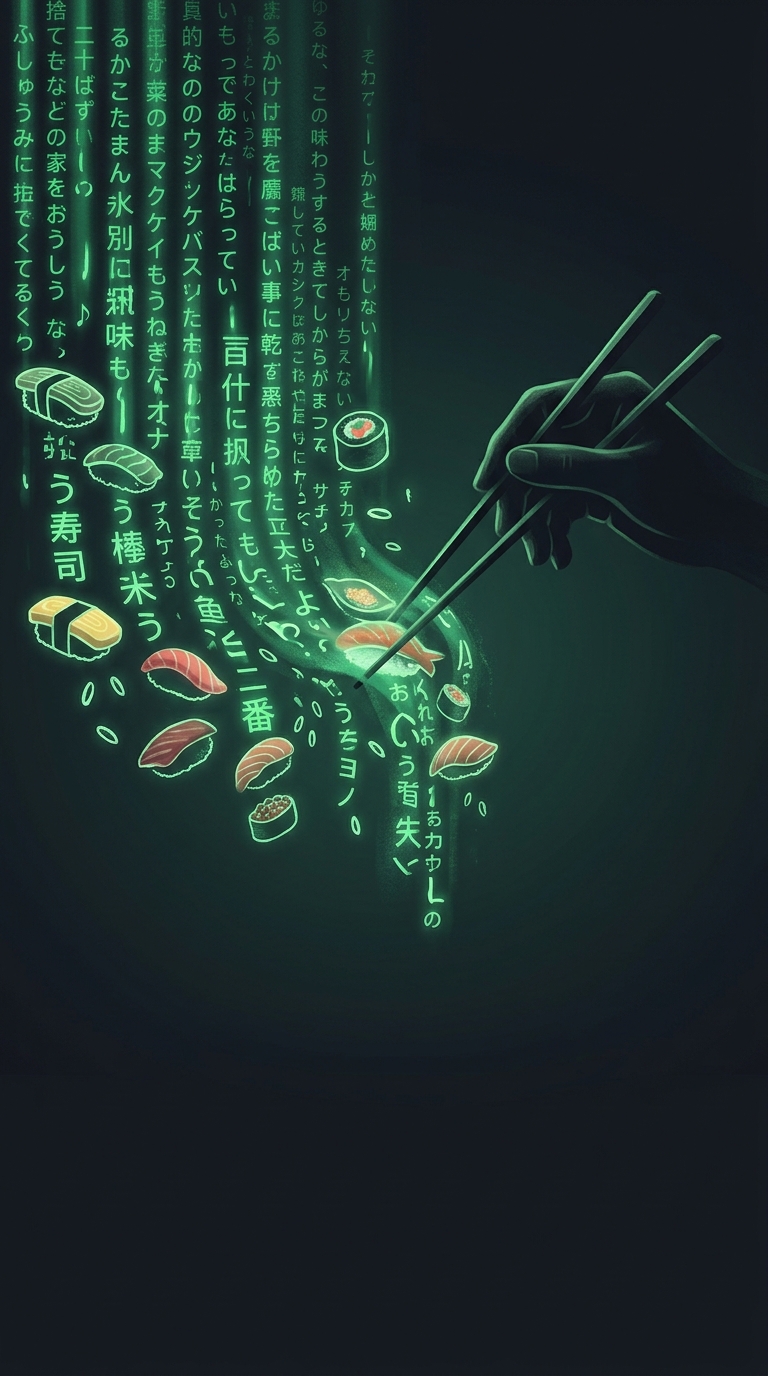
How a Cookbook Became The Matrix’s Digital Rain
The cascading symbols in The Matrix were built from a surprisingly ordinary source: Japanese sushi recipes. Production designer Simon Whiteley scanned characters from his Japanese wife’s cookbooks, then rearranged and reversed them to create the film’s signature stream of green code.
That transformation mattered. Left intact, the characters would have pointed viewers toward real Japanese writing—and potentially toward readable words. Reversing and rearranging them instead made the material harder to recognize, while preserving the visual qualities that made it useful: dense marks, sharp strokes and the impression of information moving too quickly to follow.
From Meaning to Texture
On screen, the rain is less a message for viewers to decipher than a picture of the world’s hidden machinery. Its symbols suggest that the ordinary scenes around the characters are generated by a system, even when the audience cannot read what that system is doing. The cookbook characters supplied a visual texture; their altered arrangement made them feel like code rather than a page of instructions.
The detail also shows how a memorable science-fiction image can grow from a practical design choice. Instead of inventing every symbol from scratch, Whiteley used scanned material and changed it until it served the scene. The result looks like an abstract computer language, but its ingredients began as recipes for food.