A computer you can watch someone operate
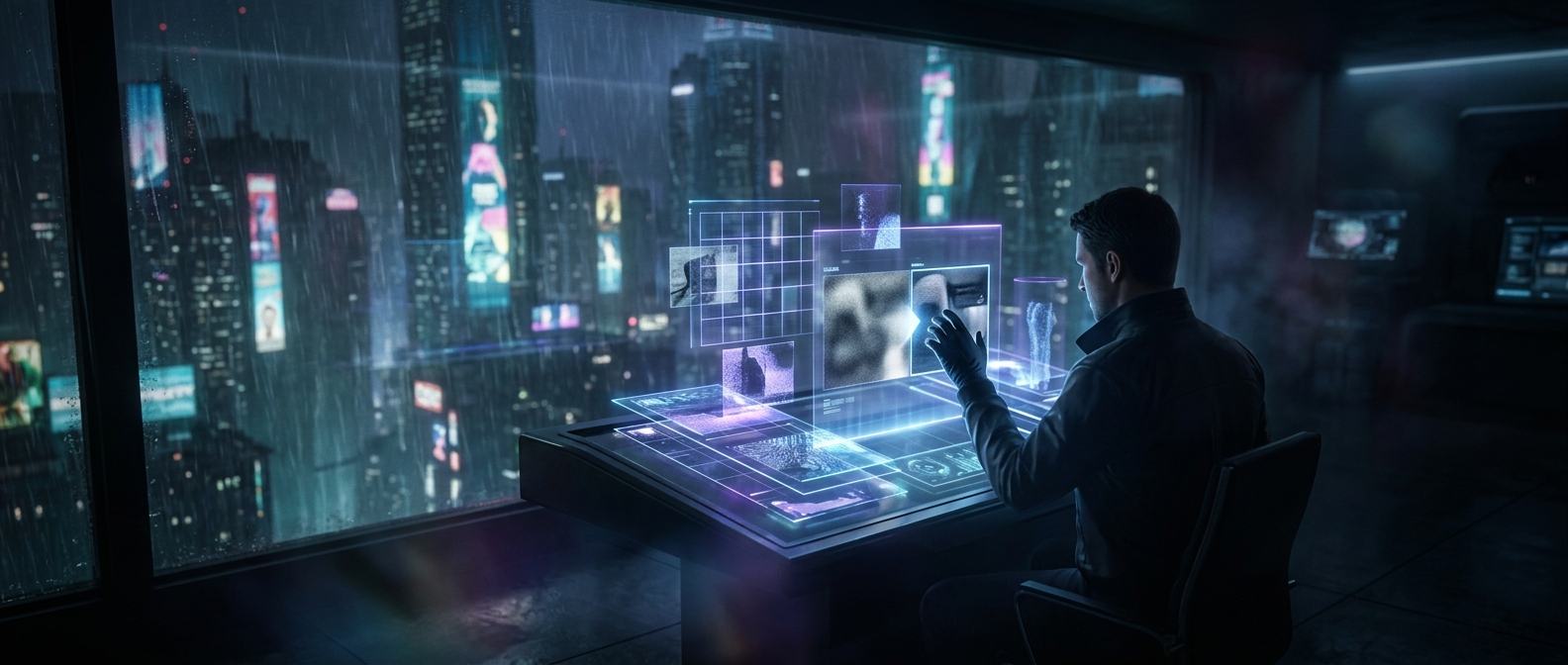
In Blade Runner, Deckard’s ESPER machine does not simply announce what it has found. It turns a photograph into something he can investigate: he gives commands, the image shifts and enlarges, and each change reveals another part of the scene. The controls and the results belong to the same room as the character.
That makes the interface diegetic—a term for a device or display that exists inside a story’s world, rather than graphics added only for the audience. Viewers see Deckard operate the machine and can follow the logic of the search: ask for a closer view, inspect the result, then ask for another adjustment. The technology is explained through action instead of a detached screen of information.
Why the design stuck
The scene also makes an abstract computing task legible as drama. A photograph is normally fixed, but ESPER treats it as a space that can be explored. Each command produces a visible consequence, so the audience can share Deckard’s discovery without needing a technical explanation of how the machine works.
That approach offered a lasting model for interface design in fiction—and an influential reference point for real designers: make information feel manipulable, and let controls reveal their effects. ESPER’s imagined power is extraordinary, but its basic appeal is easy to grasp: the computer does not just display evidence; it helps a person look again.