A Doom cameo with a Windows message
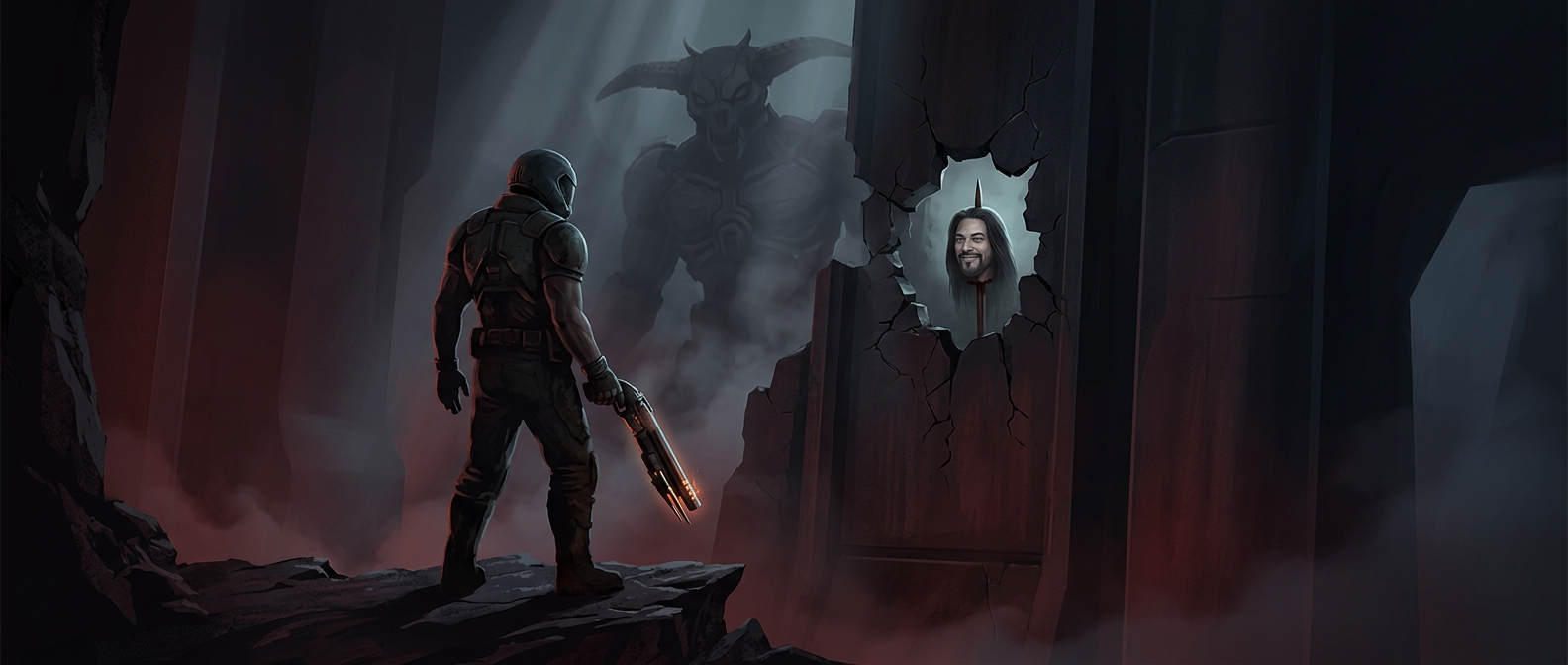
The strange image of Bill Gates carrying a shotgun through Doom’s bloody corridors was a joke with a job to do. Microsoft wanted Windows 95 to look less like a tool for offices and more like a platform people could use at home—including to play demanding games. Putting the company’s famously buttoned-up leader inside a violent, fast-paced game made that contrast instantly visible.
The stunt also turned an abstract promise into a scene viewers could recognize. “Gaming on Windows” could sound like a claim about menus, files, and software compatibility; a familiar action game suggested speed, sound, graphics, and hands-on fun. Gates’s awkwardness was part of the effect: the executive looked out of place, while the company was presenting itself as willing to change.
The difference between running a game and building for Windows
There was a technical wrinkle behind the message. Doom was a DOS game, not a game designed specifically for Windows 95. DOS was the older operating system many PC games relied on to reach a computer’s hardware directly. Windows 95 could run many DOS programs, so its arrival did not instantly turn every game into a native Windows title—but it gave Microsoft a way to argue that the new system could accommodate the games PC owners already cared about.
That distinction mattered to developers, too. Making games work reliably across different graphics and sound hardware was difficult, and Windows had to become a more practical target for game makers. Microsoft’s later gaming tools addressed that longer-term challenge; the promotional video itself was not a technical demonstration. Its purpose was to recast the company’s image: Windows could be associated with the games people played, not just the documents they typed.