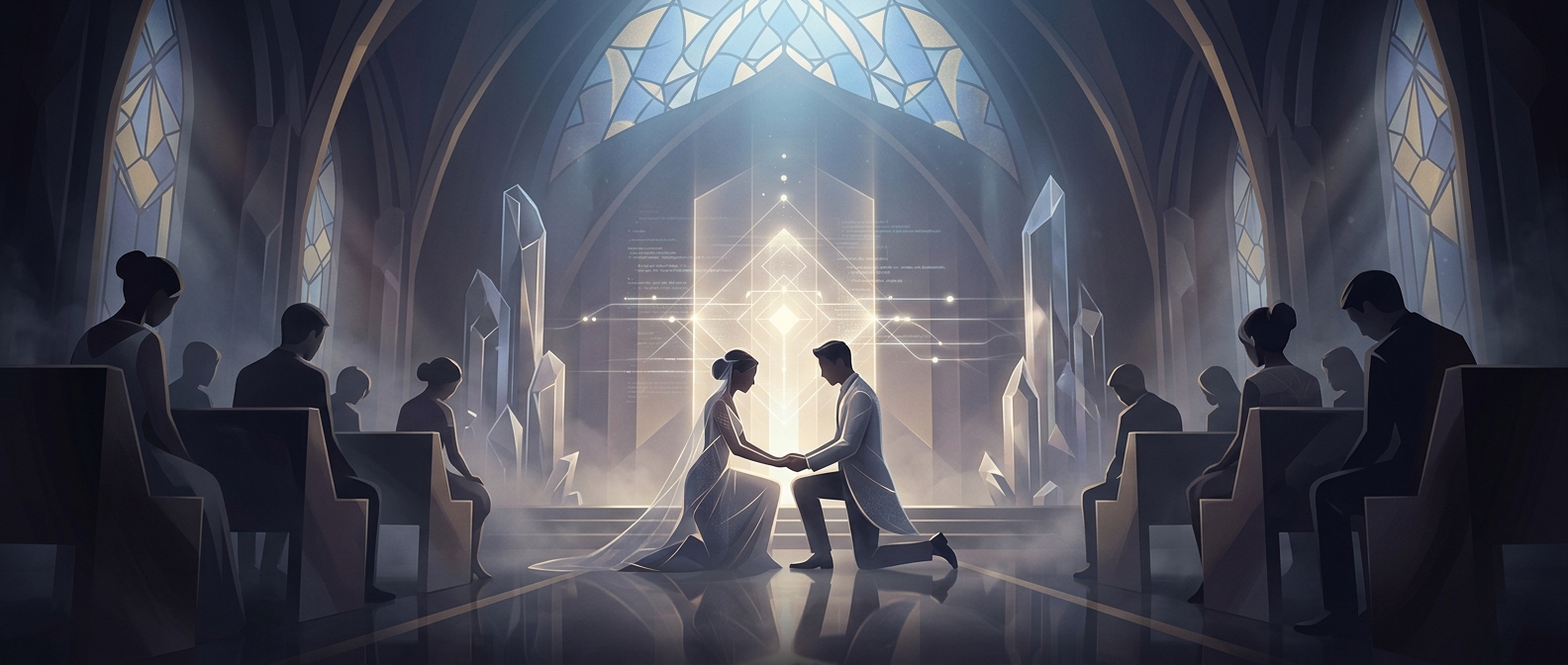
A shared world becomes a shared venue
An in-game wedding works because an online world is more than scenery: it is a place where people can gather, move around, dress their characters, and be recognized by friends. Couples can turn those ordinary features into ceremony. A guild—a player group that coordinates activities and social life—may supply the wedding party and audience, while virtual clothes and a chosen location make the event feel distinct from everyday play.
The ceremony is meaningful not because the game necessarily changes anyone’s legal status, but because other people witness it. Friends show up, play assigned roles, and create a record through screenshots. That makes the event a social performance inside a community the couple already inhabits.
The same openness creates a weak spot
Many multiplayer spaces are designed for people to share a world, not to reserve it as a private venue. Unless the game provides effective controls over who can enter or interfere, a stranger may be able to disrupt the scene. Players call deliberate disruption griefing: using the game’s systems to spoil other people’s experience.
That vulnerability is part of the occasion’s character. A ceremony can be carefully staged, but it still depends on the behavior of everyone nearby. The couple and their friends can choose the setting and plan the moment; they may not be able to control the whole world around it. So the wedding’s best screenshot is also evidence of something real about online life: even a virtual celebration is made—and sometimes unsettled—by a crowd.