Why a Text Can Break a Game’s Tension
A cliffhanger works by keeping attention fixed on an unresolved question: Will the character escape? What is behind the door? But a phone notification creates a different kind of uncertainty—someone may be waiting for a reply, or the message may matter. The player has to choose which question to answer first.
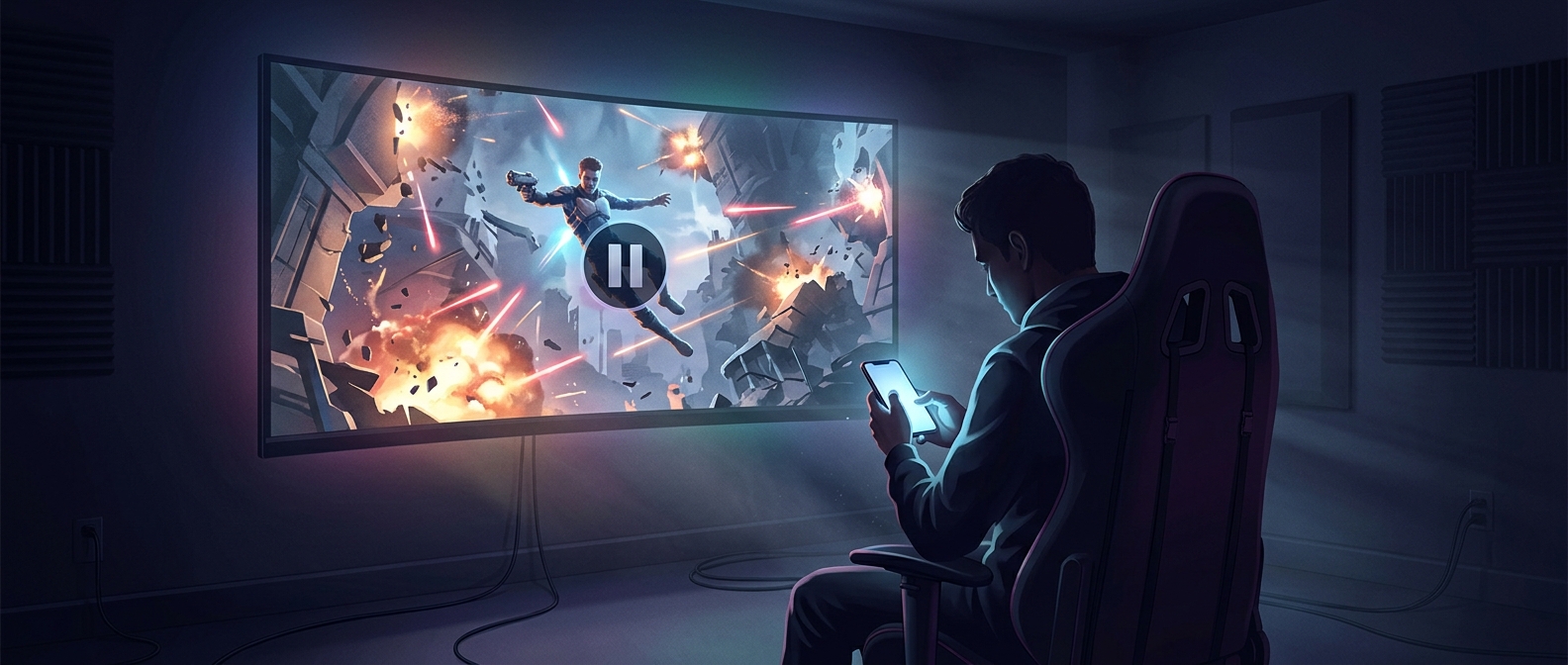
Checking the phone is a quick change of task, but it is not a clean reset. The player may return to the game still thinking about the message, while also having to recall the scene’s danger, objective, or controls. A dramatic moment can lose force not because the story has resolved, but because attention has been pulled elsewhere.
The Pause Button Is Part of the Design
Games handle interruptions differently. A pause menu can freeze play and give the player a safe moment to look away; a game that keeps running makes the same glance riskier. In either case, the phone competes with the game for a limited resource: the player’s attention.
That competition helps explain why suspense alone cannot guarantee immersion. A game can build toward a reveal, but the player still controls when to stop—and a message from outside the game can make stopping feel more urgent than finding out what happens next.