Why five choices make Rock Paper Scissors less predictable
Adding Lizard and Spock did not remove ties: two players can still choose the same sign. It made them less likely. If both players choose randomly, the original three-sign game ties one time in three; with five equally likely signs, that falls to one time in five.
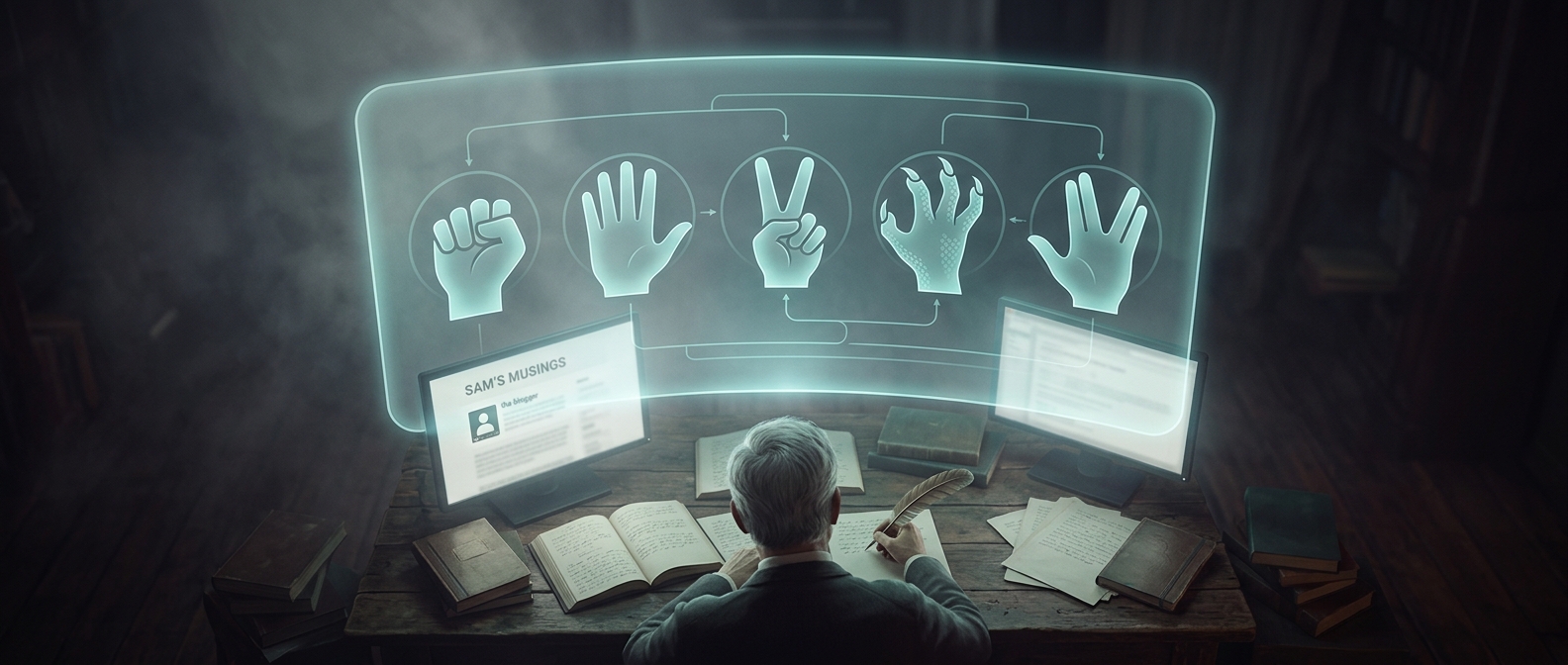
The deeper design challenge was keeping the expanded game fair. Each sign needed to beat two others and lose to two, so no option became an obvious favorite. The result is a balanced loop of matchups rather than a simple extension in which one new sign dominates the old ones.
A web of wins, not a new hierarchy
The original rules remain: rock crushes scissors, scissors cut paper, and paper covers rock. The added signs connect to both old and new ones: lizard eats paper and poisons Spock; Spock smashes scissors and vaporizes rock. The remaining matchups complete the balance: rock crushes lizard, scissors decapitate lizard, and Spock disproves lizard.
That gives each choice two ways to win and two ways to lose. Players must remember more outcomes, but they cannot safely rely on one gesture to beat most of the others. The extra complexity buys variety, not certainty.
From a homemade variant to a sitcom reference
Sam Kass created the five-way version to cut down on ties, and it later reached a much wider audience through the sitcom The Big Bang Theory. The show gave viewers a memorable reason to learn the rules: the game’s odd pairings make the expanded set feel like a playful puzzle, while its evenly distributed wins keep the original game’s basic fairness intact.