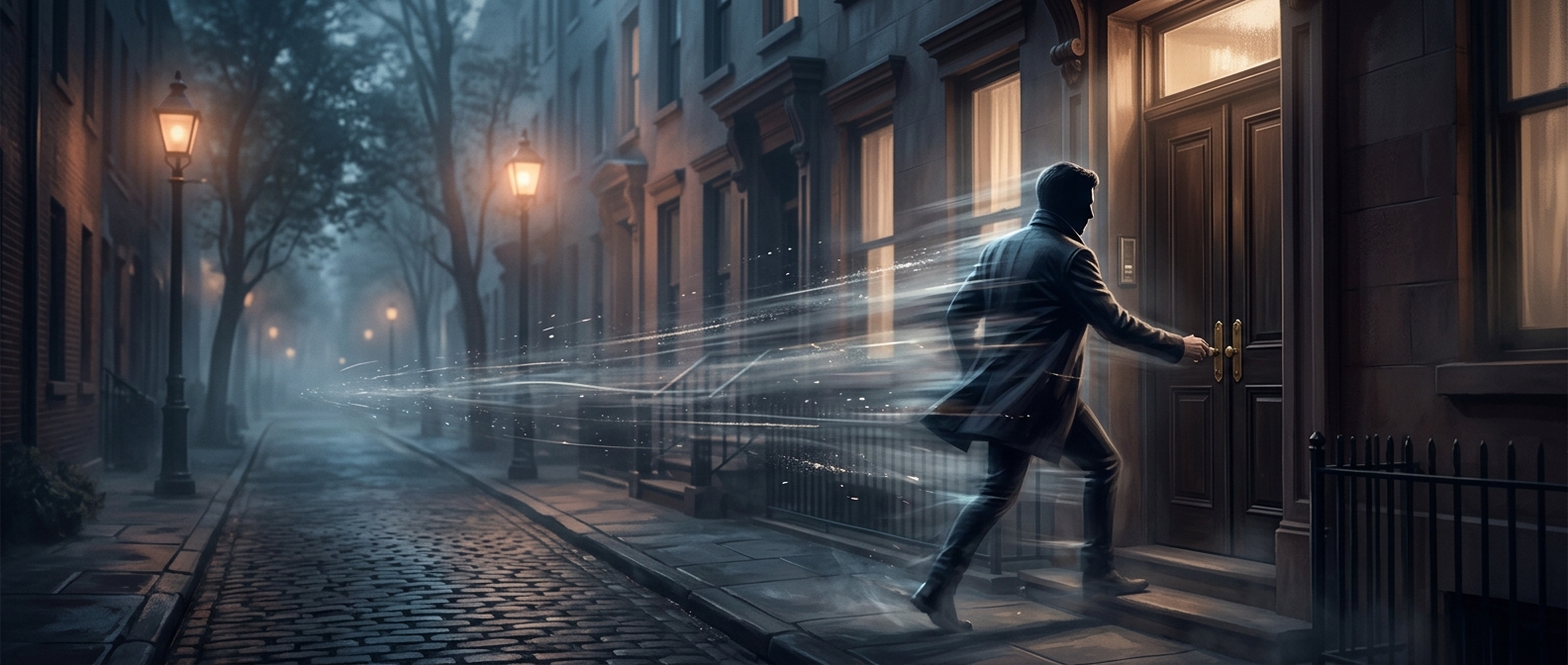
The Doorbell Is a Shortcut Through Movie Time
A doorbell in a film rarely marks the start of a realistic trip to the door. It marks the moment the story needs the character to respond. The cut from bedroom to entryway quietly skips the stairs, the search for clothes, and the walk through the house—steps that would add little unless something important happened along the way.
That skip is a form of narrative compression: a film leaves out routine time so the audience can stay with the consequential part of a scene. A sleeping character appearing dressed at the door may be implausible in a mansion, but the sequence is easy to read: the bell rang, the character hurried, and someone is waiting.
Why the Impossible Timing Feels Natural
Editing teaches viewers to accept gaps. A shot of someone waking, followed by a shot of them at the door, invites the audience to supply the missing actions. The bell also works as a crisp cue, connecting two locations and pushing the scene forward. If the visitor is a surprise or a threat, lingering over the walk would drain tension; if the moment is meant to be funny, the character’s implausibly swift arrival can be the joke.
The mansion’s size is usually less important than the scene’s purpose. Film time is elastic: an ordinary journey can vanish between cuts, while a crucial pause at the door can stretch. The result is a small visual bargain—viewers overlook the missing minutes so the story can get straight to the knock, the reveal, or the person on the other side.