How Nosferatu Made Daylight Look Like Night
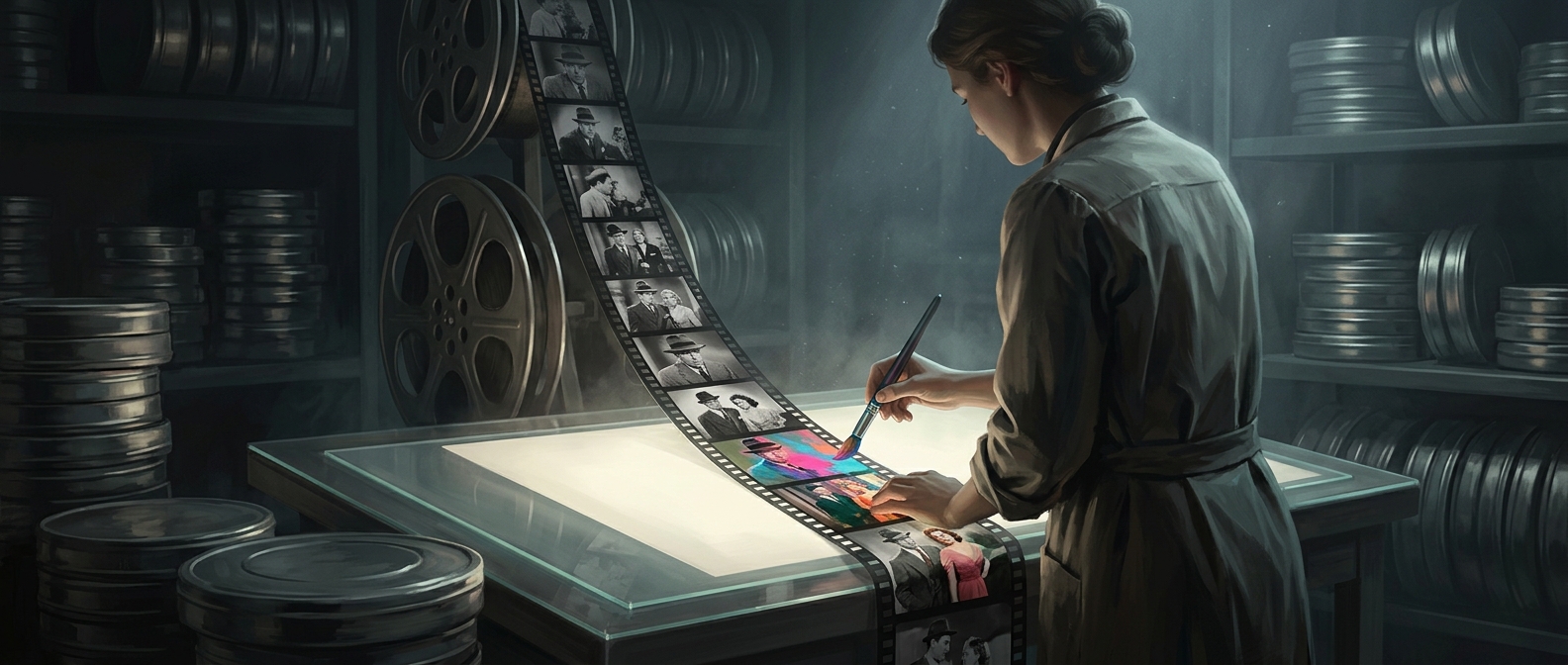
The blue in Nosferatu’s night scenes was added to the film print, not captured by a color camera. In the silent era, filmmakers often tinted finished prints by treating them with dye. During projection, the colored strip cast a corresponding hue over the image, while the underlying picture still supplied its light and shadow. Blue was commonly used for night; other tints could suggest interiors, fire, or different moods. These conventions helped audiences read a scene at a glance, though they were not a universal, rigid code.
That color mattered because the camera could not simply reproduce a modern nighttime shoot. Early film stock needed bright illumination to record a usable image, and cameras and lenses were far less light-sensitive than today’s. A scene filmed outdoors in daylight could therefore be made to stand in for night through tinting, composition, and performance—without asking the camera to see in darkness.
What the Tint Changes
In an untinted black-and-white copy, the same outdoor image can look like ordinary daytime. The viewer loses a cue that the filmmakers expected to be there, so a character moving through the scene may seem oddly untroubled by the sun. Restore the blue, and the image reads differently: the setting becomes nocturnal, and Orlok’s movements belong to the night-bound world the film is building.
Tinting was not merely decoration. It shaped how a scene’s time and atmosphere registered, much as lighting and color grading do in later cinema. But surviving prints and modern restorations do not always preserve the original appearance perfectly, and tint choices could vary between prints. The key point is that Nosferatu was made to be seen with color cues that a plain monochrome copy can erase—turning an intentional night scene into an apparent daylight mistake.