The cars changed the picture
The film’s account of impoverished American farmers seemed useful to Soviet propagandists: it offered scenes of hardship that could be presented as evidence against capitalism. But a film communicates through more than its stated subject. Viewers also notice what people own, how they travel, and what daily life looks like around them.
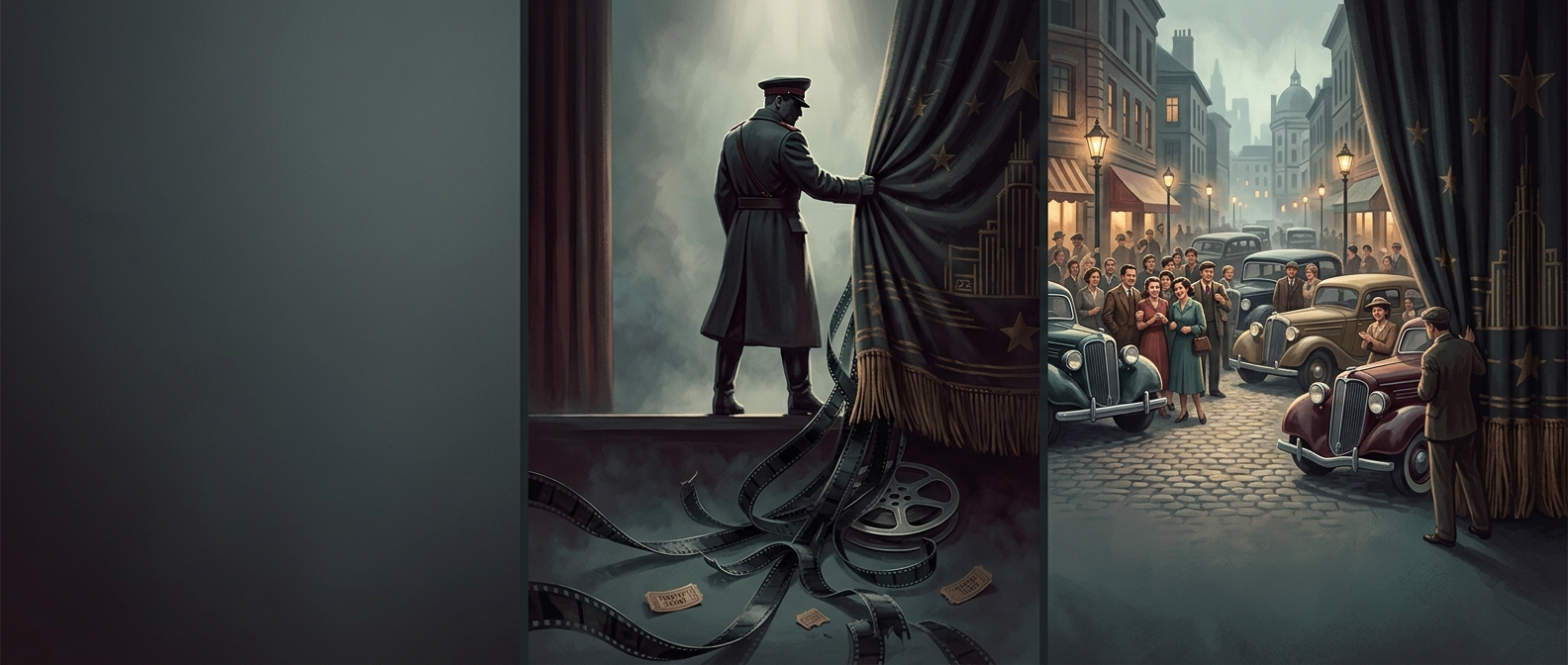
Here, the farmers’ cars created a visual contradiction. The people on screen could be poor and still possess cars, an object associated with mobility and access to consumer goods. That did not erase their hardship, but it complicated the simpler image of American poverty the Soviet campaign wanted to convey.
A propaganda frame has limits
A government promoting a film can shape how audiences are encouraged to interpret it, but it cannot fully control what the images suggest. A scene intended to show deprivation may also reveal resources or choices that make the intended message less convincing. The cars supplied that second reading without anyone needing to say it aloud.
That tension helps explain the reversal: the film was initially welcomed as an indictment of capitalism, then withdrawn from theaters. Its subject supported the campaign, but details in its pictures worked against the campaign’s preferred contrast. The episode shows how, in politically charged cinema, an ordinary object can become a counterargument.