A Performance Without a Recorded Voice
A silent-film camera preserved images, not synchronized dialogue. Actors could therefore make noise during a take without that sound becoming part of the finished film. What mattered to viewers was what the camera could show: a face, a gesture, or a line of printed text inserted between scenes.
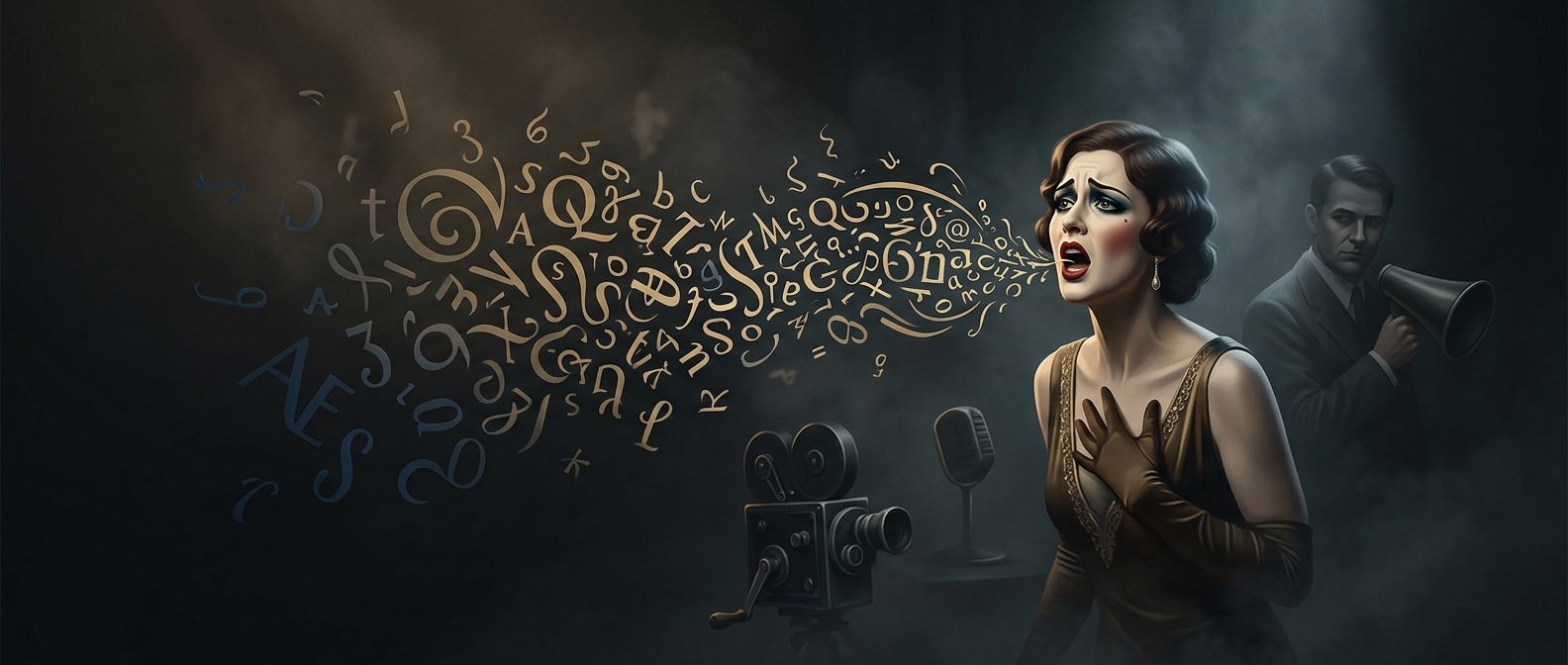
That freedom did not mean every performance was silent on set. An actor might speak intended lines, improvise nonsense, or mutter about a practical annoyance; the camera would still record the visible performance. Speaking could help an actor keep the rhythm of an exchange or make a reaction feel natural, even when no words would reach the audience.
The Face Carried the Scene
With dialogue unavailable to explain a character’s feelings, actors had to make emotion legible through expression and movement. A shouted phrase might be gibberish, but the open mouth, tense posture, and forceful gesture could still communicate anger. When the plot depended on specific information, filmmakers could use intertitles—brief written cards shown between shots—to supply words the image alone could not convey.
The result was a split between what happened on set and what an audience experienced. The actors’ voices could help sustain the moment, but viewers read the performance visually, filling in the sound and meaning from the action on screen.