How a block world becomes a social one
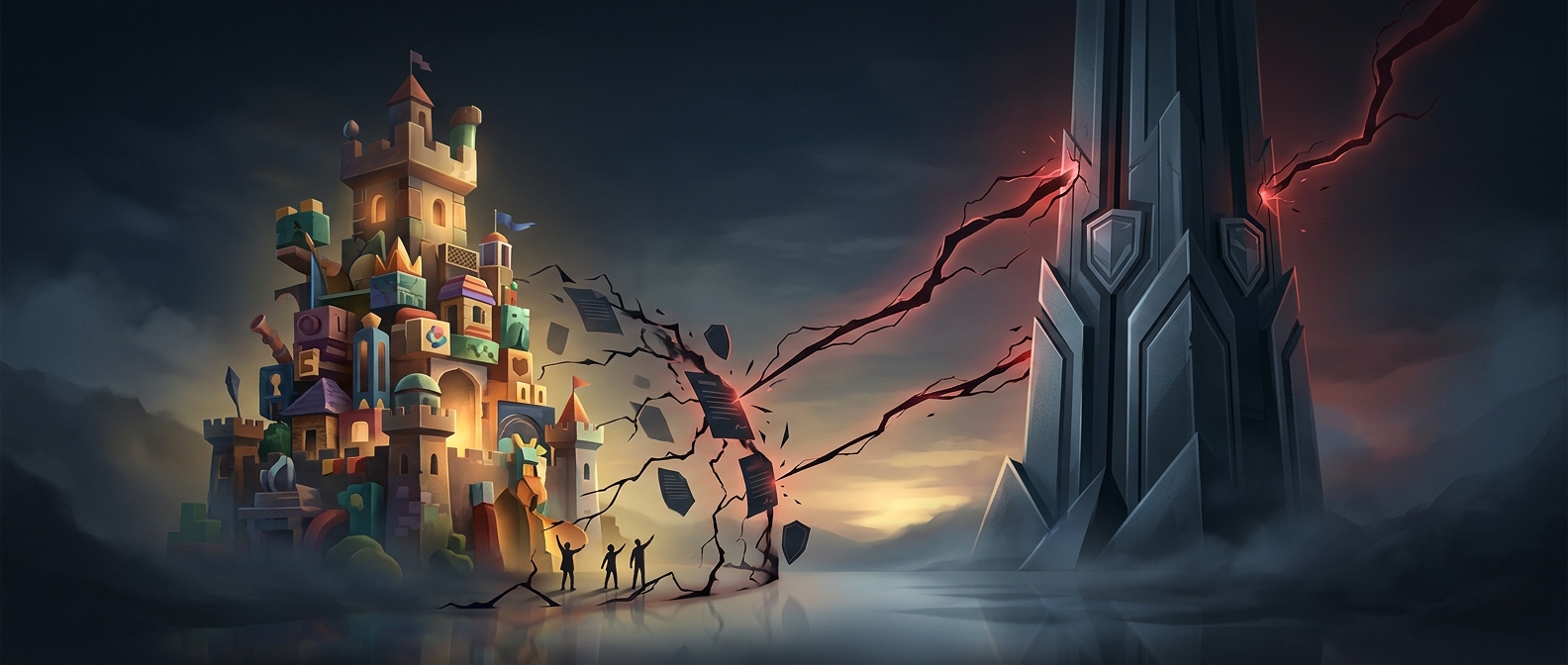
Minecraft supplies a shared space and a small set of rules: players can gather materials, build structures, and alter the landscape. The game does not automatically provide a court system or an economy. Those emerge when players agree on rules, assign responsibilities, and decide what happens when someone breaks an agreement.
The building itself can become surprisingly technical. Redstone, Minecraft’s in-game material for transmitting signals, lets players assemble circuits and mechanisms. With enough planning, a construction can perform useful calculations or operate as a machine. Other projects depend less on circuitry than on coordinated labor: a gallery, for instance, needs builders, curators, and visitors to make it more than a collection of rooms.
What makes these worlds work—and what limits them
A shared server gives a group a place to organize, but it does not guarantee cooperation. Players may create laws, elect leaders, or trade resources; they may also ignore the rules, leave, or disagree over who has authority. Server owners and administrators often retain technical powers that ordinary residents do not, so a digital government operates within a system someone else can maintain or change.
That is part of the appeal: the world makes social arrangements visible. A rule can shape where people build, who can use a resource, or how disputes are settled. Because the setting is constructed and many consequences are easier to contain than in everyday life, players can try out forms of cooperation without having to run an actual country.
A rehearsal, not a replacement
Minecraft can host miniature societies, but it is not secretly becoming a human civilization. Its communities depend on real people, real time, and technical infrastructure outside the game. Their projects demonstrate that people can build tools and institutions together under shared rules—not that a virtual world can meet all the needs of a society.
The telling detail is that a government in Minecraft is both social and architectural: its rules matter only as long as players keep choosing to uphold them.