How a Fresnel Lens Shapes a Stage Beam
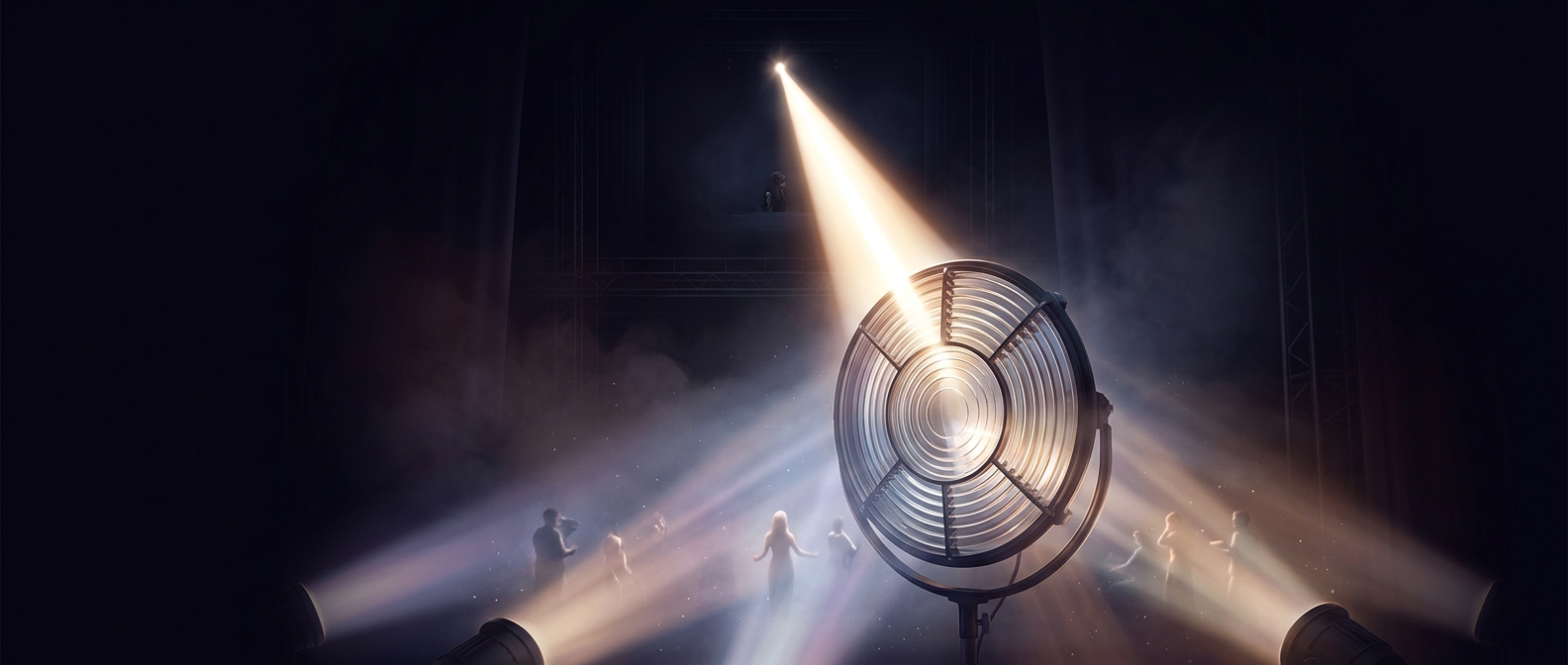
A stage lamp’s bulb or LED sends light in many directions. A Fresnel lens gathers more of that spread and directs it forward, helping a lighting crew make a defined pool of light or a beam that reaches across the stage.
The trick lies in the lens’s surface. A conventional convex lens bends light through a thick, smoothly curved piece of glass. A Fresnel lens keeps the same basic optical shape but breaks it into concentric steps, like rings on a shallow staircase. Each ring is angled to bend light toward the intended direction, while the material between the rings is removed. The result is a much thinner, lighter lens than a solid glass dome of comparable size.
Why the Rings Matter in a Theater
The design is useful in a fixture that must be moved, aimed, and adjusted throughout a production. Its broad, relatively lightweight lens can spread a lamp’s output into a soft-edged field, rather than producing a sharply outlined circle. By changing the spacing between the lamp and lens, the operator can make that field wider or narrower: a closer arrangement generally gives a broader wash, while moving the lamp farther away tightens the beam.
A Fresnel does not create extra light. It redirects light that would otherwise spill in other directions, so more of the fixture’s output travels where the scene needs it. That concentration makes the beam appear brighter on the actor or set, even though the lamp itself has not become more powerful.
The practical payoff is control: crews can shape and reposition light without hauling a bulky, heavy curved lens, making the Fresnel a familiar tool for illuminating both broad areas and specific parts of a stage.