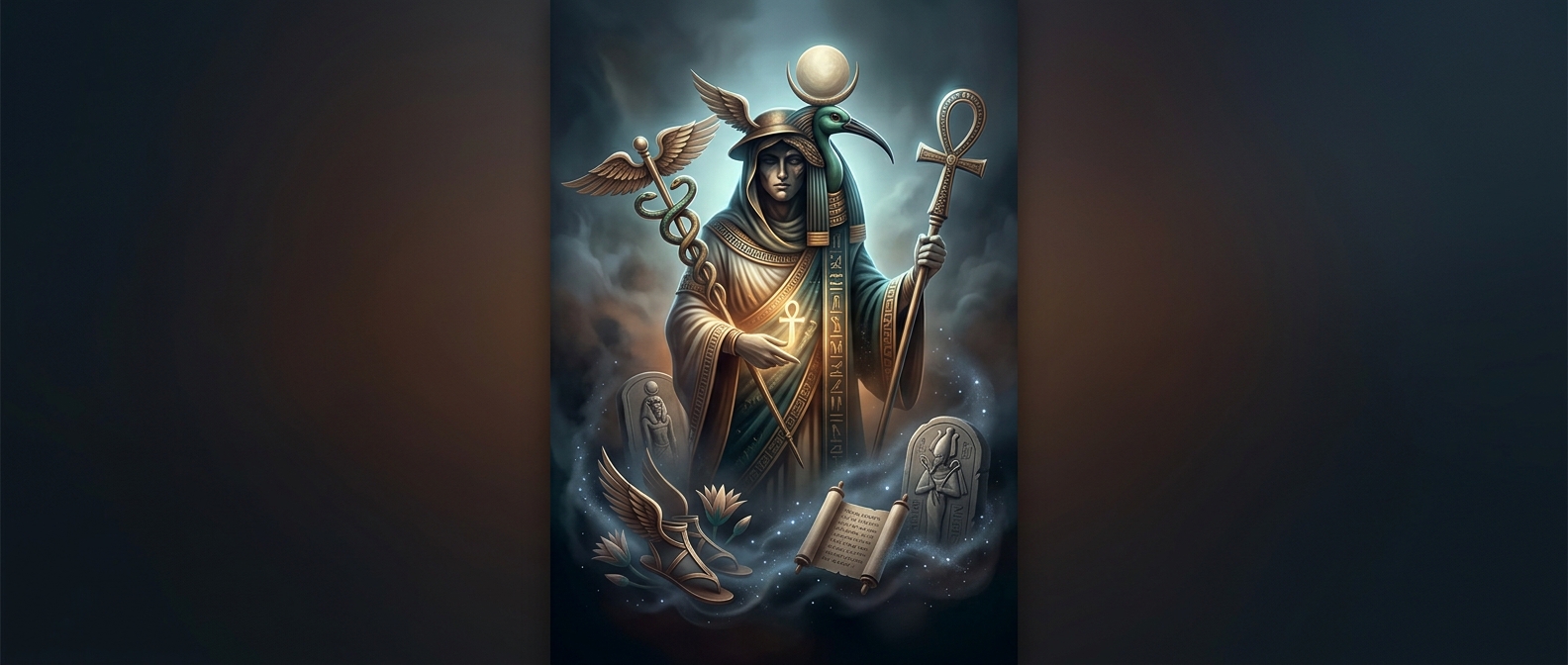
A Greek messenger and an Egyptian scribe become one figure
After Greek rule took hold in Egypt, people living in the two cultures encountered gods whose roles overlapped. Hermes carried messages and guided souls in Greek religion; Thoth was associated with writing, knowledge, and measurement in Egyptian tradition. Greek speakers identified Thoth with Hermes, a common way of relating one culture’s god to a counterpart in another.
The blended figure became known as Hermes Trismegistus, or “Hermes the Thrice-Great.” The name reflects a religious and literary tradition, not a simple story in which one god literally changed into another. It gave the figure a combined identity: the eloquence and mediation of Hermes alongside Thoth’s command of writing and sacred knowledge.
Why the combination mattered
Writers later attributed teachings about the cosmos, the soul, and divine wisdom to Hermes Trismegistus. Because he was imagined as a source of knowledge from both Greek and Egyptian traditions, his authority could bridge them. The texts associated with him helped shape what came to be called Hermetic philosophy and were read as repositories of hidden or esoteric wisdom.
That association made the pairing more than a convenient match between similar gods. Hermes Trismegistus became a legendary teacher whose mixed identity itself suggested access to knowledge spanning cultures.