An alchemical book designed to be experienced, not simply read
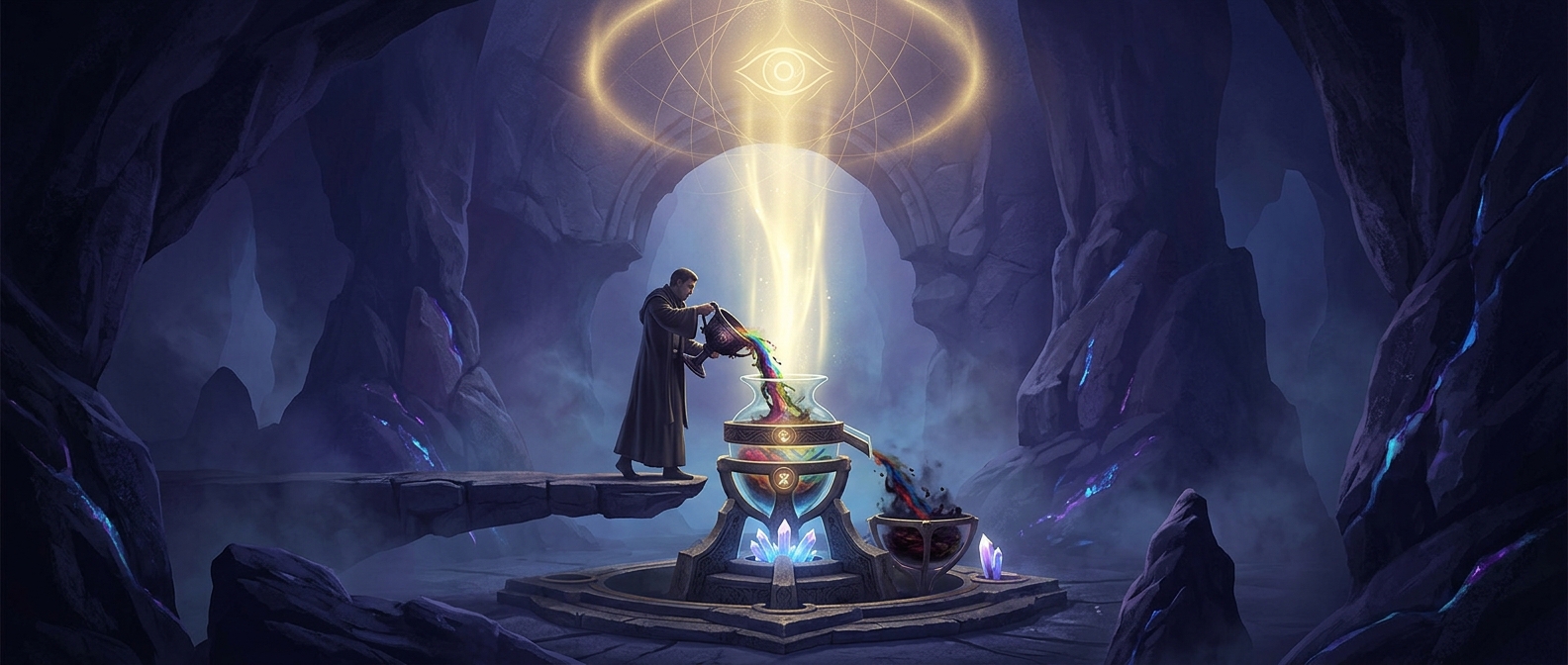
Michael Maier’s Atalanta Fugiens turns alchemy into a sequence of puzzles. Each emblem—a picture paired with written material—invites readers to connect an unfamiliar scene with ideas about transformation. The point was not merely to identify ingredients or follow a practical recipe. Alchemical change could also serve as a model for refining the human soul.
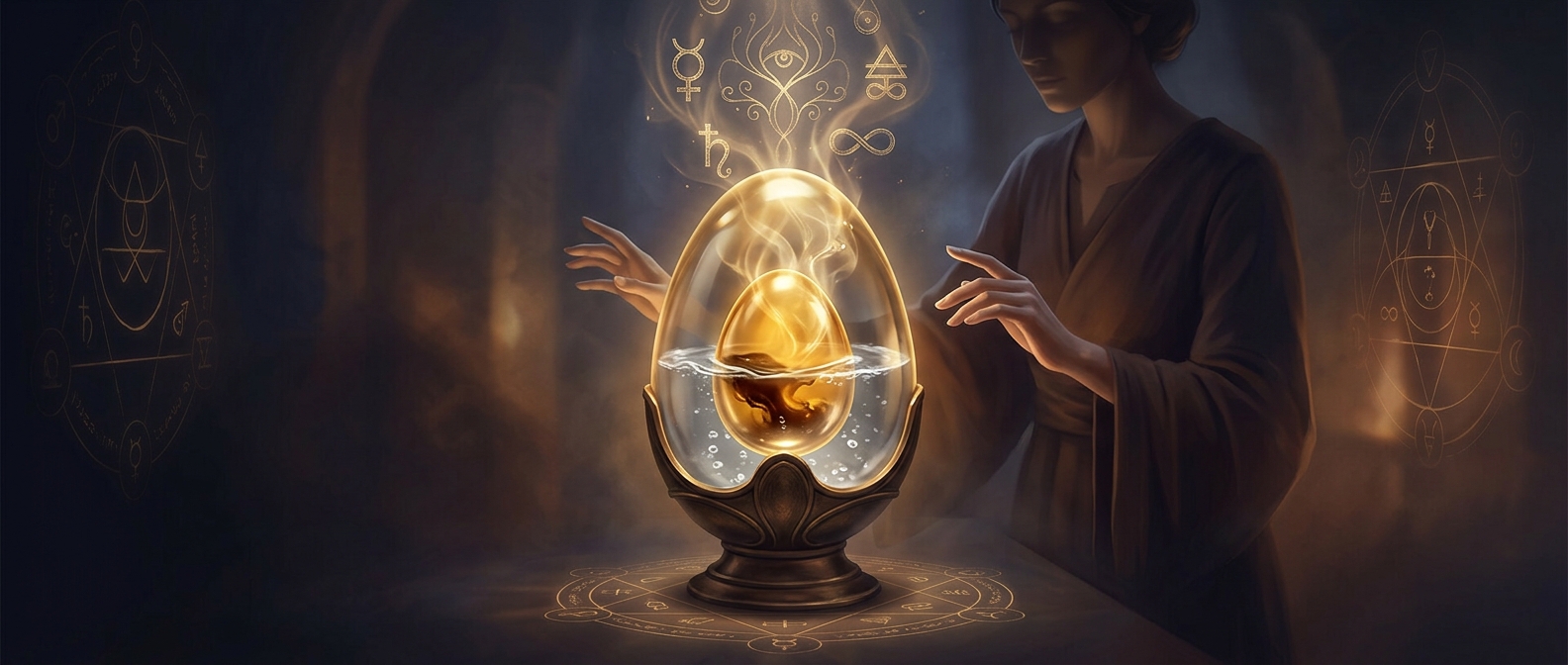
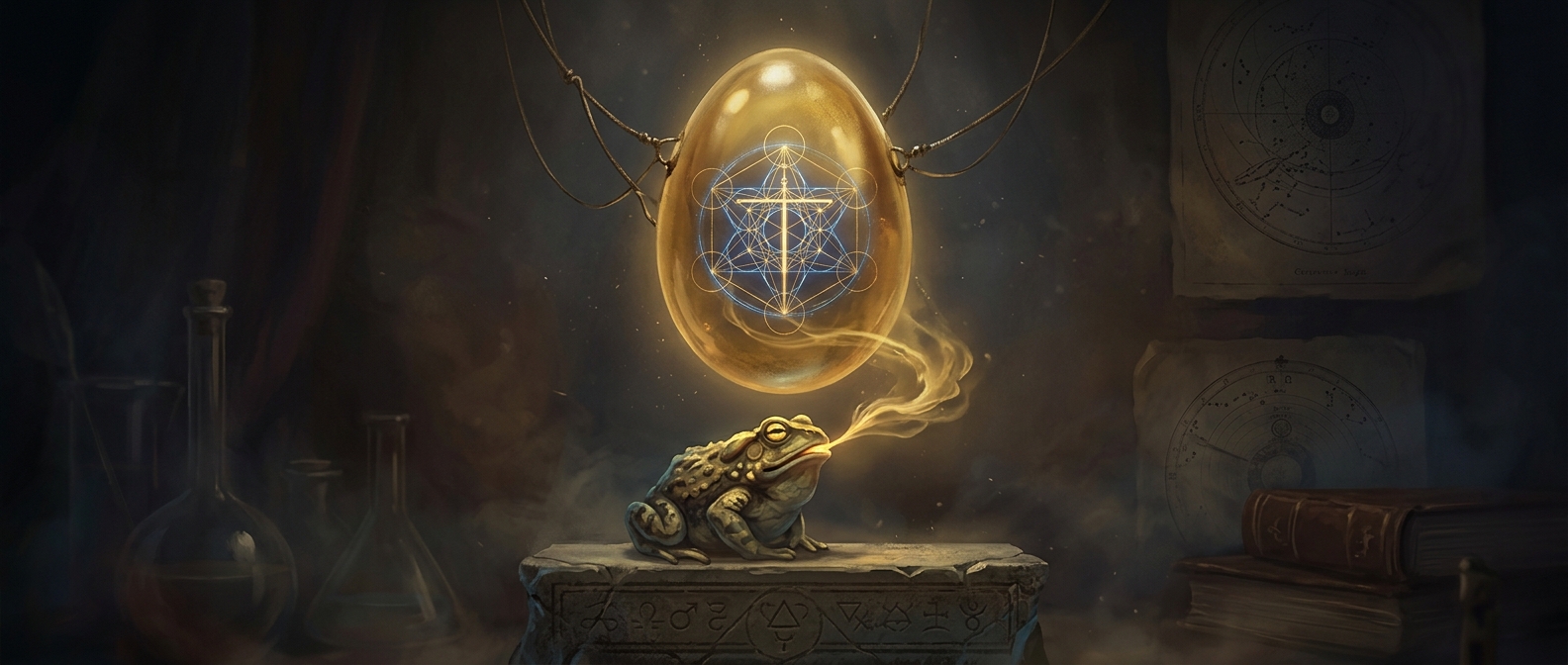
That helps explain the book’s grotesque imagery. A toad extracting liquid from a woman or a figure opening a golden egg is not a straightforward illustration of laboratory work. Such scenes make ordinary expectations unreliable, pushing readers to search for relationships among bodies, substances, and change. The images offer prompts for interpretation rather than a single plain-language answer.
Why add poems and music?
Maier paired the engravings with poems and musical fugues. A fugue is a piece of music in which a melody is introduced and then taken up in overlapping entries by different voices. Hearing a theme recur and change gives the listener an experience of transformation in time—a useful counterpart to images that demand slow looking.
The combination also changes the reader’s role. Instead of receiving one explanation and moving on, a reader can look, read, listen, and compare. The different forms do not simply repeat the same message; they make the emblem’s meaning something to work through.
Transformation as a mental and spiritual process
In this setting, “ascension” is best understood as spiritual elevation, not a literal ascent into the sky. Maier’s strange scenes could direct attention toward the difficult passage from a disordered or raw state to a more perfected one. Their oddness was part of the method: a memorable image could hold the mind on a problem longer than a tidy diagram would.
The book’s practical consequence was to make interpretation itself part of the work. Its reader had to treat looking, listening, and reflecting as stages in a search for transformation.