How a wash can turn dirt into an abrasive
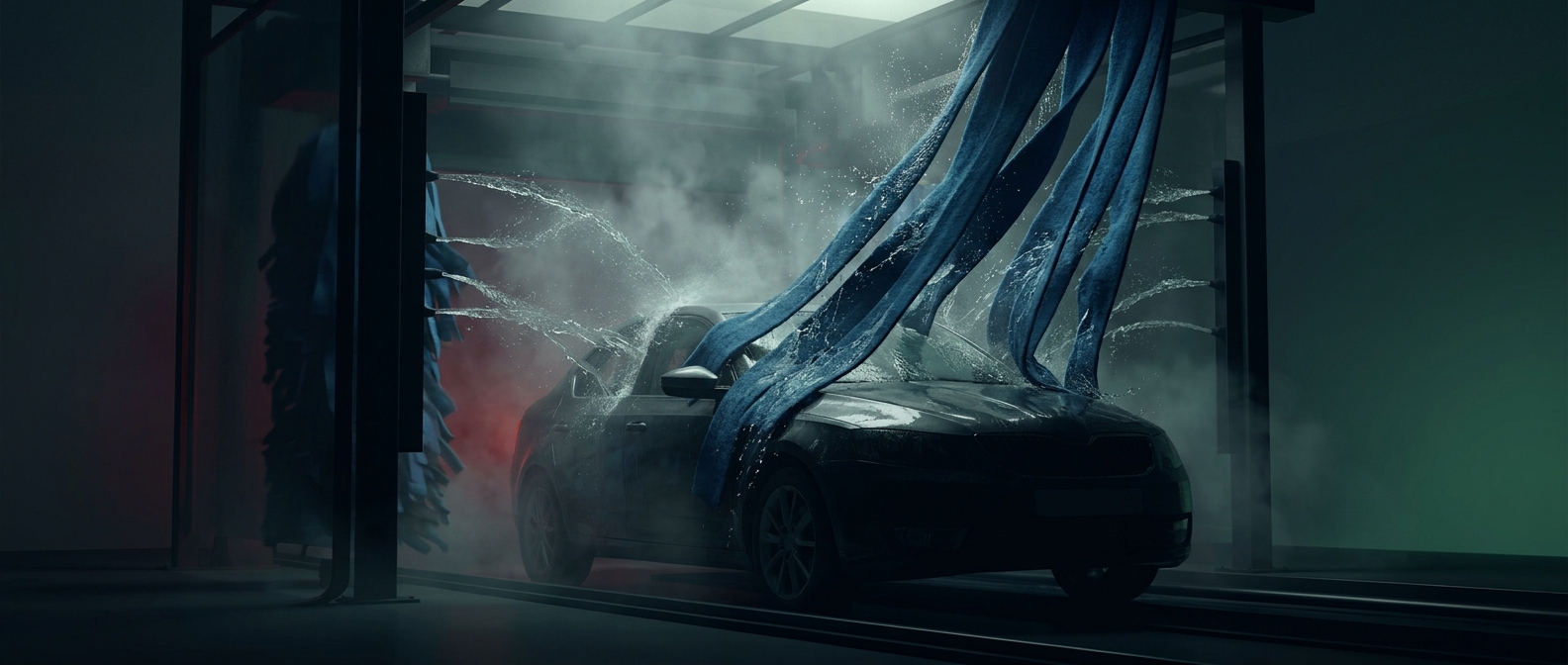
A car’s color usually sits beneath a transparent protective layer called clear coat. It is this outer surface that wash equipment contacts. Dust and road grime can contain hard mineral particles; if some remain on a brush or cloth from an earlier wash, they can be dragged across the clear coat instead of rinsed away.
The damage comes from friction. As the cleaning material moves over the body, a trapped particle can score the clear coat with a fine line. One pass may leave marks too subtle to notice, but repeated washing can build up a hazy, swirled appearance, especially in bright light. The cleaning material does not need to be stiff: even soft fabric can scratch when grit gets caught in it.
Why brushes are still used
Contact washes rely on moving material to loosen grime that water alone may not remove. Their performance depends partly on how clean and well maintained that material is, and on how effectively loose dirt is rinsed away before it rubs against the car. Those steps reduce risk; they cannot make contact with a gritty surface impossible.
A touchless wash avoids brushes and cloth, but it must loosen dirt with water pressure and cleaning chemicals instead. That changes the tradeoff rather than guaranteeing a perfect result: some stubborn grime may remain. For a driver choosing a wash, the practical point is that convenience and paint care depend not just on the machine’s motion, but on what is caught in the equipment when it reaches the car.