A name built from the game’s pieces
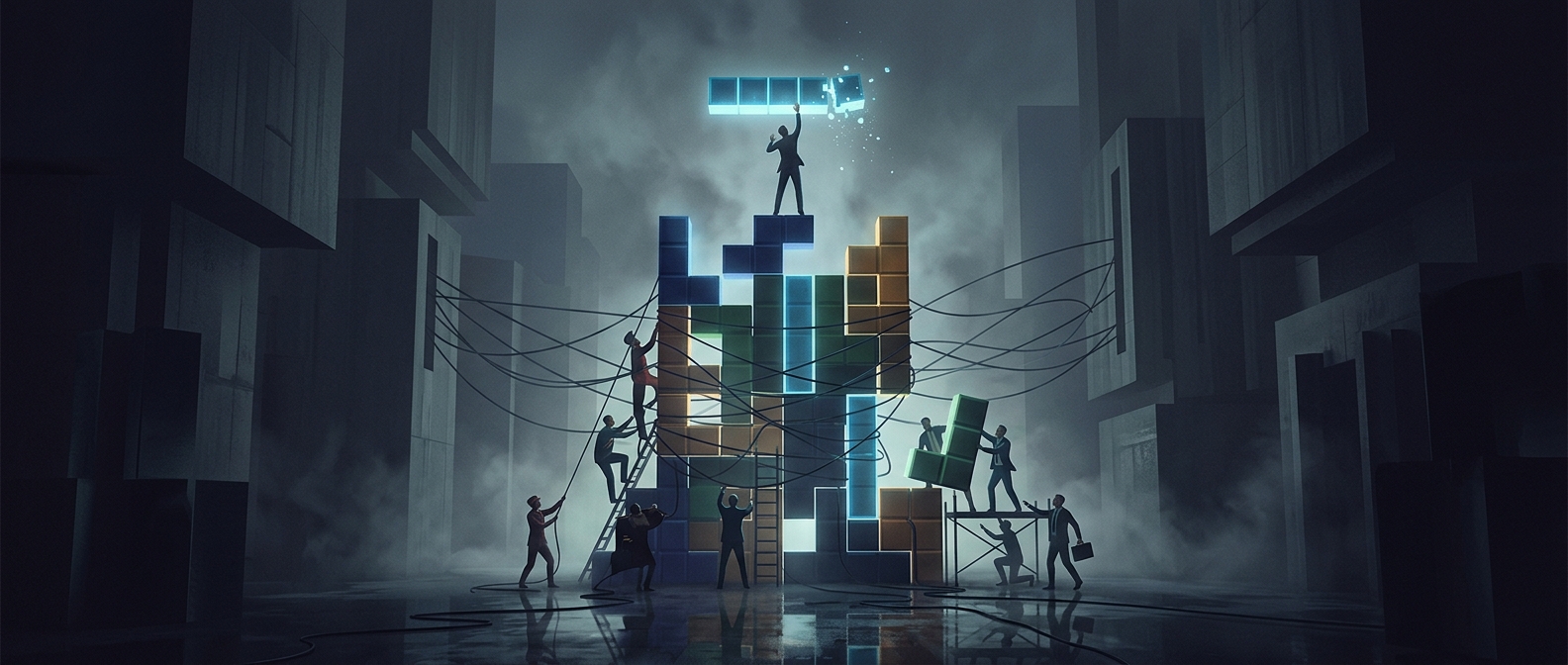
The “tetra” in Tetris points to its basic building block: each falling shape is made from four equal squares joined edge to edge. These pieces, often called tetrominoes, come in different arrangements, but the shared four-square rule gives the game its visual logic. Players rotate and position them to complete horizontal rows.
That prefix does more than describe the pieces. It gives the title a compact connection to the puzzle’s central constraint: every shape has the same number of blocks, even as its outline changes.
The personal note in “Tetris”
The rest of the title comes from “tennis,” the creator’s favorite sport. Joining the mathematical-sounding prefix to a familiar sport made a short, distinctive name—one that ties the game’s construction to a personal detail without spelling out the rules.
The result is a title that quietly captures two sides of the game: the fixed geometry of its pieces and the creator’s own point of reference. Once players learn that each shape contains four squares, the first half of the name becomes a small clue built into the game itself.