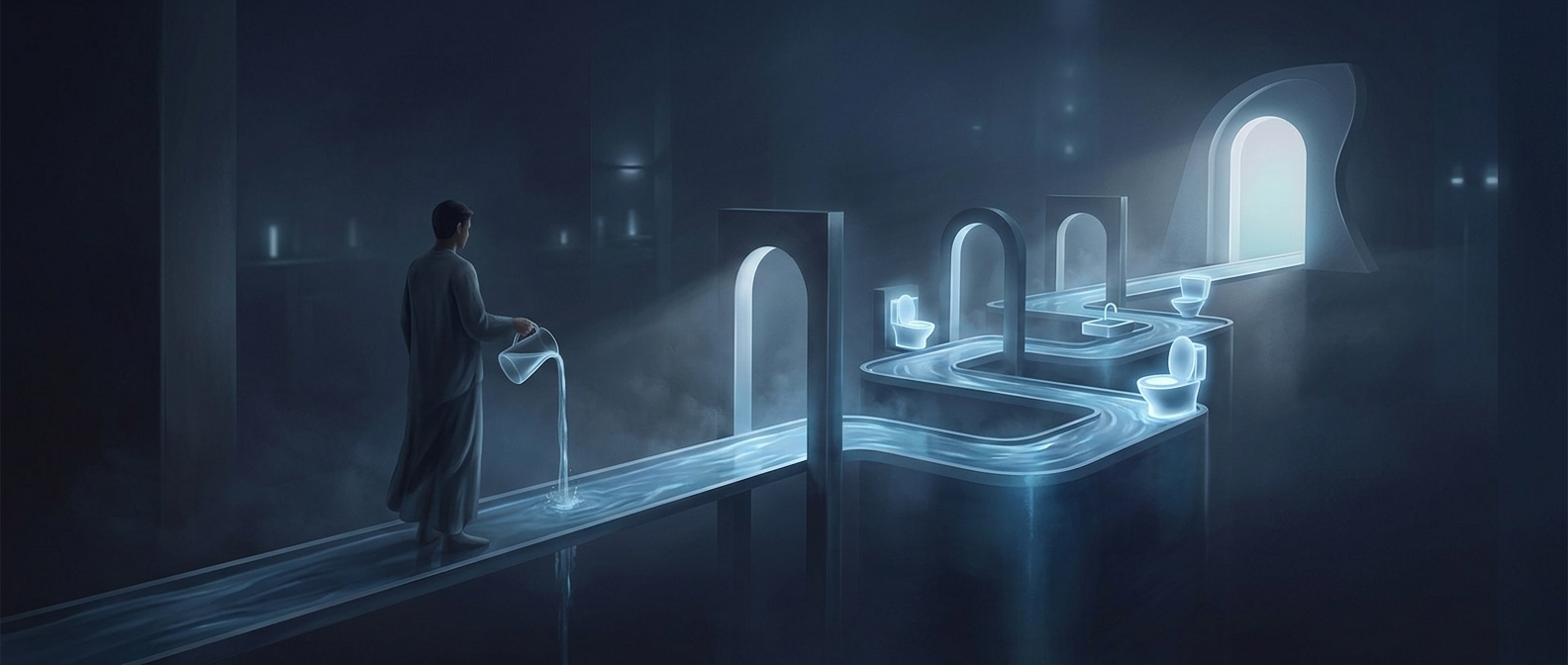
Why water before a meal can change what you eat
When you drink water, it briefly adds volume inside the stomach. Sensors in the stomach wall detect stretching and send signals along the vagus nerve—a major communication pathway between the digestive system and the brain. Those signals contribute to the sense of fullness, so a meal may feel satisfying sooner if some stomach volume is already there.
Water does not need to contain calories to affect that sensation. In some people, drinking it before eating can mean they take in less food during the meal. The change is usually modest and varies with the person, the meal, and how much water they drink; it is not a reliable way to suppress appetite completely.
The effect is about intake, not fat burning
Water itself does not melt fat or permanently shrink the stomach. Its potential weight-loss benefit is indirect: if the fullness helps someone eat fewer calories consistently, that lower intake can support weight loss over time. The water’s volume also passes through the stomach, so the immediate fullness is temporary.
That distinction matters in practice. Drinking water before a meal may be a simple aid, but it does not replace the broader eating habits that determine weight change. Its most useful role is quieter: it can help fullness arrive before the plate is finished.