Why banana flavor tastes like a different banana
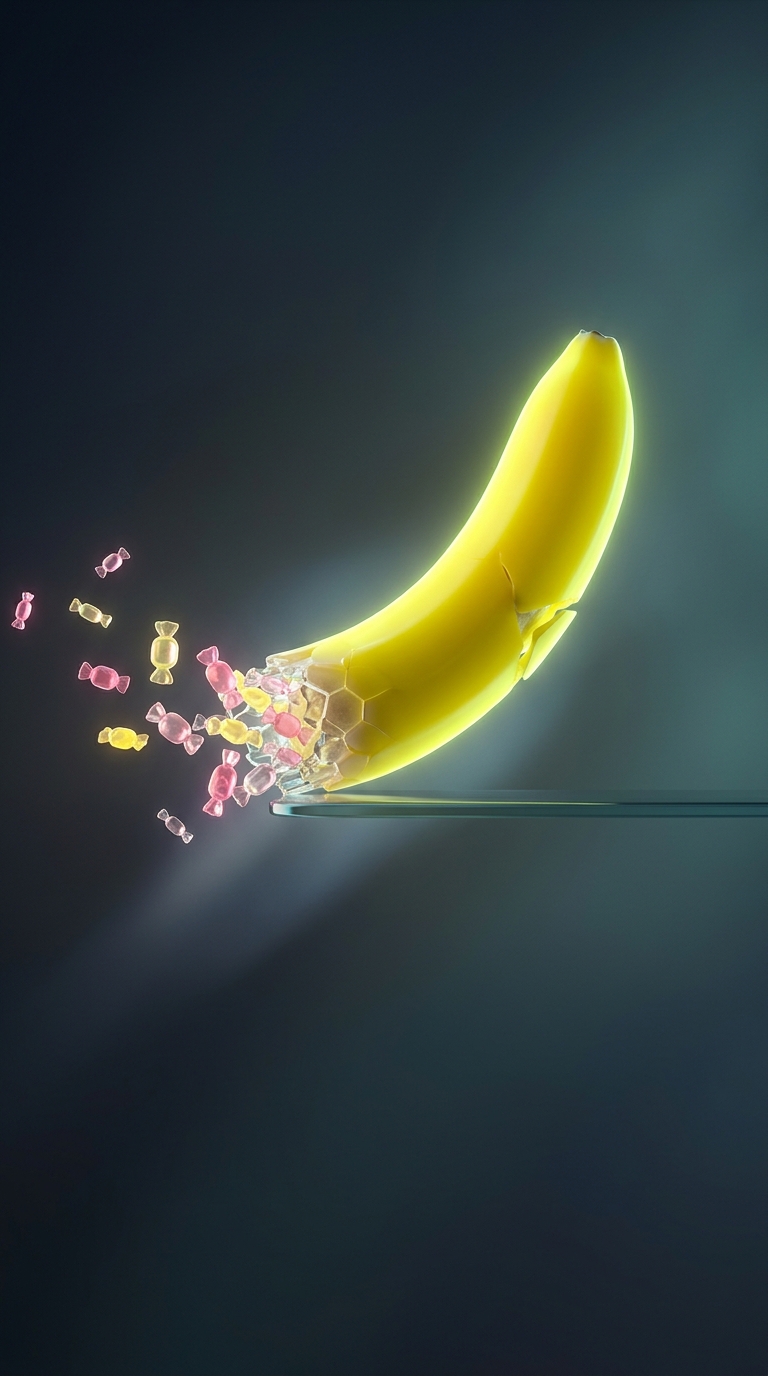
The flavoring in candy and desserts is built around a small set of aroma chemicals, especially isoamyl acetate, which has a sharp, sweet smell many people recognize as “banana.” A fresh banana’s aroma is more complicated: dozens of volatile compounds—chemicals that readily evaporate and reach the nose—combine with its sweetness, acidity, and texture. A flavoring that emphasizes just a few of them can seem intense and oddly unlike the fruit.
The variety behind the familiar flavor
The bananas most commonly sold in U.S. grocery stores today are Cavendish bananas. Earlier in the export trade, the Gros Michel was much more widely grown. It is often described as having a stronger, sweeter banana aroma, and its flavor is frequently linked to the banana note in sweets. That connection helps explain why the flavor can seem familiar without matching the Cavendish on a fruit stand.
Gros Michel did not simply vanish: it is still grown, though it no longer dominates the global export market. In the mid-20th century, Panama disease—a soil-borne fungal disease—damaged Gros Michel plantations, and growers shifted heavily toward Cavendish, which was less vulnerable to the strain then causing the damage.
A flavor is a shortcut, not a fruit replica
Commercial banana flavoring does not reproduce every aroma in a ripe banana. It selects and amplifies a few recognizable notes so they hold up in foods such as candy, where sugar and processing can alter delicate fruit aromas. The result is less like biting into a particular banana and more like a concentrated signal that says “banana.”
That signal may call to mind a variety many people rarely encounter today—which is why the mismatch can feel like a memory of a banana that no longer exists, even though the fruit itself is still grown.