Why the back of a plane can feel bumpier
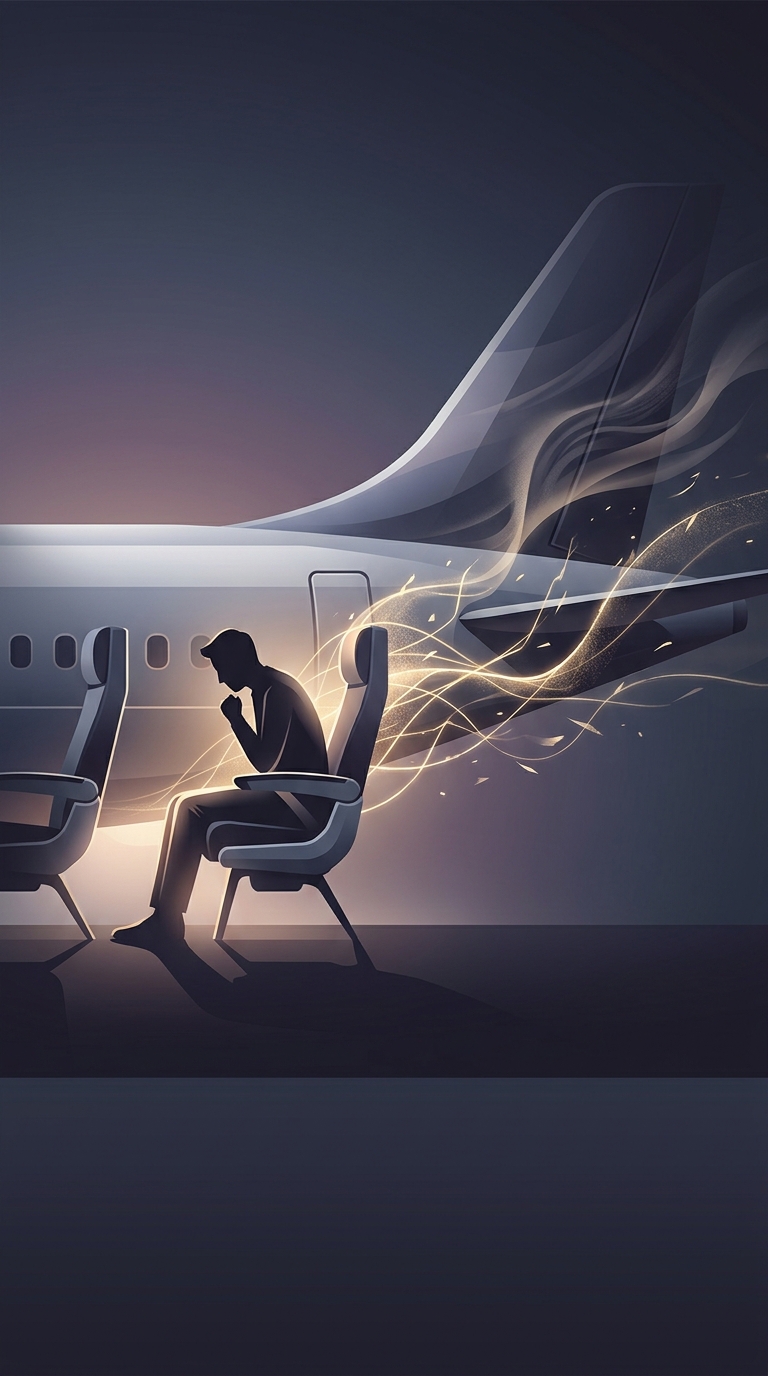
Turbulence is moving air that nudges the aircraft. It does not usually strike the tail as a separate, stronger patch of rough air; the whole plane responds to the same disturbance. But passengers in different seats can feel that response differently because the aircraft moves and rotates around its center of gravity—the point where its mass is balanced.
The farther a seat is from that pivot, the larger the movement it can experience when the plane pitches, or tips its nose up and down. The tail is well behind the center of gravity, so a small rotation can translate into a more noticeable rise or drop at the back. That extra motion can make bumps feel sharper, even when the aircraft itself is handling the turbulence normally.
Where to sit for a steadier ride
Seats around the wings are generally closer to the aircraft’s center of gravity, so they tend to move less during pitching. They are often the better choice for travelers who are sensitive to motion. The difference is about how much movement reaches your seat—not about the rear being a less safe place to sit.
A plane can still jostle at the wings, and the exact sensation depends on the aircraft and the type of turbulence. But when choosing between an otherwise similar seat near the wing and one far aft, the seat near the wing is more likely to feel steadier.