Why a Loud Vacuum May Leave Dust Behind
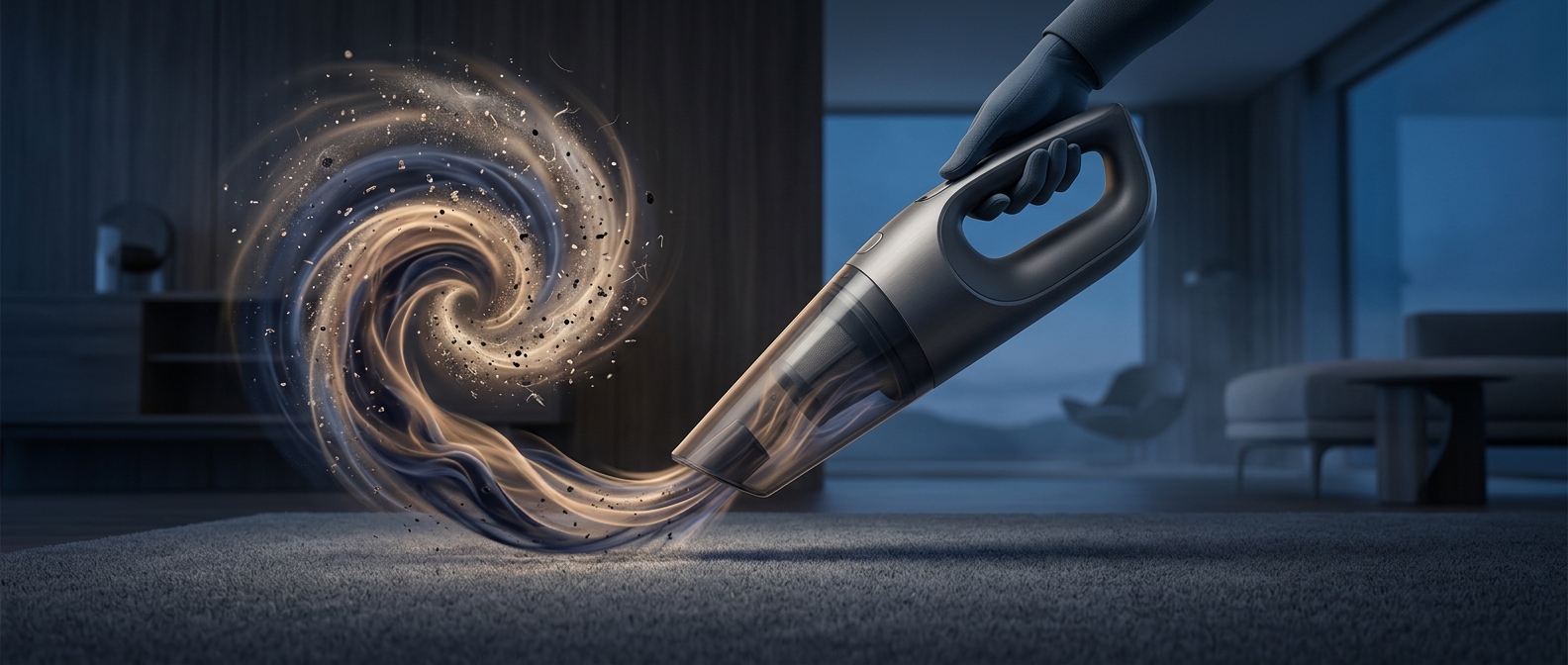
A vacuum’s roar is not a direct measure of how much dirt it picks up. The motor and moving air can make plenty of noise even when little useful airflow reaches the carpet. What matters at the floor is whether the machine can create a pressure difference and keep air flowing through the nozzle, carrying loosened dust into the bin or bag.
Noise and Pickup Can Come Apart
Inside the vacuum, a fan draws air through the nozzle and exhausts it elsewhere. The motor may still spin loudly if airflow is restricted downstream. A clogged filter, a packed bag, or a blockage in the hose can limit how much air moves, so the machine sounds busy while its pickup weakens. Air rushing through a narrow opening can also be noisy without moving much air overall.
The floor connection matters too. If the nozzle is held too far from the surface, or a seal is damaged, air can enter around the edges instead of sweeping across the carpet. Dust then stays put, even though the vacuum is loud. Carpet fibers may also need the brush or nozzle to loosen debris before airflow can carry it away.
What the Roar Actually Tells You
Sound mainly tells you that parts are vibrating or air is moving—not that the air is reaching the right place at the right rate. A sudden change in pitch can sometimes accompany a restriction, but loudness alone is a poor performance test. A vacuum cleans through a working path from carpet to collection bin, not through noise. If the roar is strong but pickup is weak, checking that path—from nozzle and hose to filter and bag—is more revealing than turning the machine up.