The room’s air does the pushing
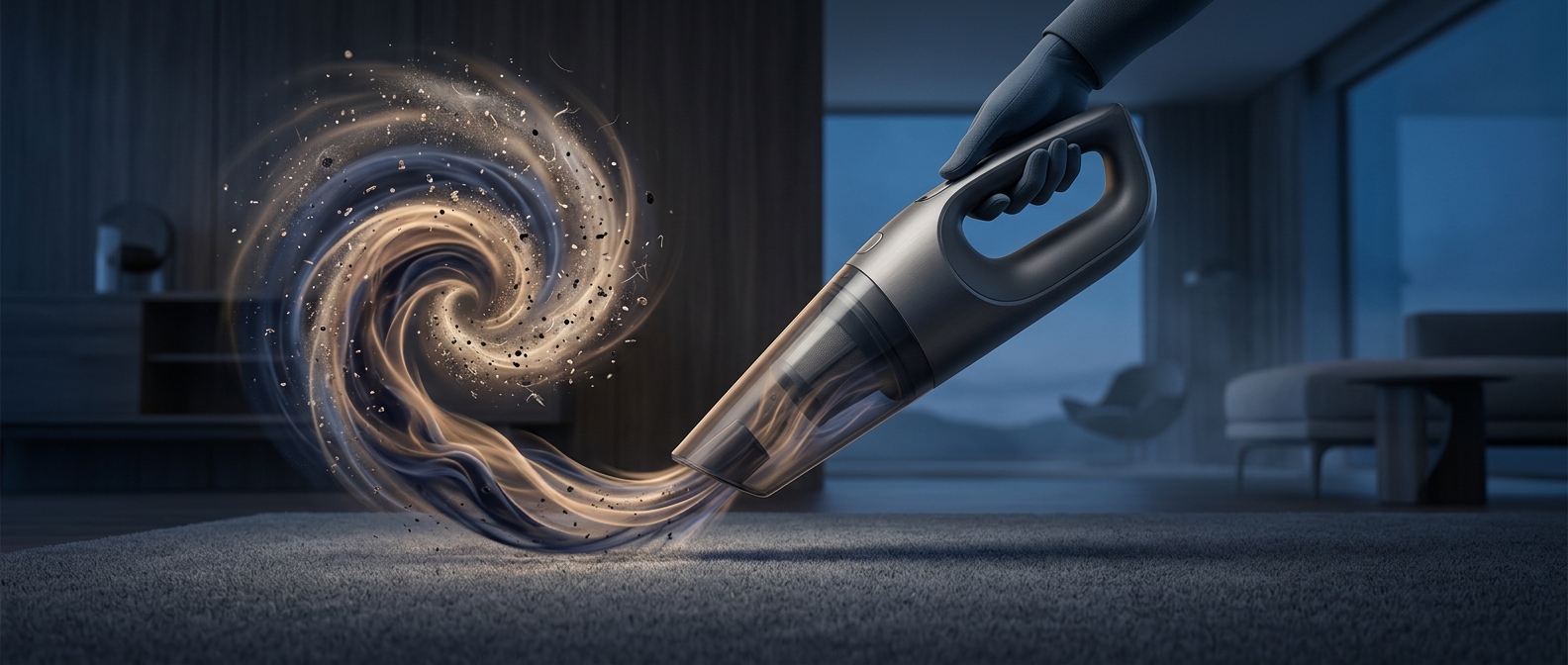
A vacuum cleaner does not reach out and pull dirt in like a hand. Its fan lowers the air pressure inside the machine and hose. Because the surrounding room remains at higher pressure, air rushes toward the lower-pressure area through the nozzle. That moving stream can carry loose dust, crumbs, and hair along with it.
The pressure difference is what makes the airflow possible; the airflow is what transports most of the debris. A nozzle’s shape and closeness to the floor help direct that stream across a surface, while brushes on some models loosen particles so they can be swept into the current.
The dirt has to leave the airstream
Once debris enters the cleaner, it must be separated from the air before that air returns to the room. In a bagged vacuum, the bag traps particles as air passes through its material. Bagless designs often spin the incoming air so heavier particles drop into a bin, then use filters to catch finer dust. The precise arrangement varies, but the basic job is the same: keep debris in the machine while letting air move through it.
That is why a full bag, dirty filter, or clogged hose can weaken cleaning. Each restricts airflow, reducing how quickly air moves through the nozzle and how effectively it carries debris away. The fan may still be running, but the stream that transports dirt has become weaker.