Why self-consciousness can disrupt an automatic skill
Walking is learned through practice, but once it becomes familiar, you do not need to plan each step. Your brain coordinates balance, timing, and movement largely outside conscious attention. That frees you to think about where you are going rather than how your legs are moving.
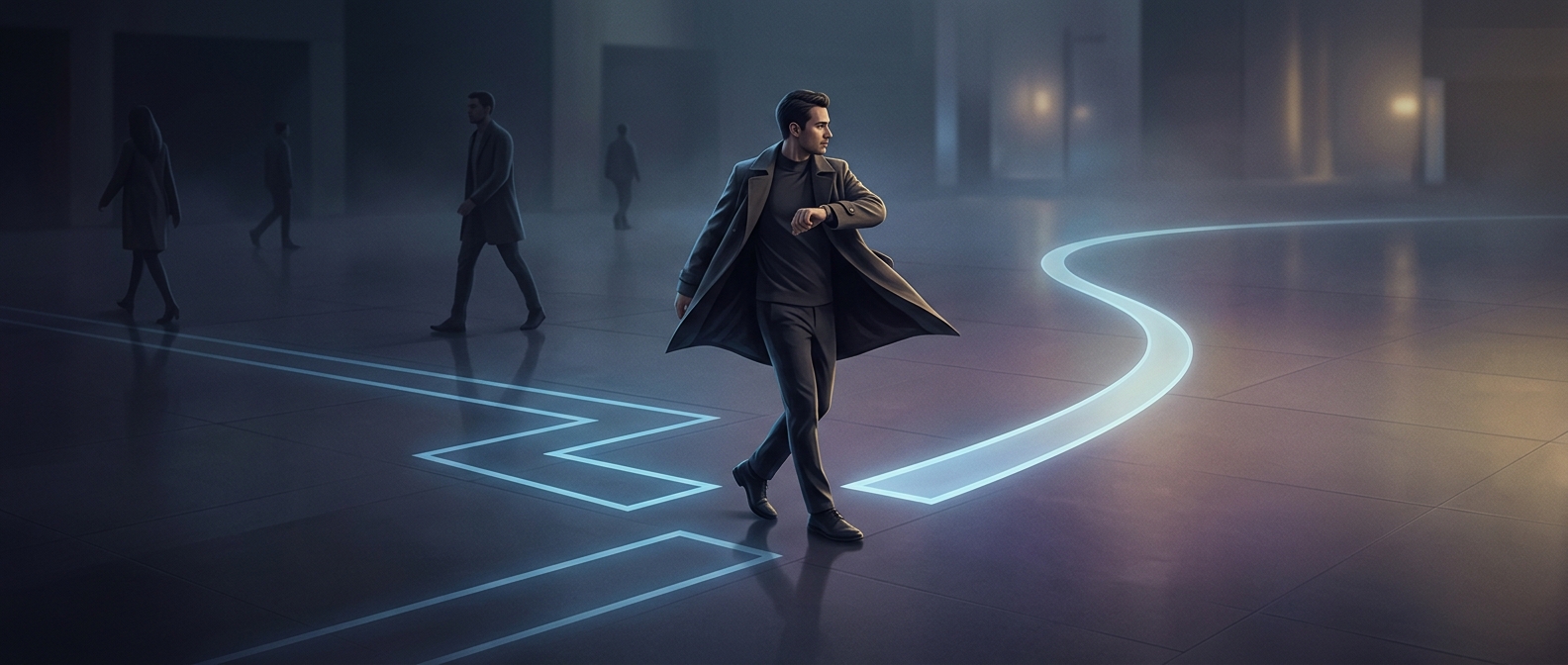
Passing a group of teenagers can change the task. If you imagine that they might be watching or judging you, attention shifts inward: you start checking your posture, stride, and arm swing. This is self-focused attention—monitoring yourself from the imagined viewpoint of an observer.
How monitoring gets in the way
Conscious thought is useful when learning a new movement or correcting a genuine problem. But a well-practiced skill depends on many small adjustments happening quickly and together. Trying to supervise each one can interrupt their smooth coordination. Instead of letting your body use its practiced rhythm, you may hesitate, stiffen, or overcorrect.
The same pattern can show up when someone suddenly notices their handwriting, becomes aware of their voice while speaking, or thinks too hard about a familiar sports move. The ability has not vanished; attention has shifted from performing it to inspecting it.
The audience may be mostly in your head
The teenagers do not have to be watching you. The possibility of being evaluated can be enough to make ordinary movement feel like a public performance. When your attention returns to your destination or the conversation you were having, walking often feels natural again—because the skill was still there, waiting to run in the background.