Why a stopped car can make a crossing feel urgent
A driver who yields does more than leave a gap in traffic: they make their attention visible. The pedestrian may see the car waiting, the driver watching, and a line of traffic forming behind it. That turns an ordinary crossing into a brief social encounter, even though the two strangers may never speak.
The hidden pressure of a small favor
Being allowed to cross can feel like receiving a favor. People often respond to favors with reciprocity—the impulse to return kindness rather than simply accept it. Here, there is no obvious way to repay the driver, so the pedestrian may offer a small substitute: move quickly, avoid lingering, and show they noticed the courtesy.
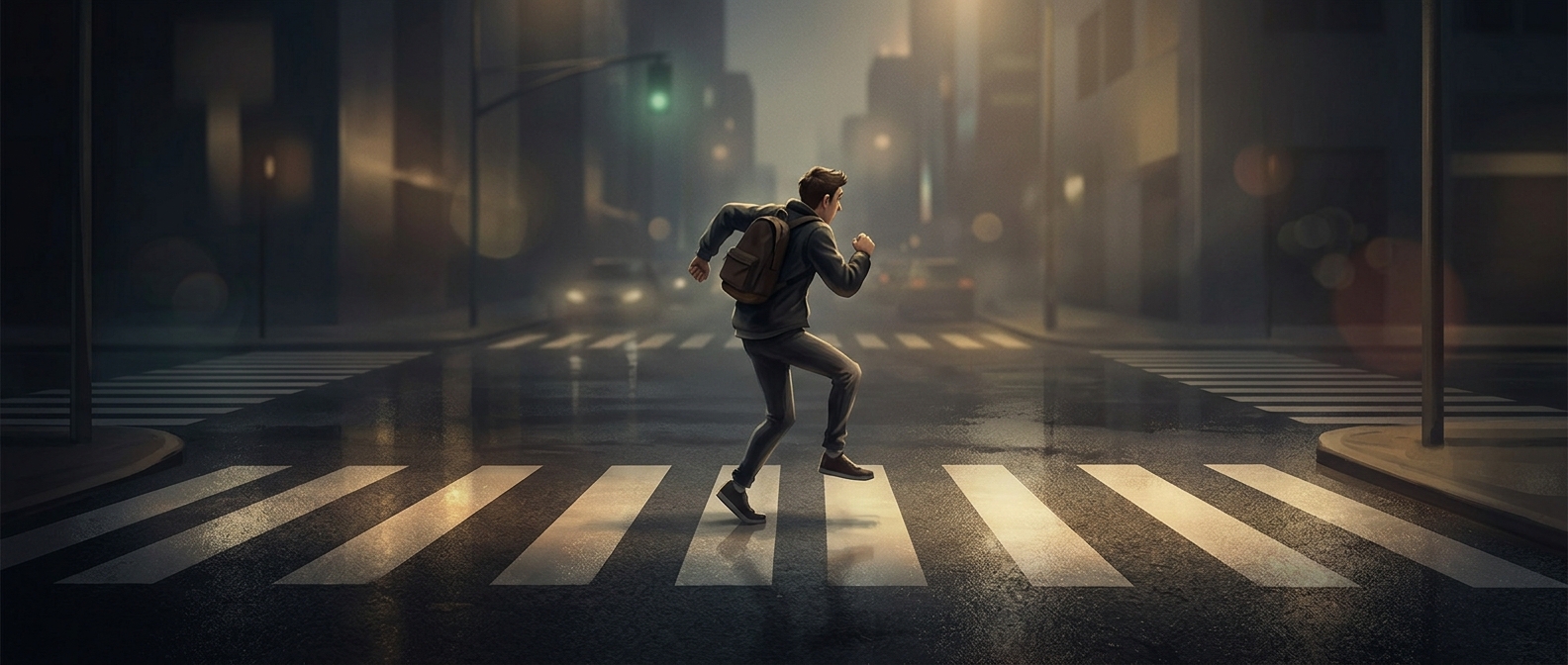
The jog also manages an awkward imbalance. The driver controls a large vehicle and is visibly waiting; the pedestrian is the reason the car cannot move. Speeding up signals, “I see you waiting, and I’ll keep this brief.” It can reassure the driver while helping the pedestrian avoid feeling like an inconvenience.
Why the gesture can look more dramatic than it is
The crossing itself may take only seconds, but being watched makes those seconds feel longer. A hurried walk or little trot is a low-cost way to ease that pressure. It does not necessarily mean the pedestrian believes they owe the driver a debt; it may simply be the quickest way to close the interaction politely.
That is why the movement can seem oddly theatrical: the pedestrian is not just getting across the road, but trying to settle a tiny social account before the car rolls on.