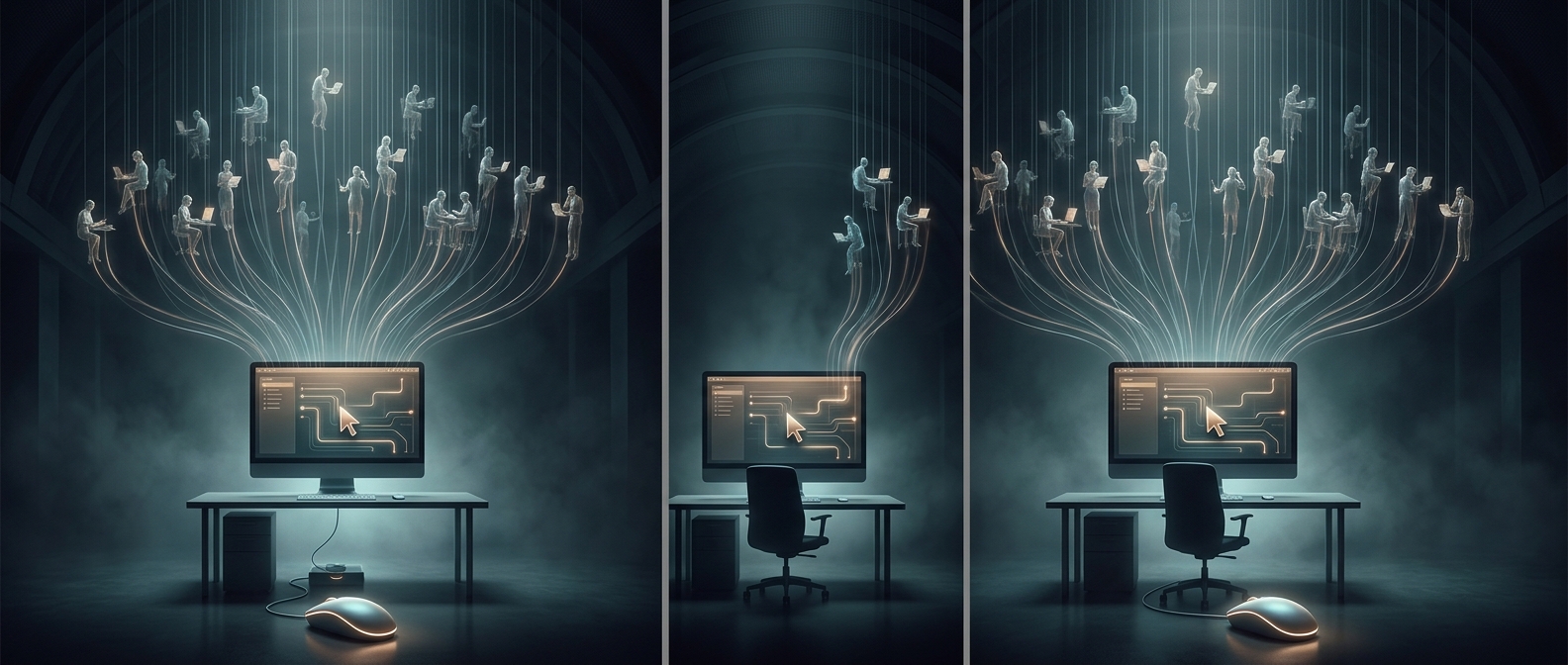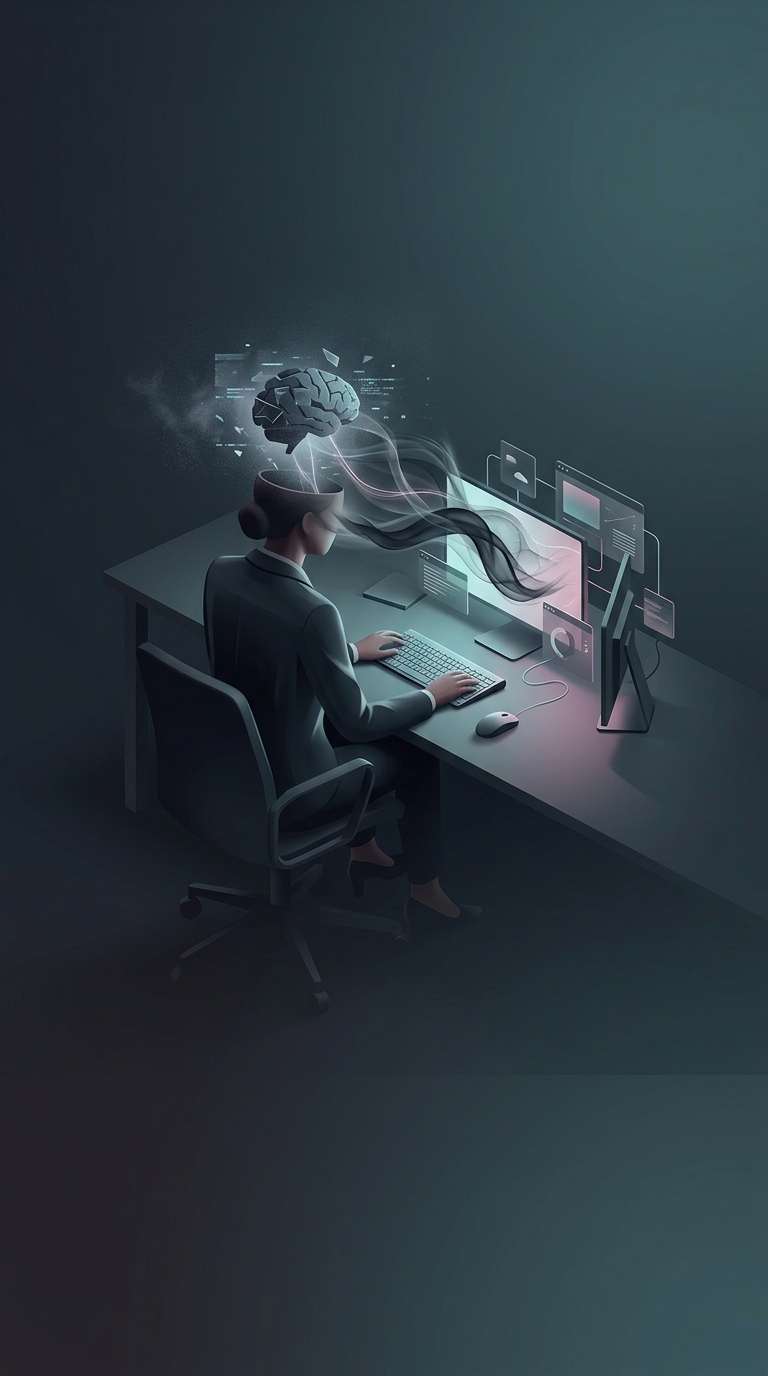
Why Constantly Checking Messages Drains Your Focus
The habit is switching between work and incoming messages—for example, pausing a report to check email, then trying to pick up the report again. The cost is not that your underlying intelligence changes. It is that, for a while, less of your attention is available for the task in front of you.
Your Mind Has to Rebuild the Task
When you turn away, your brain must hold the original goal in mind while it handles the new one. Returning to the first task means recalling what you were doing, where you left off, and what needs to happen next. Some of that context slips, so you may reread, repeat steps, or make avoidable errors.
Even a brief interruption can leave part of your attention lingering on the message. A quick check may therefore take longer than the seconds spent reading it: the real expense is the restart.
Why It Adds Up in an Office
Messages arrive throughout the day, and each one can invite another switch. The work becomes a sequence of starts and recoveries rather than one uninterrupted stretch of thought. That is especially costly for tasks that require keeping several details in mind, such as writing, planning, or analyzing a problem.
The practical implication is simple: grouping message checks into set periods can protect longer blocks of concentration. The point is not to ignore urgent communication, but to avoid making every new notification the next task your brain has to reconstruct.