Two Green Lanterns, Two Very Different Weaknesses
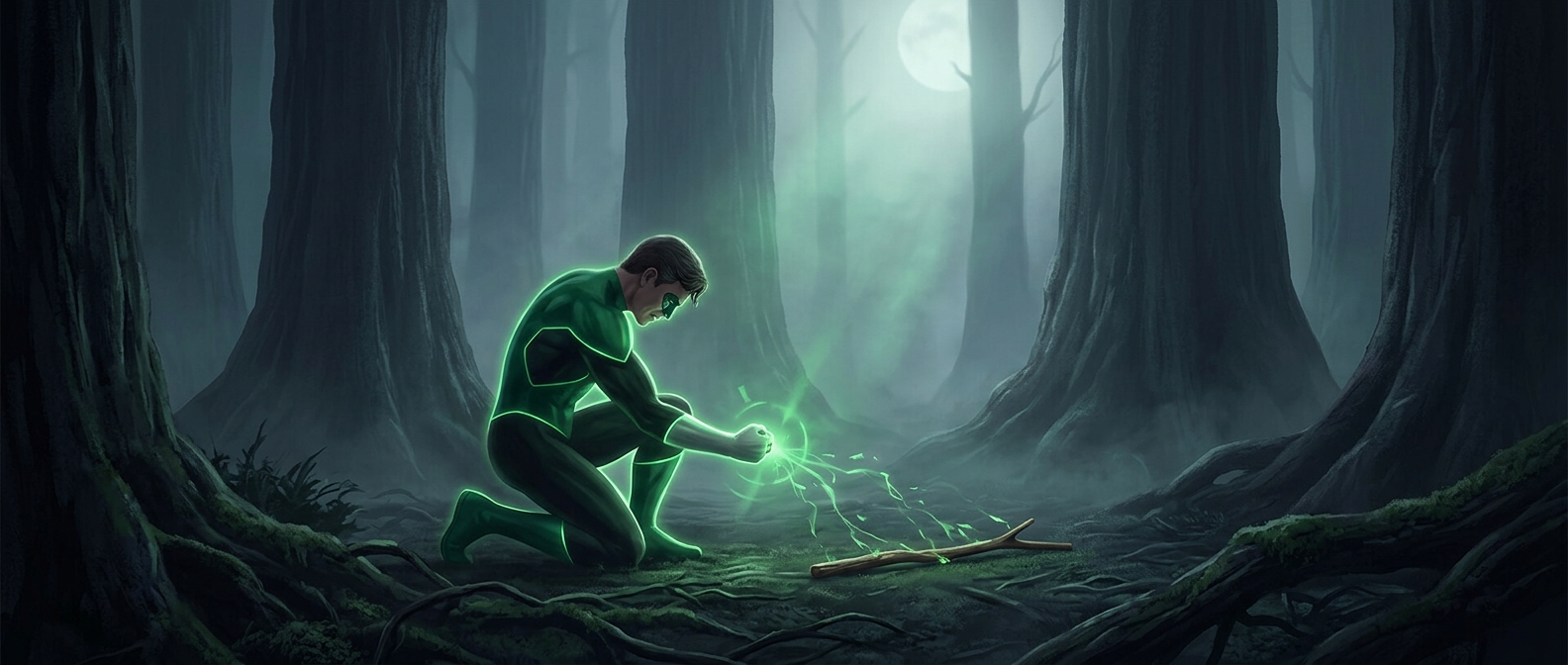
A wooden branch could threaten one Green Lantern, but not because all Green Lantern rings shared a weakness to wood. The detail belongs to Alan Scott, the original Green Lantern, whose powers came from a magical ring. Later, Hal Jordan and the Green Lantern Corps used rings with a different limitation: they could not affect the color yellow.
That distinction matters because the characters’ similar names and green costumes can make their powers seem like one continuous system. In fact, their rings came from separate stories and operated by different rules.
Why Alan Scott’s Ring Couldn’t Affect Wood
Alan Scott’s ring was magical rather than the product of the later Corps’ science-fiction mythology. Its power had a specific blind spot: it could not affect wood. A wooden object could therefore bypass the ring’s usual protection or resist an attack created by it, making an ordinary stick an unexpectedly useful weapon against a hero who could otherwise wield extraordinary power.
The weakness also gave writers a simple way to make a powerful character vulnerable. Instead of inventing a stronger villain or a more elaborate device, a story could turn an everyday material into a meaningful obstacle.
The Yellow Weakness Was a Separate Rule
The familiar yellow vulnerability belonged to later Green Lantern stories. In the ring’s early mythology, a magical impurity made its power ineffective against yellow. That restriction shaped how Green Lantern could use the ring: a construct might work against many threats, but the color of the target could stop it.
So the wooden-stick detail is not a loophole in the yellow rule. It comes from a different Green Lantern and a different set of fictional rules. The surprising counter works precisely because the stories gave these heroes’ rings distinct origins—and distinct limits.