How Sesame Street made its two worlds meet
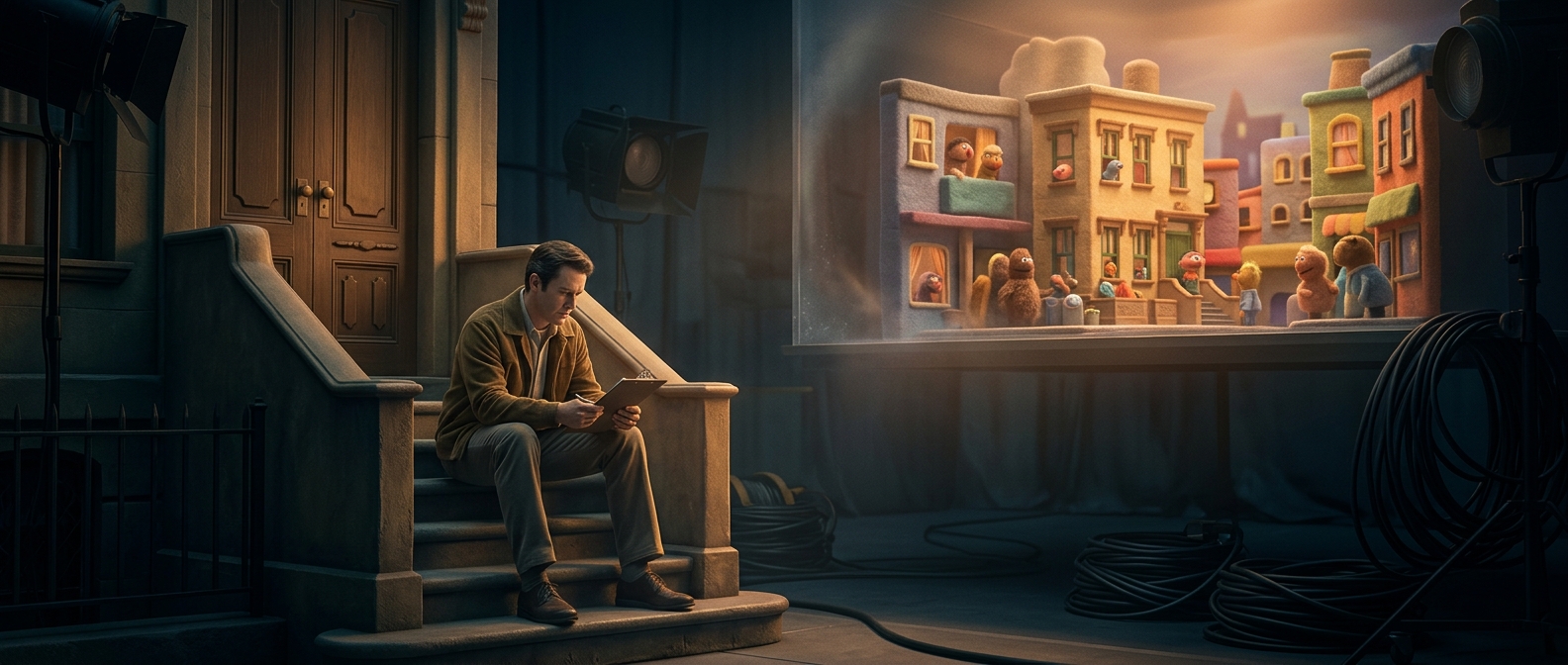
The original plan treated Sesame Street’s human neighborhood and its Muppet sketches as separate kinds of television. That reflected a concern among child-development experts: very young viewers might not understand what it meant for a puppet and a person to share the same world. The distinction seemed safer if live-action scenes stayed realistic and the Muppets appeared in their own segments.
But a program designed to hold children’s attention had to contend with what they actually watched. In audience tests, children lost interest during scenes featuring only people. The problem wasn’t simply that the material was educational; the show’s human scenes lacked the visual energy and comic unpredictability that made the Muppet segments compelling.
Big Bird became the bridge
Jim Henson argued for letting Big Bird interact with the human cast. Rather than asking children to switch between a realistic neighborhood and a separate puppet show, the program could make both part of one place. Big Bird’s size, curiosity, and childlike point of view also gave young viewers a character who could ask questions and react to the adults around him.
That choice changed how the show could teach. A letter, word, or everyday problem could arise in conversation between characters, not just appear in a self-contained sketch. The Muppets could draw children into the scene, while the human cast gave the setting continuity and recognizable social situations.
The compromise was not to make the puppets seem human in every respect. It was to trust children to follow a world with different kinds of characters—and to use that world to keep them watching long enough to learn.