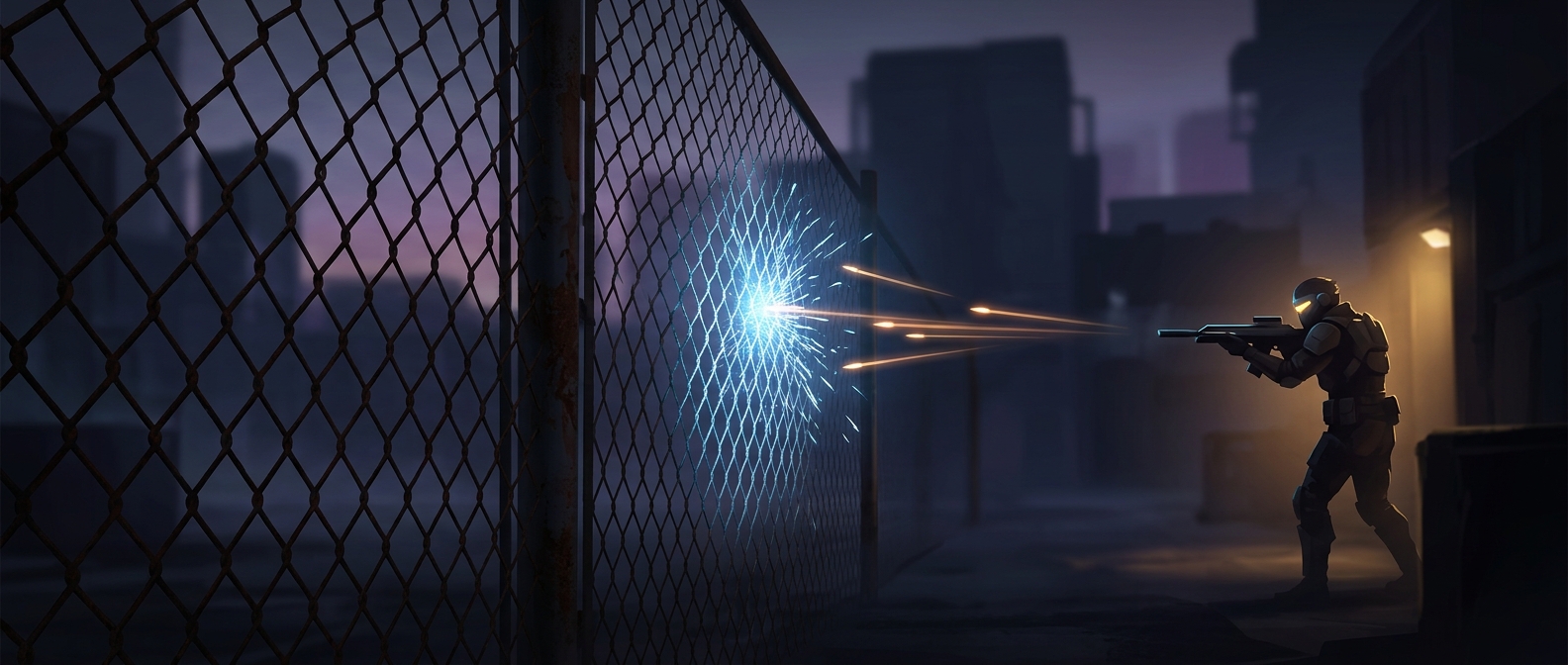
Why a Fence Can Deflect a Bullet
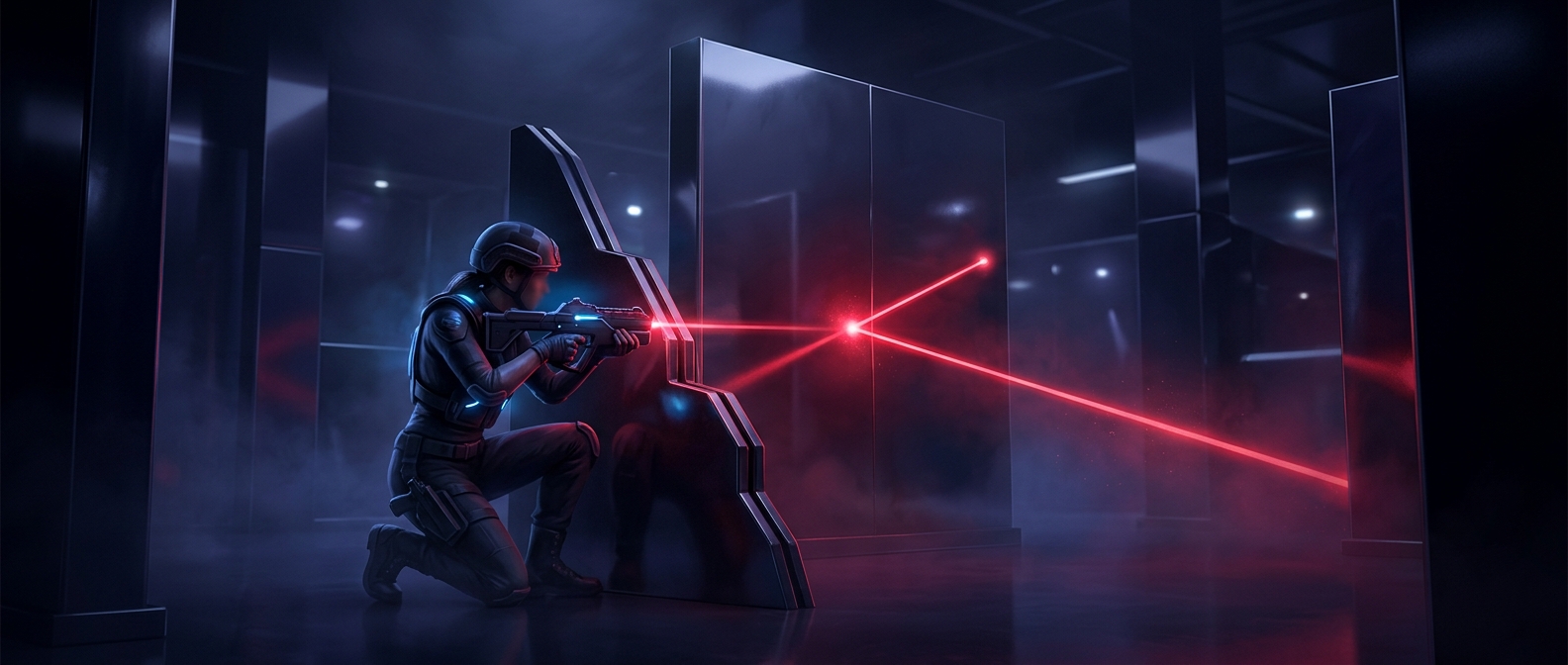
A chain-link fence looks like a grid of open space, but its wires can still intercept a bullet. The outcome depends on the exact collision: a bullet that clips a wire at an angle may be pushed off its original path, while one that meets a wire more directly may deform, break apart, or pass through after damaging it. “Ricochet” describes a change in direction; it does not mean the bullet bounces away intact like a ball.
The wire’s small size makes the result hard to predict from a glance. A bullet aimed through a diamond-shaped opening might instead graze one of its edges, and even a slight change in impact angle can alter where it goes next. The fence is therefore neither a solid barrier nor a guaranteed clear shot.
The Design Problem for Games
For a game, modeling this faithfully means deciding whether the fence is treated as a solid obstacle, a set of individual wires, or a simplified surface that can deflect shots. Those choices affect what players can see and what they can safely shoot through. A solid collision surface is easier to implement but can make the fence unrealistically protective; ignoring it altogether removes the chance of a shot being knocked off course.
A more detailed simulation would need to account for the shot’s angle and the wire it strikes, among other factors. Games often simplify such interactions for predictable play, but the underlying physical detail explains why a fence that appears full of gaps can still make a shot miss its intended line.