The cabinet turned a simple shape into a character
On screen, Pac-Man was a compact yellow circle with a wedge-shaped mouth. The design’s pizza-like simplicity made it readable as a tiny animated sprite: the missing slice could open and close to suggest chomping. But Midway’s North American arcade cabinet art had a different job. It presented the game on a full-size machine, where a more elaborate illustration could make the character look like a lively mascot.
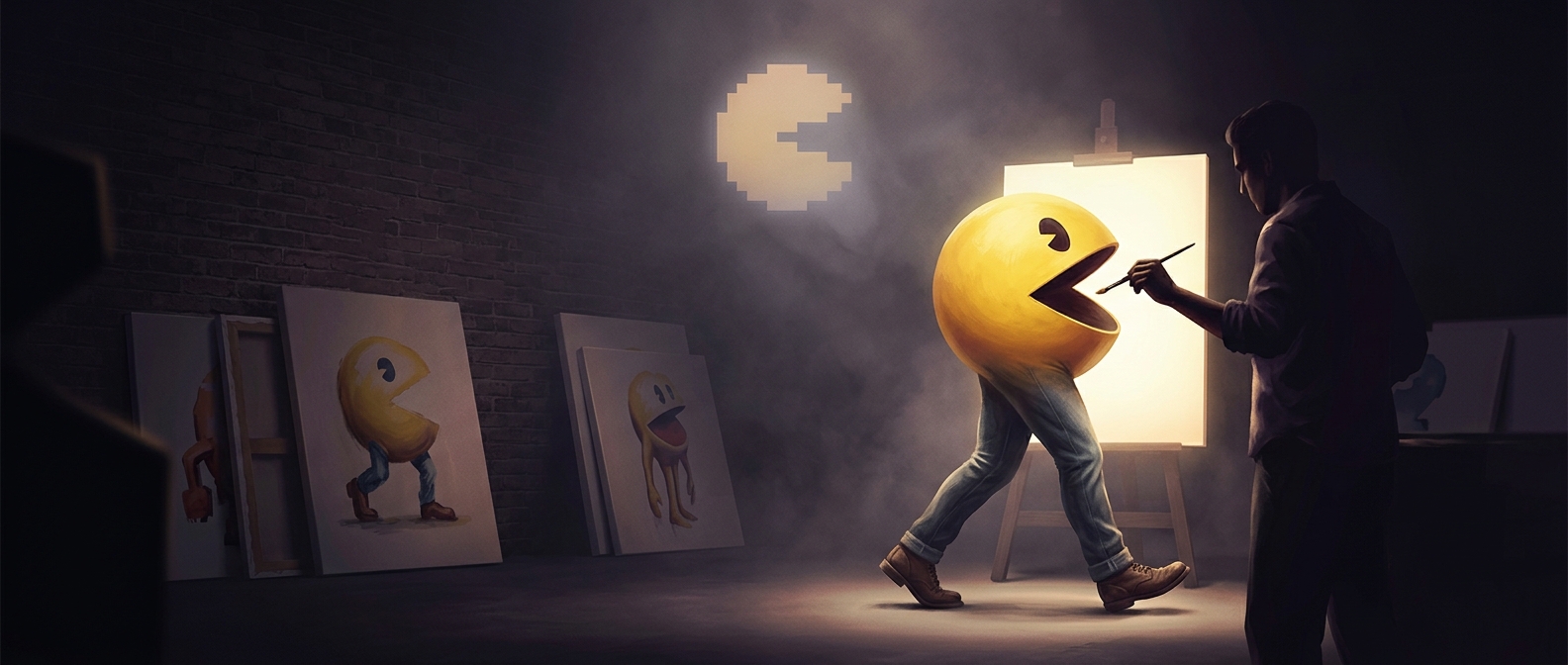
In that translation, artists misread the round figure. They gave Pac-Man long, muscular legs and red boots, turning the simple shape into a comic, athletic figure. The legs belonged to the cabinet artwork, not to the Pac-Man players controlled in the game.
A pizza wedge became a body
The gap in Pac-Man’s outline was meant to evoke a slice missing from a pizza. Once the character was treated as a person rather than a moving circle, the same design invited a very different interpretation: a mouth on a body that could run. The boots and oversized legs made that interpretation unmistakable—and created a striking contrast with the nearly legless character on screen.
That mismatch is part of the game’s visual history: the cabinet sold an energetic cartoon hero, while the gameplay kept Pac-Man’s design spare enough to read instantly in motion.