One flight can create value in two places
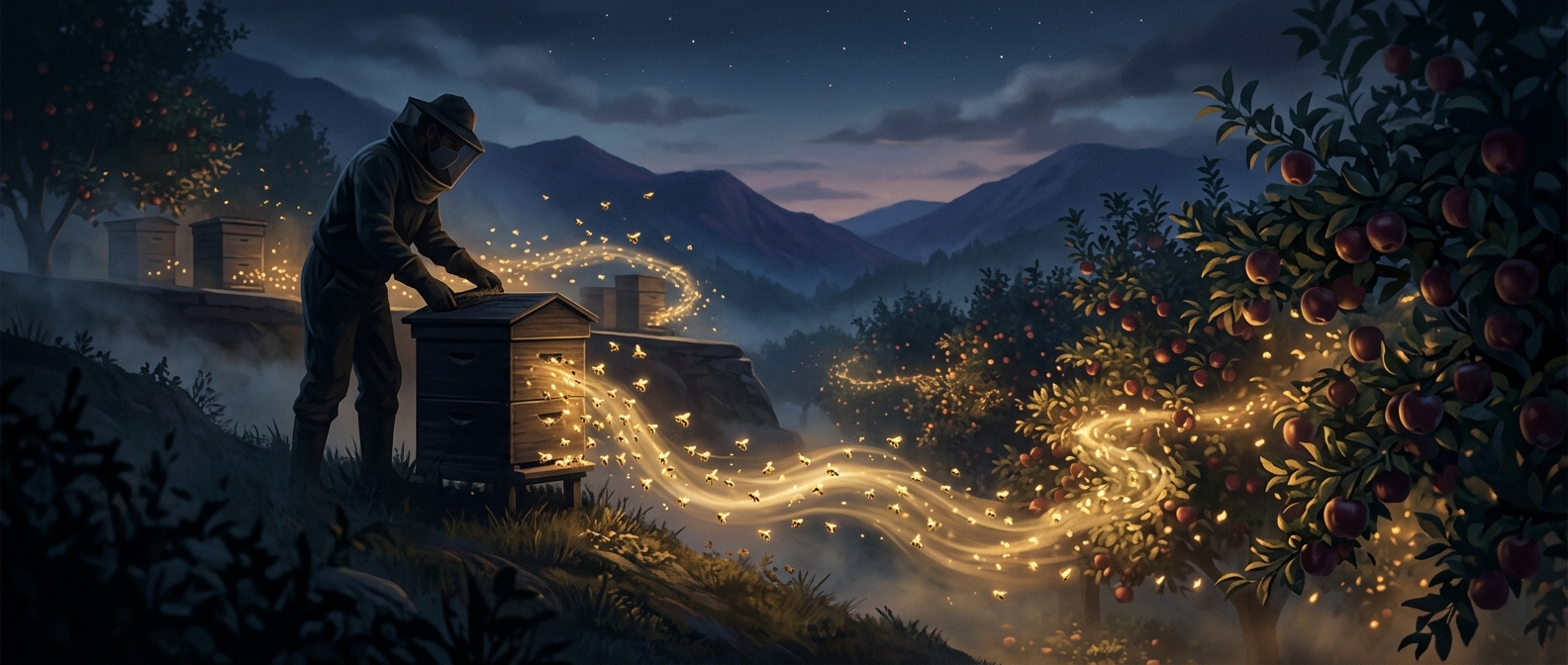
An apple blossom is not just a source of nectar and pollen for a bee. It is also the first step toward a fruit. As bees move among flowers, pollen can stick to their bodies and be carried to another blossom. When compatible pollen reaches the flower’s female parts, fertilization can begin, helping the tree develop an apple.
That makes a foraging bee an unpaid worker from the orchard owner’s point of view. The beekeeper’s business is supported by honey, while the orchard may benefit from the same trips without arranging a pollination contract. The two businesses gain different products from one shared activity: honey for one, and potentially a better-set crop for the other.
A useful coincidence, not a guaranteed harvest
The benefit depends on timing and place. Bees need to be active while the trees are flowering, and the orchard must be close enough for them to visit. Apple varieties also differ in whether they can fertilize themselves; many need pollen from another compatible variety. In those cases, bee movement between trees helps pollen reach where it can do its work.
Pollination is only one link in the harvest. Weather, frost, tree health, and later growing conditions also affect how much fruit develops. So nearby bees can improve the odds of a successful crop, but their presence does not guarantee one.
Why the arrangement matters economically
The orchard receives a benefit without paying directly for it, while the beekeeper can earn from honey without needing the orchard as a customer. That is a small example of an unpriced benefit: an activity undertaken for one purpose also helps someone else, even when no money changes hands between them.
The practical implication is easy to miss: a hive’s value can extend beyond the jar of honey. During bloom, its bees may be doing useful work for a neighboring farm simply by following food from flower to flower.