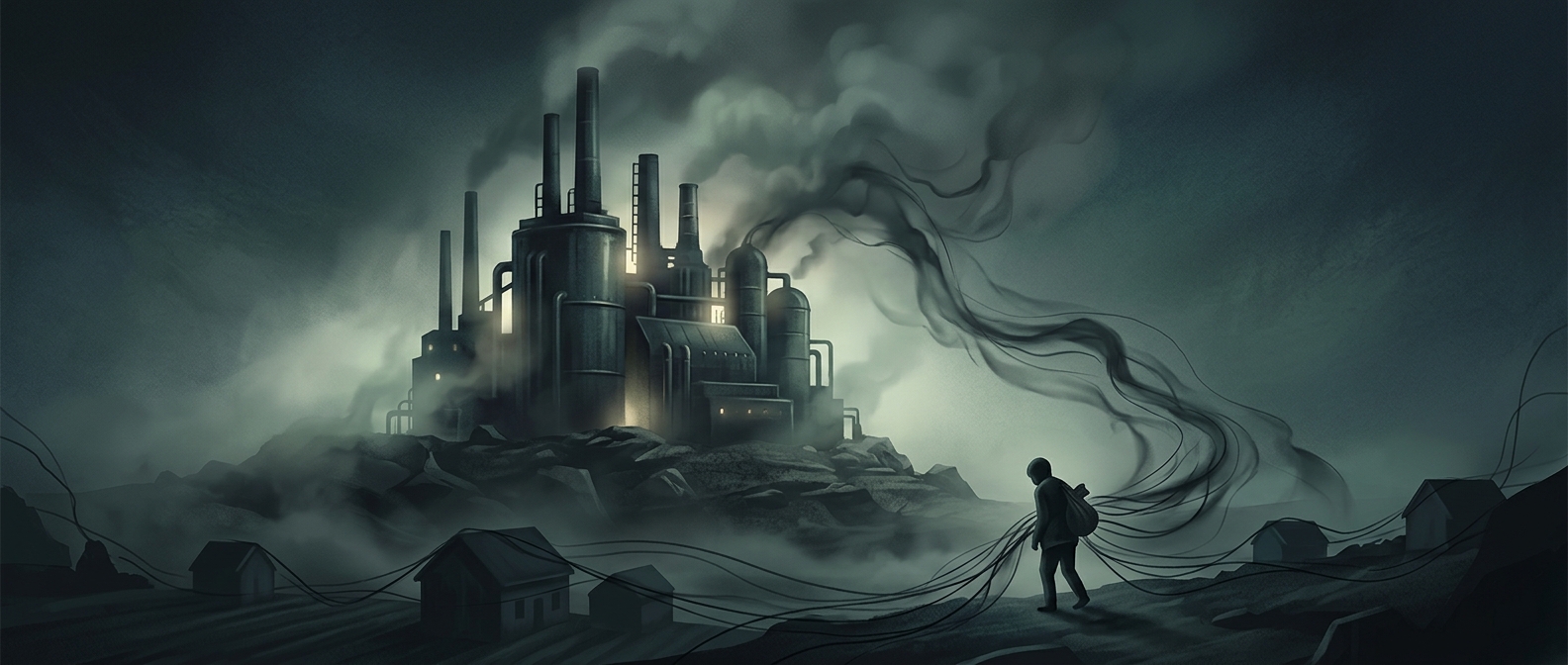
When the Price Leaves Out the Damage
A factory’s costs do not end at its property line. If it can discharge waste into a river without paying for the resulting harm, its accounts may show savings that are real for the business but incomplete for society. Economists call this an external cost: a cost created by an activity but borne by people who were not part of the transaction.
That missing cost can distort decisions. A factory deciding how to handle waste compares the expense of treatment with the expense of doing nothing. When downstream harm is not charged to the factory, dumping can look cheaper even if the combined cost to everyone is higher. The market price of the factory’s goods then reflects only part of what producing them consumes.
How the Bill Travels Downstream
The damage may arrive as a collection of burdens rather than one invoice. Residents can face degraded water, lost use of the river, or additional costs to protect their health and property. Some harms are difficult to measure or repair, and the people affected may have little influence over the factory’s decision. The savings stay concentrated with the producer; the costs are spread among neighbors and communities.
This is why pollution is not merely a dispute about individual behavior. It is also an incentive problem: whoever can avoid paying for harm has a reason to produce too much of it. Rules that limit discharges, require cleanup, or make polluters pay can bring some of that hidden cost back into the factory’s decision. The practical challenge is making the responsibility match the damage—so the cheapest option for one business is not simply the one that sends the bill downstream.