A sky arranged as a sacred image
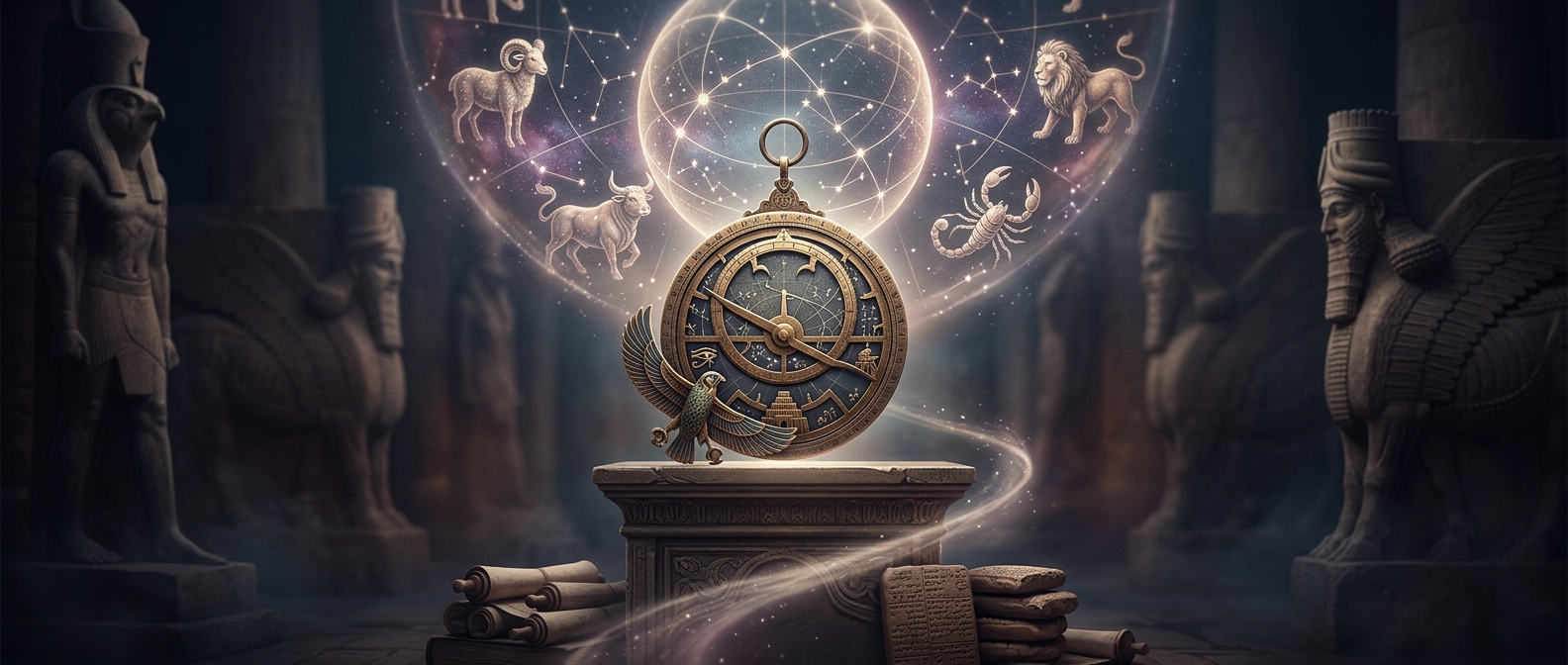
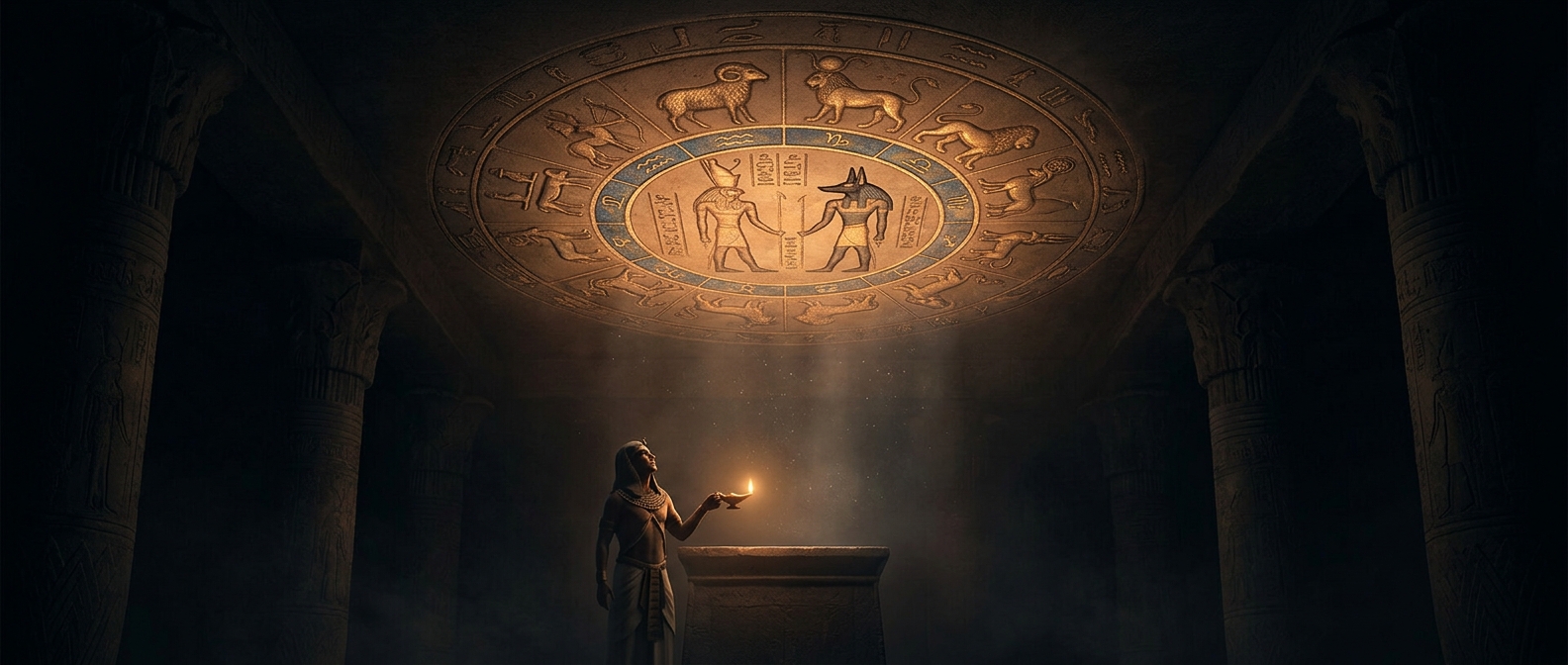
The Dendera Zodiac is more than a ring of familiar star signs. Its circular composition gathers different ways of describing the heavens into one ceiling image: the twelve-part zodiac associated with Greek astronomy, Egyptian star groups called decans, and figures linked to other constellations and planets. The decans—stars or star groups used to mark intervals through the night and year—gave the image an Egyptian framework alongside its imported zodiac signs.
That mixture reflects a world in which astronomical observation, calendars, and religious meaning overlapped. The zodiac offered a way to divide the sky into recurring regions; Egyptian figures and divine associations placed that system within local ideas about cosmic order. The relief is therefore not simply a portrait of one night’s sky, nor a modern chart with precise coordinates. It is a symbolic arrangement of celestial knowledge.
Why the circle matters
A circular design makes the heavens appear ordered and continuous, with no obvious beginning or edge. Within that frame, the figures can be read as parts of a whole rather than as isolated decorations. The ceiling setting strengthens the effect: worshippers looking upward encountered a pictured cosmos above the temple’s sacred space.
The relief also preserves a visible record of cultural exchange. Greek zodiac signs had traveled from Babylonian traditions, while Egyptian artists and religious ideas shaped how celestial figures appeared in the temple. The result is not a clean replacement of one system by another, but a layered image in which several traditions share the same sky.