Why the image feels so charged
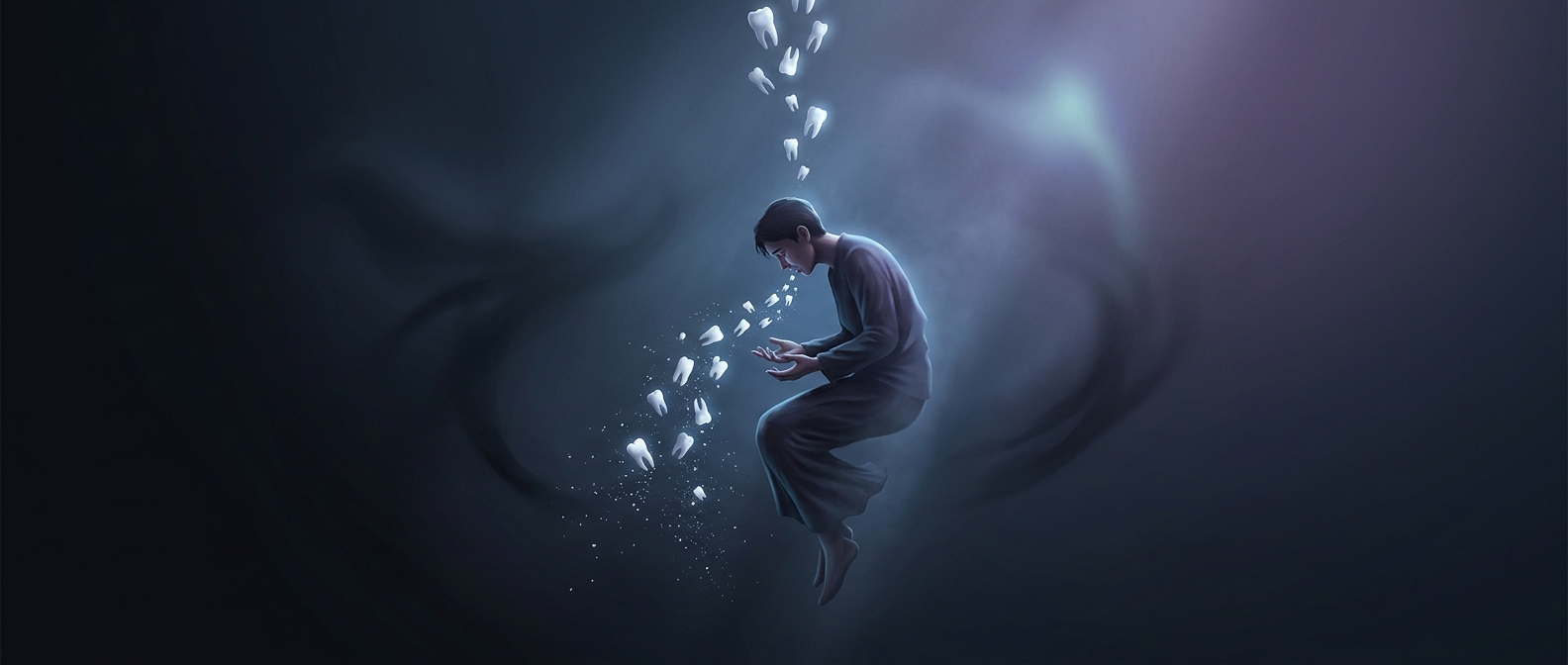
Dreams often borrow from familiar concerns and sensations, then combine them in ways that make an emotion feel concrete. Teeth are tied to eating, speaking, and how we present ourselves, so a dream of losing them can turn a less tangible worry—such as embarrassment or uncertainty—into a scene of visible change. The image does not have one universal meaning; its significance depends on what is happening in the dream and in the dreamer’s life.
Look for the feeling, not a fixed symbol
A useful question is not “What do falling teeth always mean?” but “What did it feel like to lose them?” Panic about being seen may point toward social exposure; frustration at being unable to speak may echo a situation where someone feels unheard. If the dream feels oddly matter-of-fact, it may connect to change without the same sense of threat.
This is a way to explore associations, not a diagnostic test. A single dream cannot establish what someone is worried about, and a dream dictionary cannot supply a reliable answer on its own. Recent experiences, personal memories, and even an ordinary bodily sensation during sleep can shape the scene.
What makes the dream worth noticing
The dream can be a prompt to identify a vulnerability that has been hard to name while awake. Paying attention to the emotion and its setting—who is present, whether anyone notices, and what the dreamer tries to do—often offers more useful clues than treating the teeth as a coded prediction. The revealing detail may be less the loss itself than the moment the dreamer realizes other people can see it.