The View From Inside Big Bird’s Suit
Big Bird’s head made the character readable to viewers, but it also made ordinary sightlines difficult for the person inside. To work the beak, Caroll Spinney raised an arm into the puppet’s head. That left his view of the set obstructed just when he needed to know where he was in relation to cameras, scenery, and other performers.
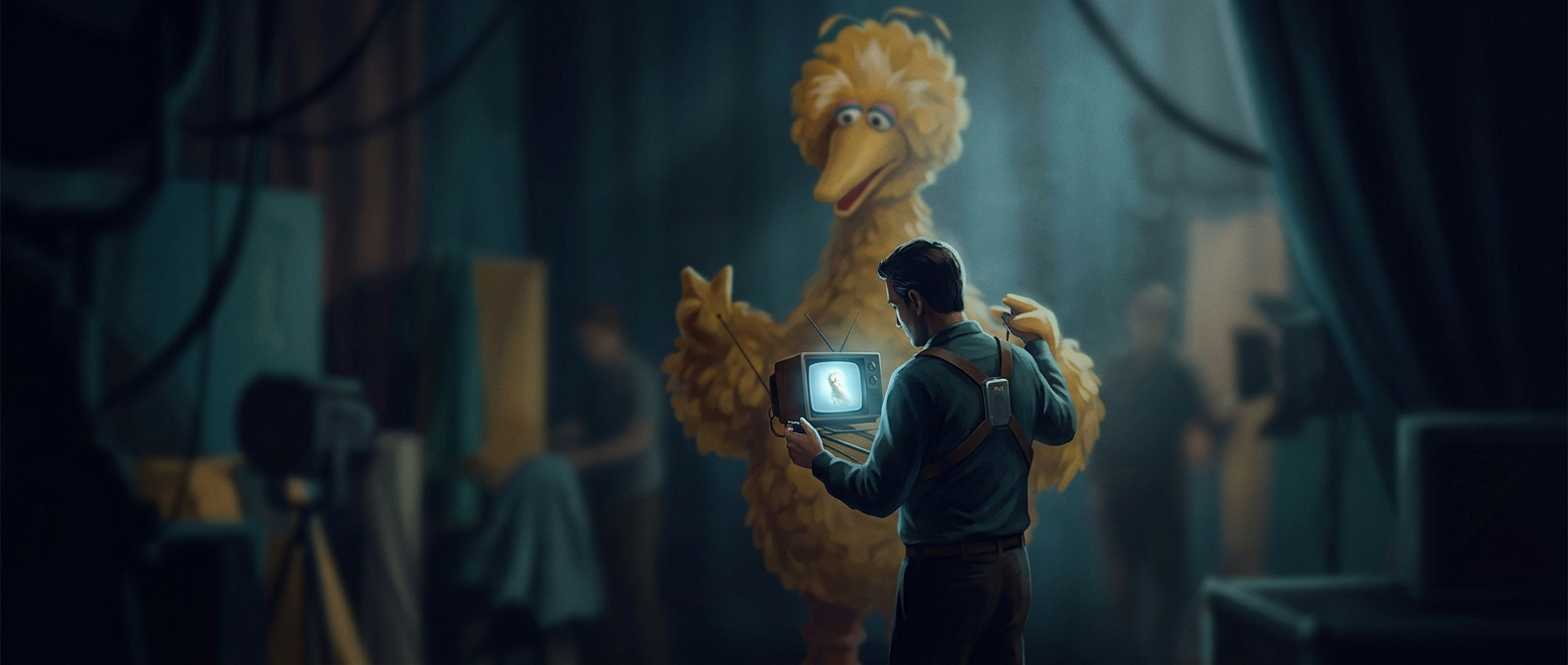
The small monitor solved a practical stage problem: it gave Spinney a live picture of what the camera was seeing. That distinction mattered. A performer can be standing in the right place on the set yet appear badly framed on television; the camera’s angle and the puppet’s position determine what the audience actually sees. Watching the feed let him adjust Big Bird’s placement without needing a clear view past the raised arm.
A Camera Became Part of the Costume
The monitor was not there to help Spinney see the physical room as a person normally would. It supplied a camera’s-eye view—a useful substitute when the costume and the puppet’s controls limited his own. In effect, the suit turned a television image into a navigation aid.
That arrangement also illustrates a broader challenge of performing a large character: the puppet must remain expressive and properly framed while its operator works inside it, often with restricted vision. The tiny screen helped connect those two perspectives. Big Bird could move through the set as a character, while Spinney kept track of the version of Big Bird the audience would see.