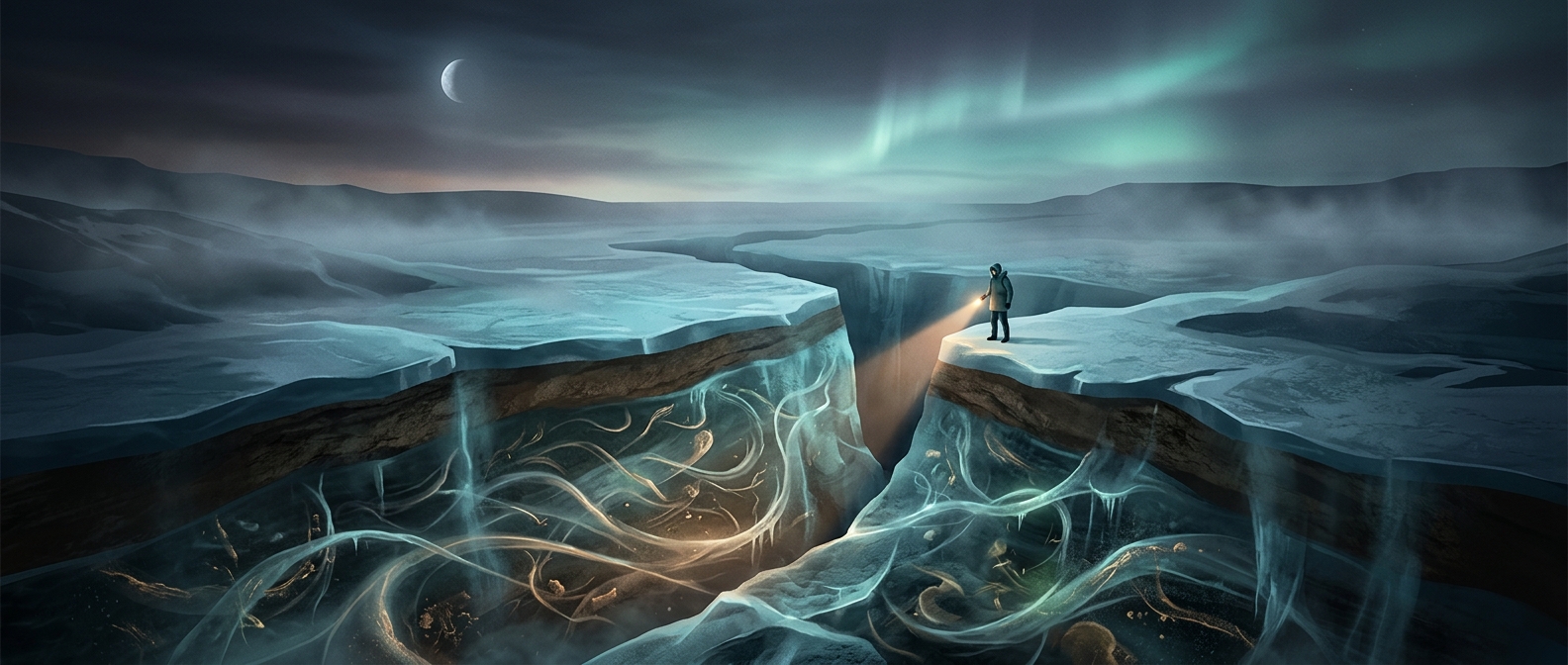
How Batagaika’s thawing ground releases carbon
Batagaika, in northeastern Siberia, is a thermokarst megaslump: a broad collapse in ground that was once stabilized by permafrost. Permafrost is soil or rock that stays frozen for at least two consecutive years. At Batagaika, warming and erosion have helped thaw ice-rich ground; as the buried ice melts, the soil loses support and slumps downhill, exposing more frozen material.
That newly exposed soil contains ancient plant matter accumulated over thousands of years. Once it thaws, microbes can break the organic material down. In places with oxygen, this process mainly produces carbon dioxide; in waterlogged, oxygen-poor conditions, it can also produce methane. These gases are not simply a store of methane escaping from intact carcasses. Animal remains may be visible in the exposed layers, but the main climate concern is the much larger pool of frozen organic soil.
Why the slump can keep growing
The exposed ground is vulnerable to further thaw and erosion. Meltwater and rainfall carry loosened sediment away, while the newly revealed permafrost can thaw in turn. This creates a reinforcing cycle: warming helps open the slump, and the slump exposes carbon-bearing ground to conditions that allow some of its carbon to return to the atmosphere.
The process is a local example of a broader climate feedback, not a single crater capable of warming the entire planet on its own. The timing and amount of carbon released depend on how much soil thaws and whether it decomposes in oxygen-rich or waterlogged conditions. Batagaika’s striking scar in the landscape makes that normally hidden process visible: ground that looked permanent can collapse, layer by layer, as its frozen contents thaw.