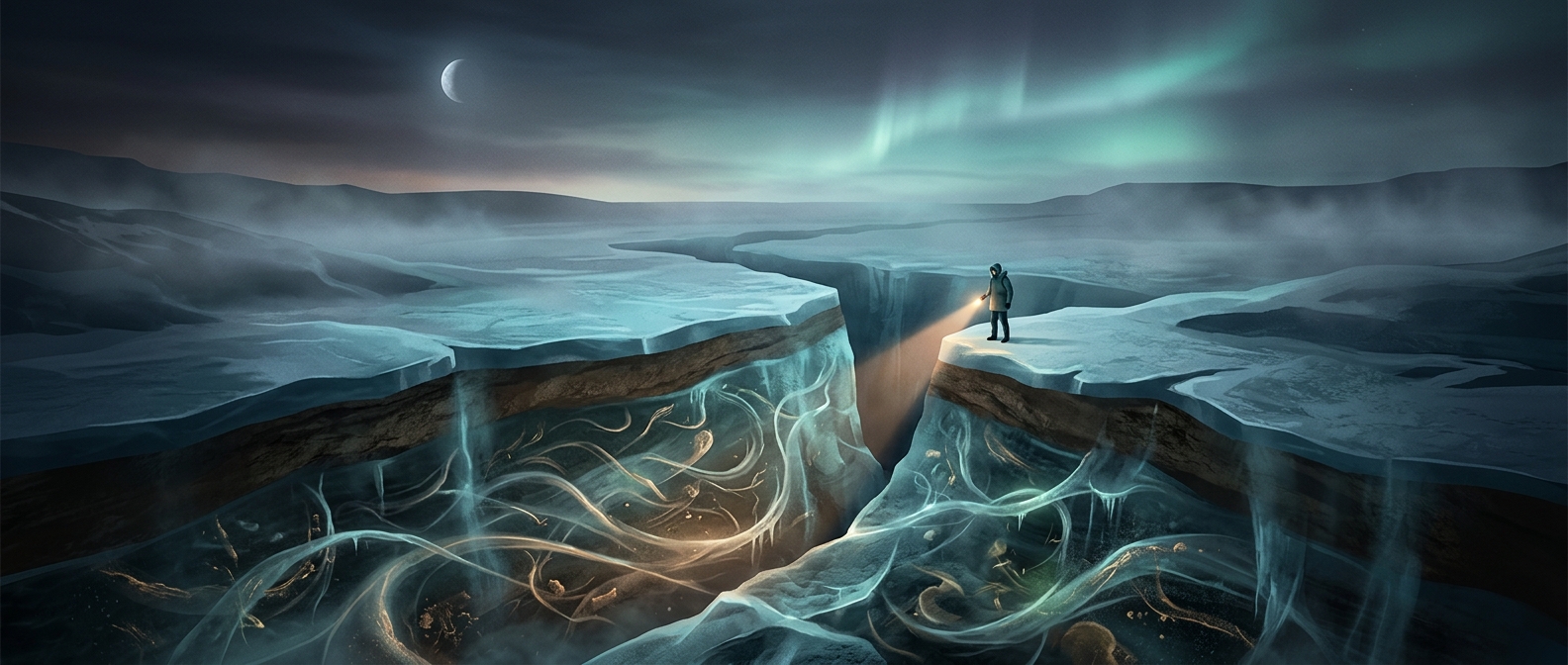
How frozen ground became a carbon store
Permafrost is ground that remains frozen for at least two consecutive years. In Arctic regions, plants grow during brief summers, then die and add organic material to the soil. Cold conditions slow the organisms that would otherwise decompose it, allowing some plant remains to accumulate over thousands of years.
The frozen layer usually lies beneath a surface zone that thaws each summer and refreezes in winter. As the climate warms, that seasonal thaw can deepen, exposing previously frozen material to microbes. The change is not simply a switch from storage to release: it depends on how the ground shifts and where water collects.
Thaw changes the landscape—and the emissions
When ice-rich ground melts, the surface can sink and form waterlogged hollows, or drain and become drier. That helps determine how much oxygen reaches decomposing material. With more oxygen, microbes tend to produce carbon dioxide; in oxygen-poor wet ground, they can also produce methane, a potent heat-trapping gas.
This creates a climate feedback: warming can thaw more soil, and the gases released by decomposition can contribute to further warming. The response varies from place to place, because thaw, drainage, and plant growth differ across the Arctic. A patch of newly wet ground and a dried-out slope may hold similar old carbon, yet release it in different forms.