How a glacier can hide a lake
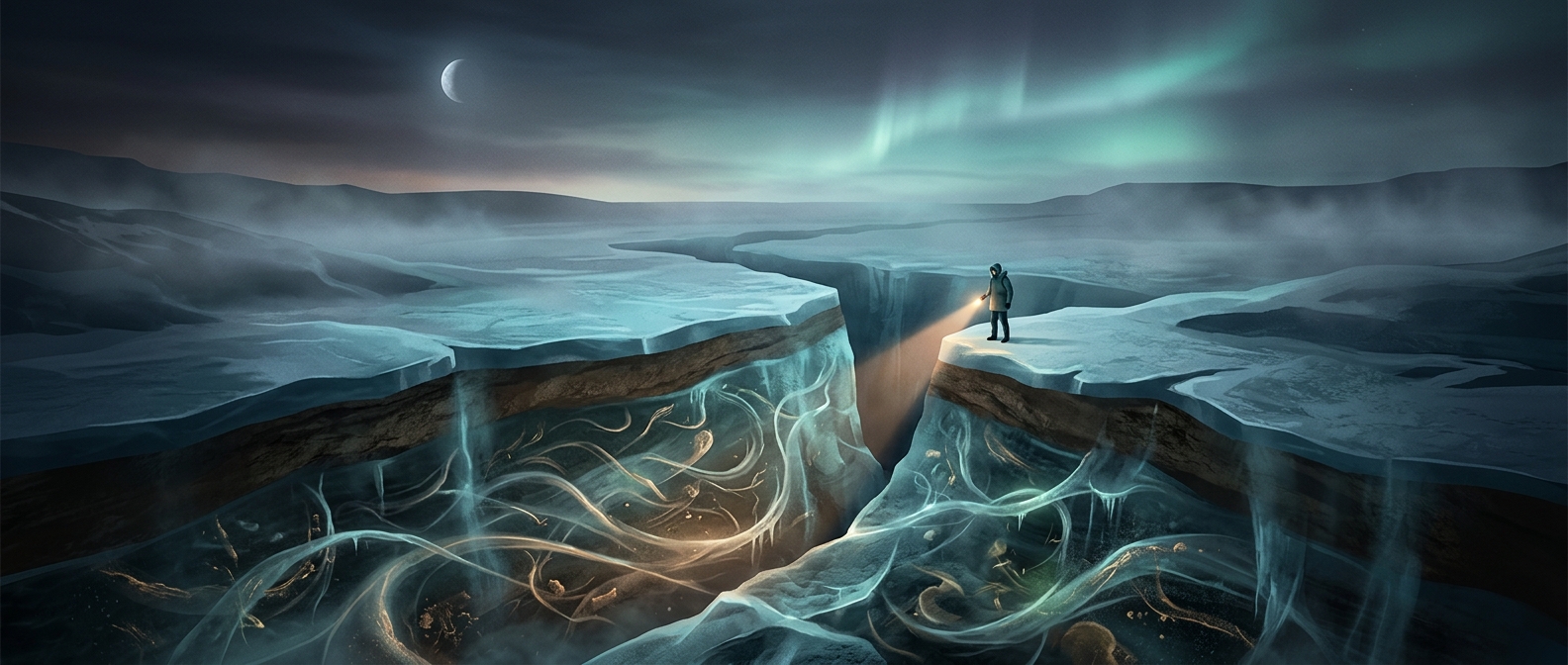
A glacier’s surface may look solid and still, but its base can be a different world. Where the ice meets the ground, heat rising from Earth’s interior can melt the lowest layer. Friction as ice moves over rough ground adds some heat, too. The resulting water can gather in low spots in the bedrock, beneath a ceiling of ice.
Why the water does not simply freeze
The ice above exerts enormous pressure on water at the glacier’s base. Pressure lowers water’s freezing point slightly, making it easier for meltwater to remain liquid even in a very cold setting. The pressure does not warm the water by itself; rather, it changes the conditions under which ice and liquid water can coexist. Heat from below and pressure from above work together to sustain the hidden reservoir.
The shape of the ground matters as well. A depression in the bedrock can hold water much as a basin does, while surrounding higher ground helps contain it. The glacier therefore acts as both roof and weight: it covers the lake and presses down on it.
A lake that can alter the glacier
These lakes are not necessarily permanent, sealed pools. Water can move through cracks and channels beneath the ice, and a lake may fill or drain as conditions change. When water spreads along the glacier’s base, it can reduce friction between ice and bedrock. That can let the ice slide faster, linking a hidden body of water to changes in the glacier’s movement.
The striking consequence is that a glacier’s underside can be active and wet while its top remains an unbroken expanse of ice. The lake is hidden not by a separate roof, but by the glacier itself.