Familiar faces made the crisis feel immediate
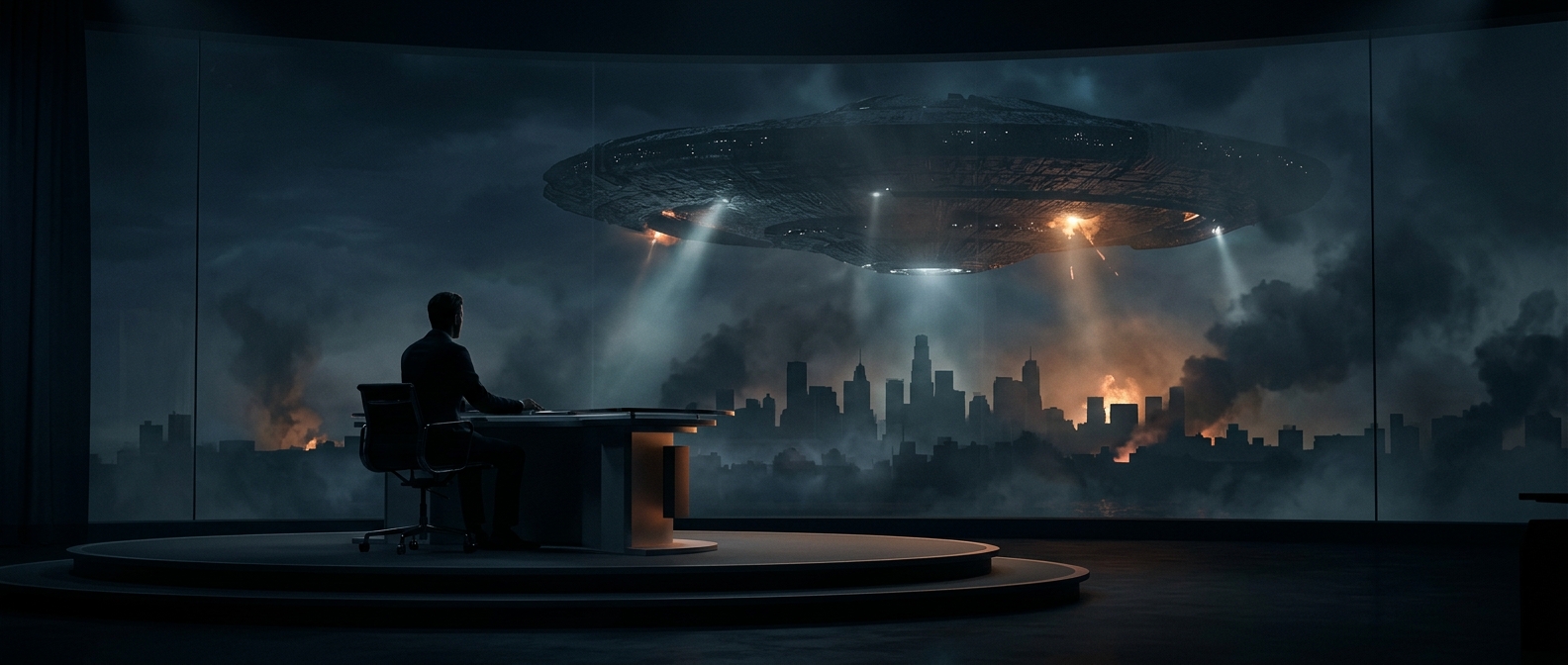
In Independence Day, the alien attack is too enormous to feel real on its own: cities are threatened, governments scramble, and people around the world try to understand what is happening. The film gives that spectacle a familiar point of entry by placing recognizable journalists in the role viewers already know them for—bringing urgent events into the living room.
A real news anchor carries more than a face. Viewers recognize the cadence, on-camera composure, and visual language of a broadcast, so a report delivered by a familiar journalist can feel like an interruption to ordinary life rather than another scene in a science-fiction story. That borrowed familiarity helps the fictional emergency register as breaking news.
The news format grounds the spectacle
The choice also lets the film show the invasion from outside its central characters’ experience. A broadcast can suggest that people in many places are watching the same unfolding disaster, while giving the audience a quick sense of its scale. The reporters do not need lengthy introductions: their public identities make the scene legible almost at once.
That contrast is part of the effect. The threat is fantastical; the people explaining it are familiar from real television. By joining those two things, the film makes its imagined catastrophe feel briefly as though it has crossed into the viewer’s own world.