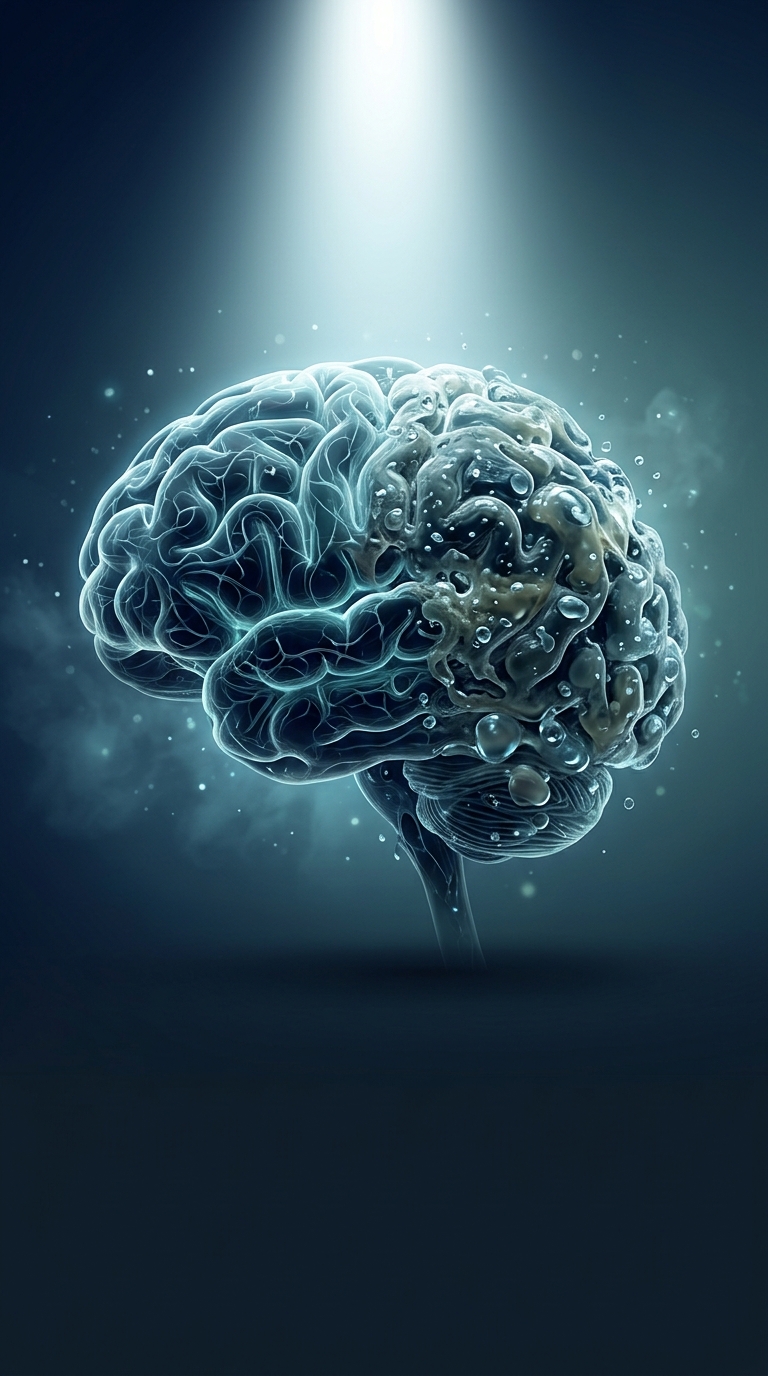
The brain is mostly water
By weight, the brain is roughly three-quarters water. That water is not simply sitting between brain cells: it helps create the fluid environment in which cells function, supports the movement of nutrients and waste, and helps maintain the chemical balance needed for nerve signals.
The rest is a mixture of fats, proteins, carbohydrates, and dissolved minerals. The exact proportions vary with how the tissue is measured, but fat is especially important: it forms much of the insulating material around nerve fibers and is part of the membranes that enclose cells.
Why composition matters
A nerve signal depends on more than electrical activity. It also relies on carefully controlled concentrations of charged particles—such as sodium and potassium—inside and outside cells. Water provides the medium for that chemistry, while cell membranes and their proteins regulate what crosses them.
So the brain is not a solid biological computer packed with wiring. It is a water-rich tissue whose fats, proteins, and salts are arranged to let billions of cells communicate. That combination is why even a modest disruption to the brain’s water and chemical balance can interfere with how it works.