The Tongue’s Quiet Resting Posture
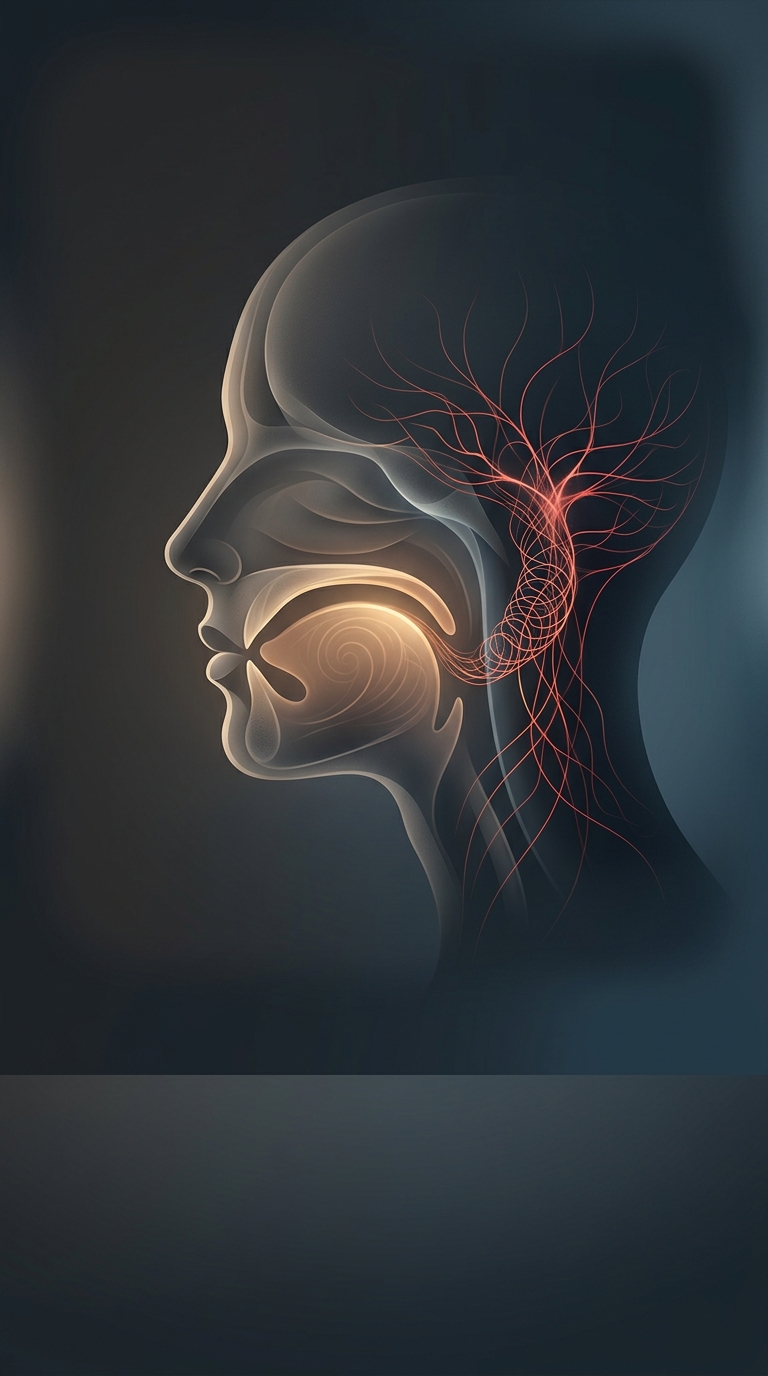
When you are not speaking or swallowing, your tongue is usually not simply lying loose on the floor of your mouth. In a common relaxed posture, much of it rests lightly against the roof of the mouth, with the tip near the small ridge just behind the upper front teeth. It should not need to push hard against the teeth.
That position is less like holding a pose and more like letting a flexible muscle settle where the mouth’s shape supports it. The tongue is a muscular organ attached at its base, so it can change shape and move rapidly without being lifted as one rigid piece.
A Small Shift for Every Word
Speech requires the tongue to make precise, momentary changes. It rises, lowers, or touches different parts of the mouth to shape sounds; swallowing involves a coordinated movement that helps move food toward the throat. Between those tasks, it returns to a resting position—often without conscious attention.
The exact posture can vary with the person and the moment. But noticing where your tongue sits between words can reveal a surprisingly active part of the body at rest: even when you are not using it, the tongue is not necessarily lying flat and still.