A pore is more than an opening
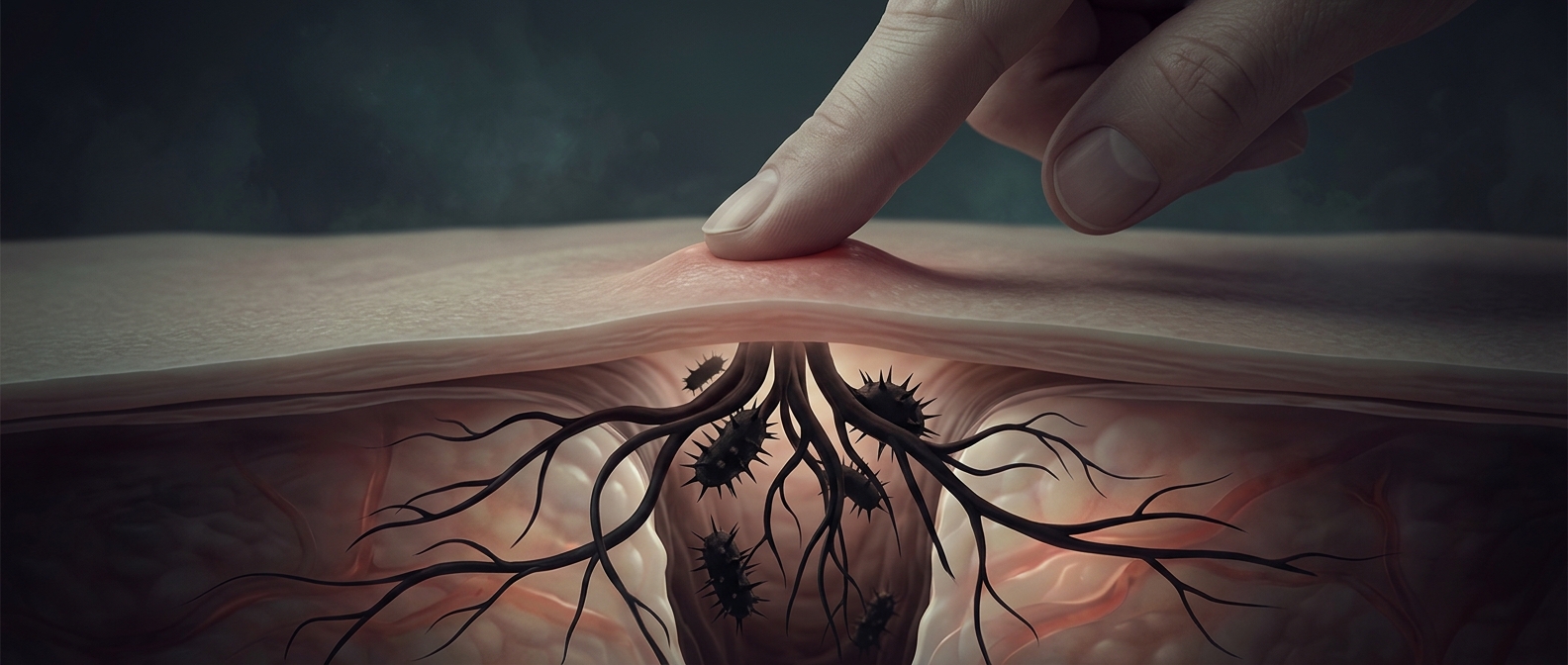
A pimple forms in a hair follicle, the tiny channel that carries a hair to the skin’s surface. Oil and dead skin cells can clog that channel, while the body’s immune response makes the surrounding area inflamed. The visible bump is therefore not simply a plug waiting to be pushed out: pressure on it can squeeze material deeper or sideways, where the skin has no easy route to drain it.
Why the damage can linger
The extra irritation may keep the immune response active, so redness and swelling can last longer. Squeezing can also break the skin at the surface. That small wound creates another opportunity for germs to enter and can leave a dark mark as it heals; deeper injury may raise the chance of a scar. These effects are more likely with repeated or forceful picking, but even a spot that seems ready to pop can be difficult to empty cleanly.
Leaving a blemish alone avoids adding pressure and injury while it settles. If it is painful, persistent, or keeps returning, a clinician can recommend treatment suited to the type of acne rather than relying on force. The key tradeoff is simple: squeezing may briefly flatten a bump, but it can make the surrounding skin take longer to recover.