How a Bow Turns Motion into Sound
A violin bow does not simply scrape a string. Its horsehair is coated with rosin, a substance that makes the hair grip the string. As the player draws the bow, the hair briefly pulls the string sideways, then the string slips free and springs back. This repeated catch-and-release motion keeps the string vibrating; the instrument’s hollow body then helps carry that vibration into the air as sound.
The player controls the result through bow speed, pressure, and the point where the bow crosses the string. A heavier, slower stroke can produce a strong tone, while a lighter touch can sound delicate. The player’s other hand changes the string’s vibrating length to set the pitch, so bowing supplies energy while fingering shapes the notes.
Why the Bows Move Together
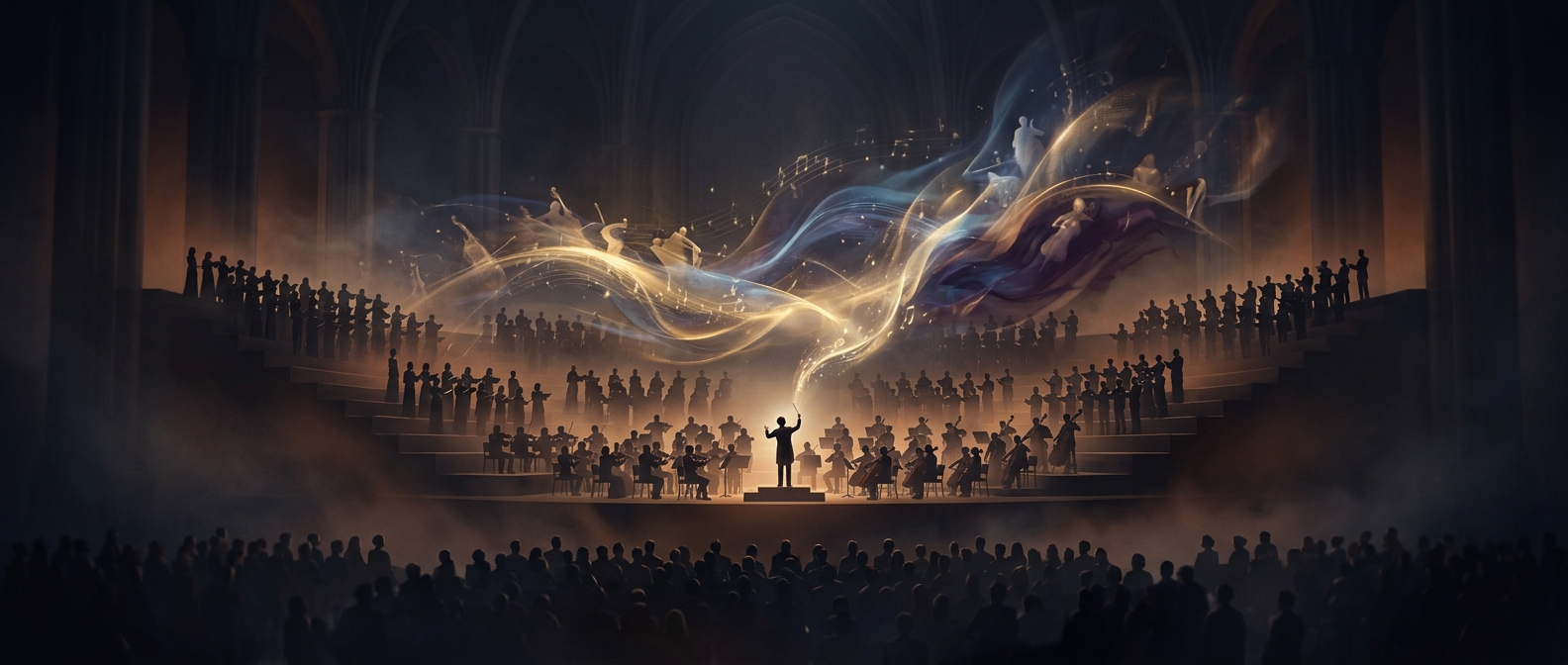
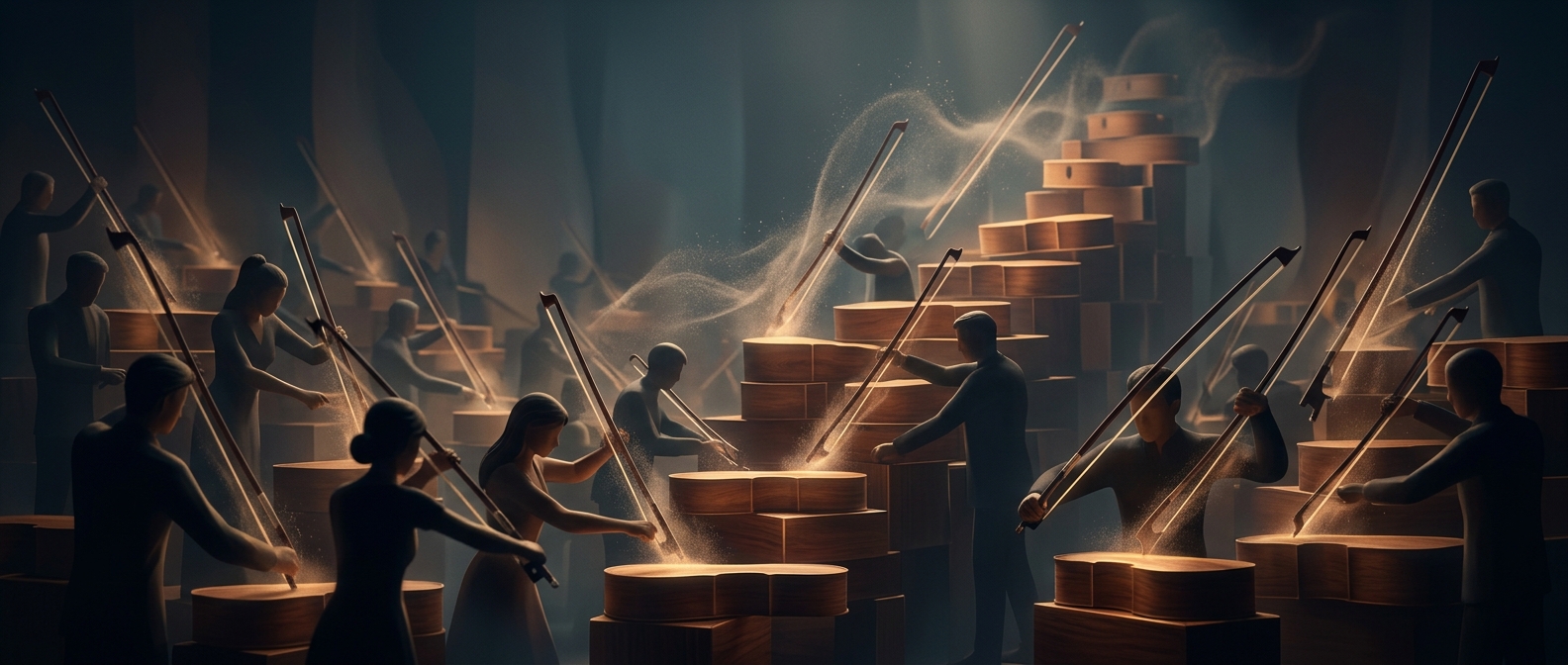
In an orchestra’s string section, players often use the same bow direction at the same moment. That shared motion is called a bowing. It helps the section make a phrase speak with one attack and gives the music a unified visual pulse. The players follow the conductor and the markings in their parts, while still adjusting their strokes to blend with the musicians around them.
The coordination is more than choreography: a bow change can make a note’s start or end audible. When dozens of players reverse direction together, the gesture helps align the sound; when the music calls for a smoother texture, they can vary their bowing to soften that collective edge.