A European crown built on a French army
Mexico’s monarchy grew out of a crisis in which foreign debt became an opening for intervention. After President Benito Juárez’s government suspended payments on foreign loans, France joined Britain and Spain in sending forces to Mexico. Britain and Spain soon withdrew; Napoleon III pressed ahead, aiming to replace Mexico’s republic with a government friendly to French interests. Mexican conservatives who opposed Juárez also backed a monarchy, but their support did not make the project broadly accepted.
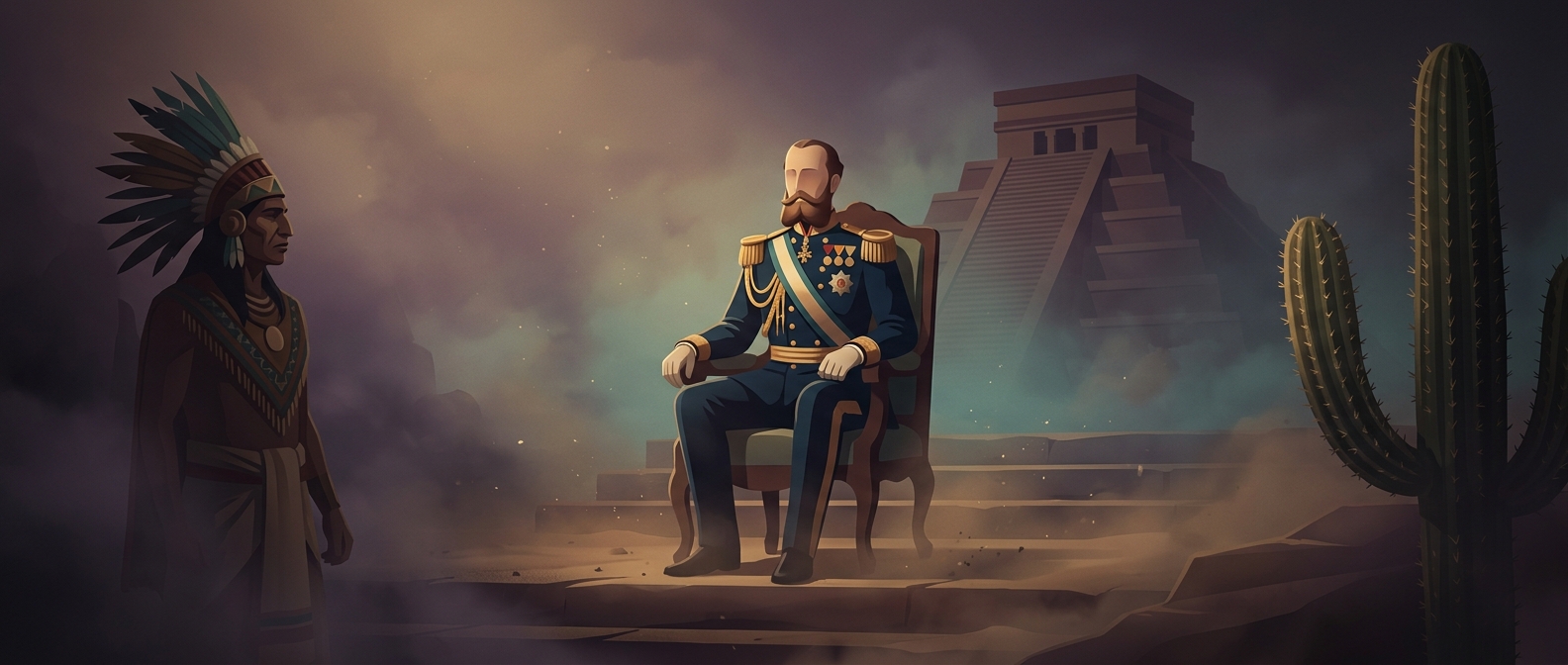
French troops captured Mexico City in 1863, and an assembly of Mexican supporters offered the crown to Maximilian, an Austrian archduke. He accepted believing the new empire had a political foundation. In practice, it depended heavily on French soldiers, while Juárez’s republican government continued resisting from outside the capital.
When the foreign support disappeared
The arrangement became harder to sustain as the United States emerged from its Civil War. Washington opposed European rule in the Americas and could now put pressure on France to withdraw. Napoleon III also faced a growing threat from Prussia in Europe, making a costly Mexican expedition less attractive. French troops began leaving in 1866 and were gone by 1867.
Without them, Maximilian’s forces could not hold out against the republicans. They captured him at Querétaro, and a Mexican court-martial sentenced him to death. He was executed by firing squad on June 19, 1867. The empire’s collapse showed the weakness at its core: a throne proclaimed in Mexico could not survive once the foreign army sustaining it went home.