A palace that its king did not want
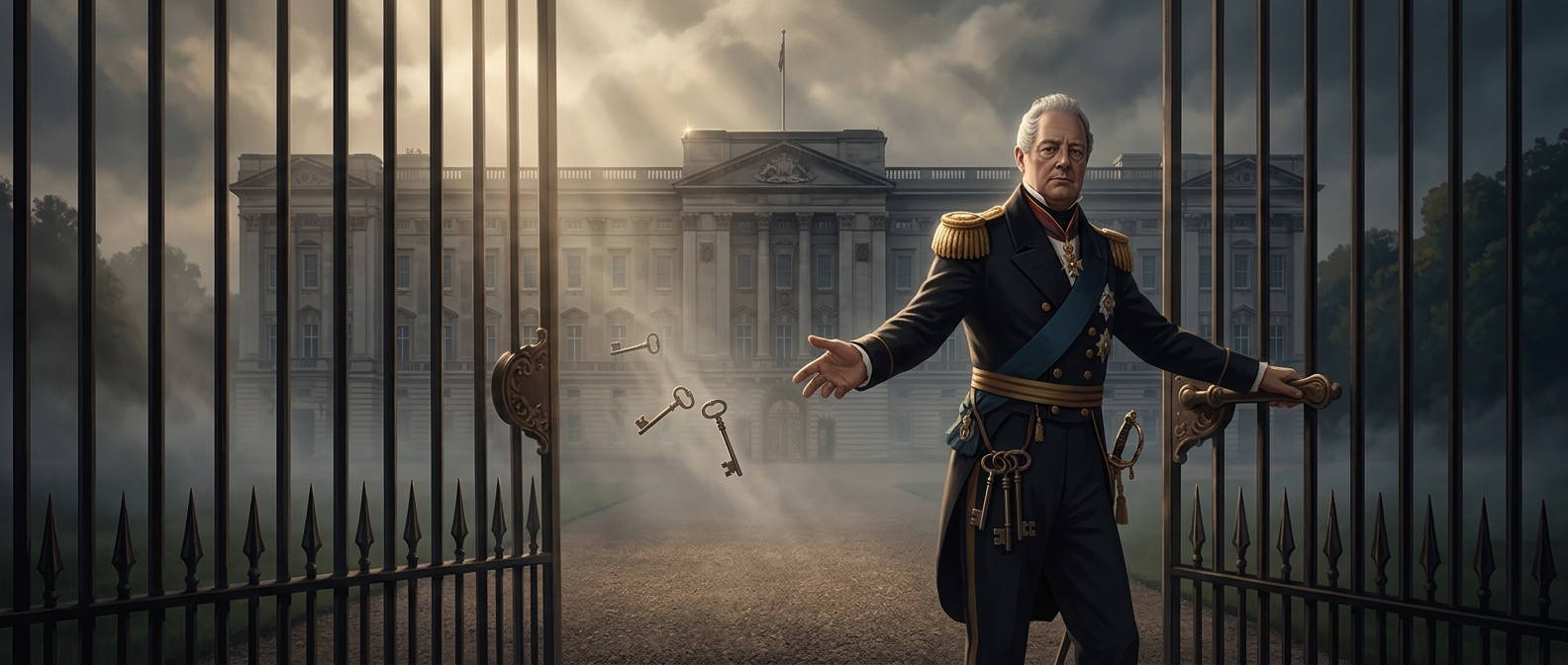
Buckingham Palace was not yet the settled royal residence its name suggests. It had grown out of Buckingham House, a private mansion bought for the royal family in 1761. George IV later drove an ambitious rebuilding project, but the result was an imposing building with serious practical shortcomings. William IV, who reigned from 1830 to 1837, found it uncomfortable and preferred to live at Clarence House.
His suggestion that the government use the palace for soldiers was more than a royal joke: it reflected a basic mismatch between grandeur and usefulness. A building could look fit for a monarch from the outside yet still be an awkward place to live. William’s offer went nowhere, leaving the question of the palace’s purpose unresolved.
Victoria made the unfinished project a home
That changed when Victoria became queen in 1837. Buckingham Palace offered a London base for the monarch, but it needed substantial work before it could function as a royal household. Victoria and Prince Albert oversaw changes to the building, including the addition of a new east wing, which gave the palace the familiar façade facing the Mall.
The shift was consequential: the palace became a working center of monarchy because a new sovereign chose to live there, not simply because its scale made it seem destined for the role. William’s rejected offer shows how close the building came to a very different identity—less a royal home than government accommodation.