A piano made ordinary doorways feel dangerous
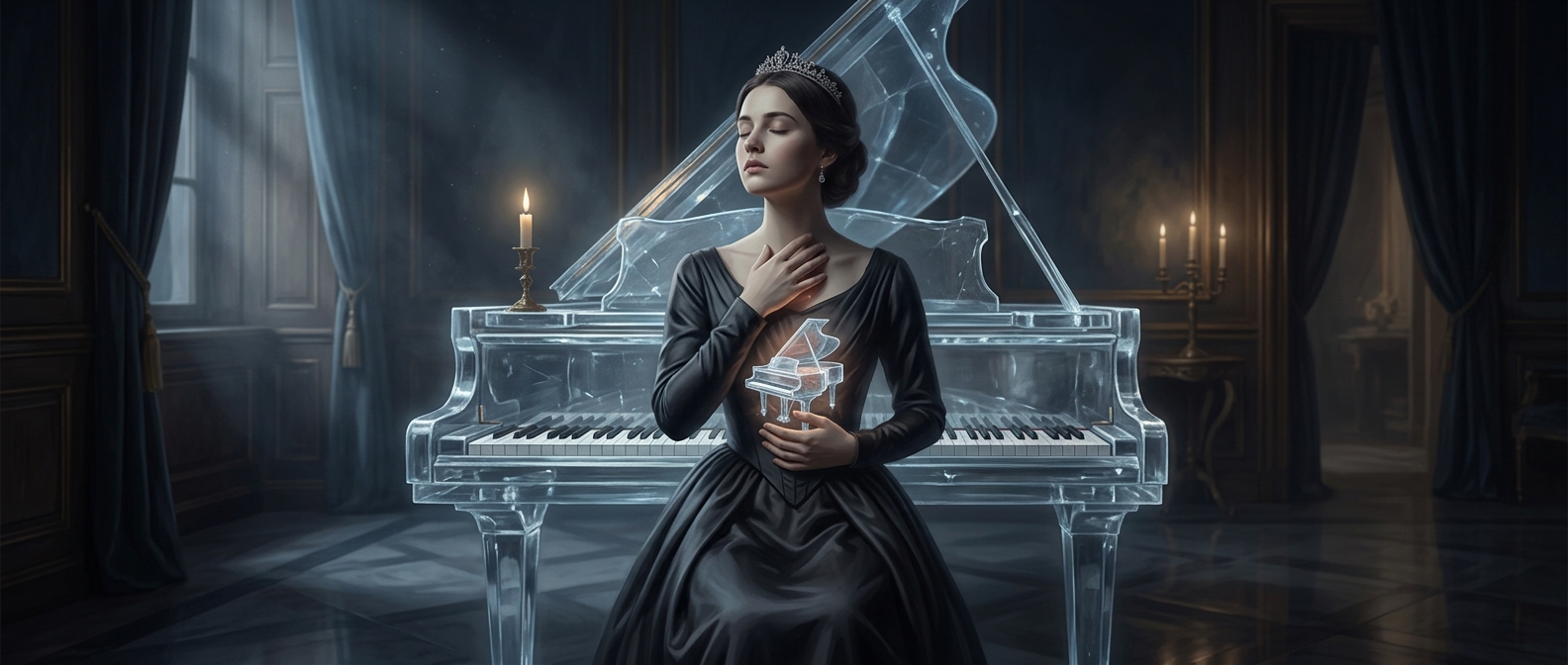
The story turns on a conviction that could not be checked by simply looking: the princess believed a grand piano was inside her intestines. In her mind, the instrument was not an image or a joke. It was a physical object that might be harmed if she moved carelessly.
That belief reshaped a small, repeated act. A doorway that posed no danger to most people became a passage she had to negotiate sideways, as though the piano’s size and position inside her body were real constraints. The striking detail is not only the impossible object, but the practical rules that followed from it.
When a belief governs the body
A fixed belief about something inside one’s body is often described as a somatic delusion: a conviction about the body that persists despite the absence of ordinary evidence for it. The term describes the kind of experience; it does not, by itself, explain what caused it in this individual case.
The anecdote gives no reliable account of how the belief began or what treatment, if any, she received. What it does show is how an inner conviction can become an outer routine. For her, passing through a doorway was no longer just walking—it was a maneuver to protect the piano she believed she carried.