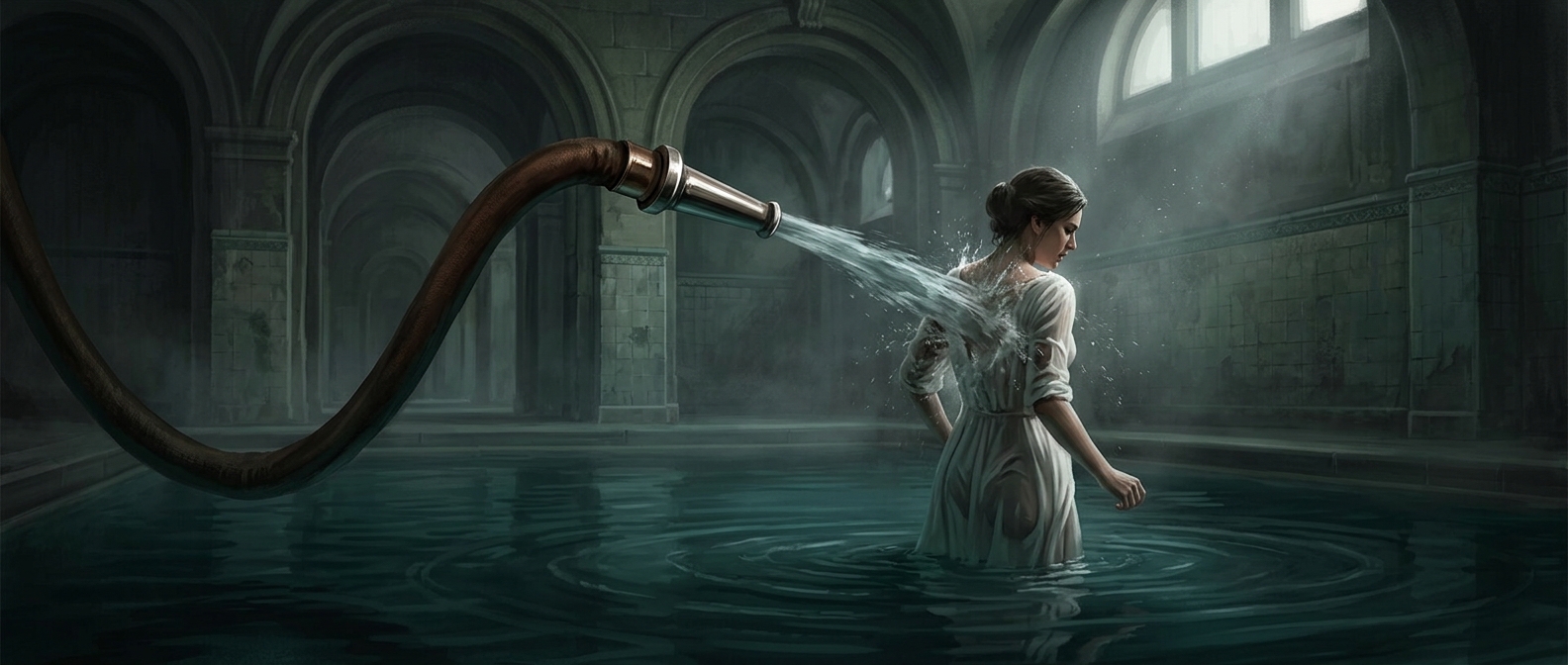
Why Turn a Hose Into a Treatment?
The point was not simply to get wet. In hydrotherapy—the use of water as a physical treatment—jets could deliver a forceful, focused stream to the skin and muscles. Pressure made the water feel more like a moving massage than a bath, while its temperature added another sensation: warm water could feel soothing, and cooler water briskly stimulating.
That experience was the treatment’s immediate appeal. Spa visitors and practitioners also hoped that water’s force and temperature would affect circulation or ease bodily complaints. Those hopes belonged to a much broader tradition of therapeutic bathing; they should not be confused with proof that a hose could cure illness.
The Attendant Was Part of the Apparatus
A powerful stream is difficult to regulate by oneself. An attendant could aim it, change the distance, and adjust how long it struck a particular area. Those choices mattered: a jet held close feels more forceful than one aimed from farther away, and a concentrated stream differs from water spread across the body.
The formal setup turned an ordinary piece of plumbing into a supervised procedure. The guest had to remain in position while someone else controlled the water, making the session feel less like leisure and more like a prescribed regimen. The hose’s pressure was only part of the treatment; the attendant’s control made that pressure usable.