How a Wild Raft Ride Stays on Course
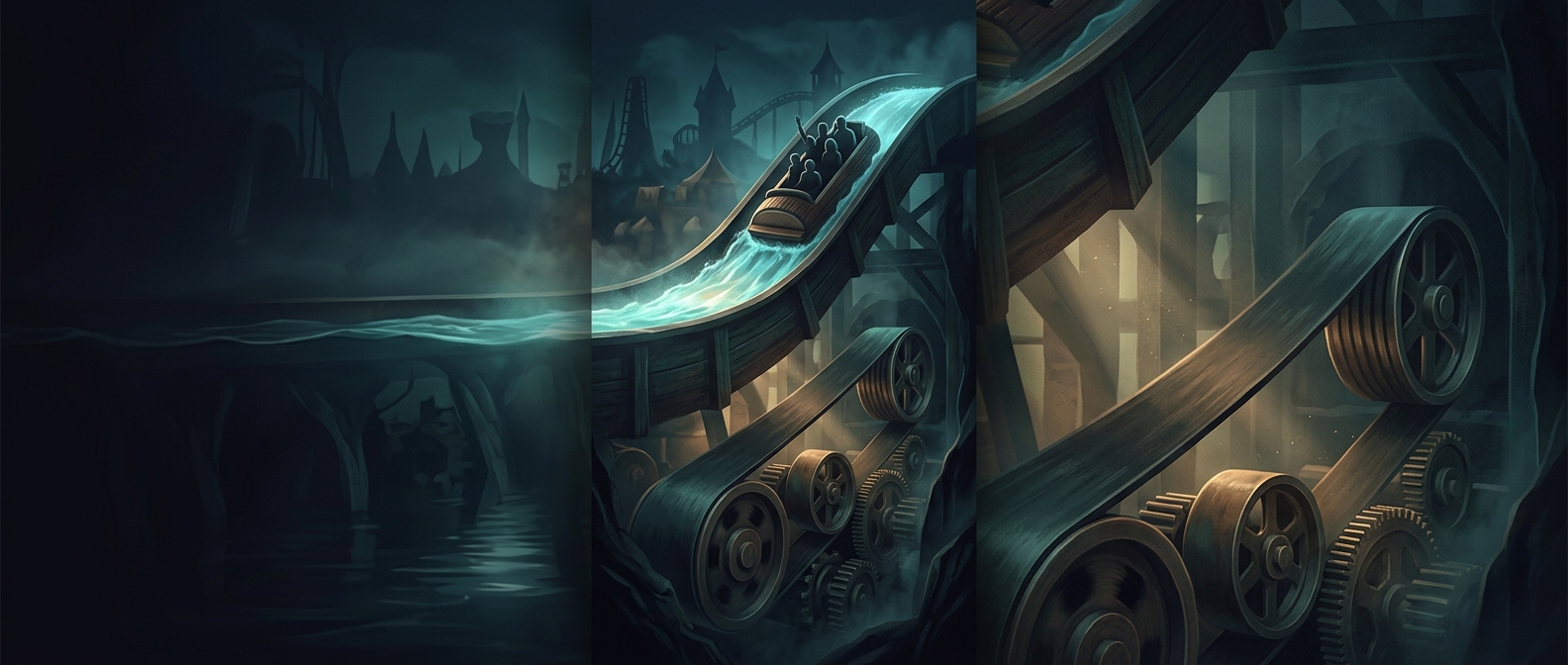
A raft can feel as if the current has seized it, but the water is only part of the ride’s motion. Beneath the surface, powered conveyor belts can catch the raft and carry it through sections where flowing water alone would not provide reliable movement. Pumps circulate water through the channel, adding a current that pushes and swirls the boat.
Speed and Spin, Built Into the Channel
The belts help set the raft’s forward pace at key points; the pumps shape how water presses against its sides. When that push is uneven, the raft turns. Channel curves and the raft’s own shape also affect the spin, so riders experience motion that varies from moment to moment without the boat being left entirely to chance.
This is the central design trick: the ride makes controlled forces feel unpredictable. A raft may bump, drift, and rotate, but the machinery keeps it moving through a planned route rather than simply floating wherever the water takes it.
Why Hide the Machinery?
Keeping the belts and much of the water system below the surface preserves the illusion of a natural torrent. Riders see churning water and feel sudden changes in direction; they do not see the mechanisms supplying the steady push underneath. The result is a ride that feels unruly from the raft while remaining a managed sequence of movement.