A trademark can cover a word in one narrow role
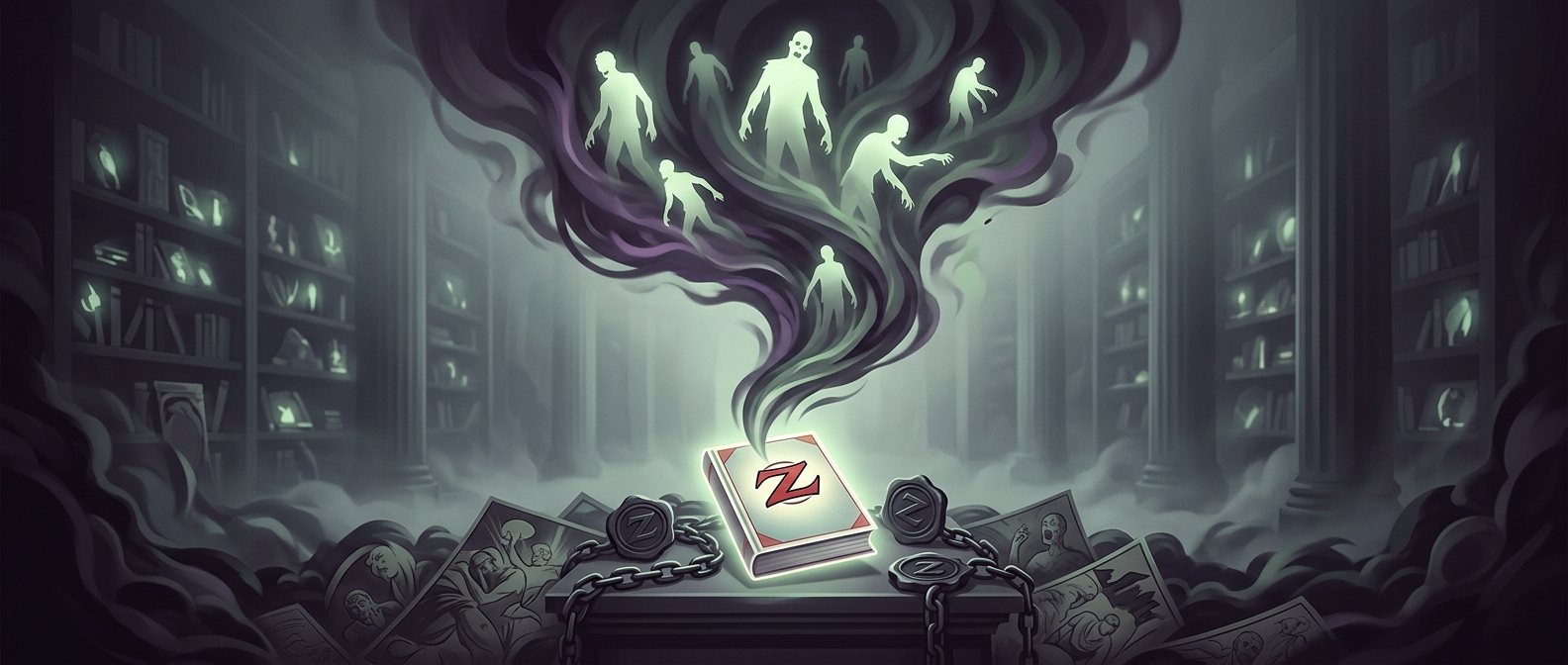
Marvel’s claim was not ownership of the word zombie. It was a trademark claim tied to using that word in comic-book titles. Trademarks identify the source of particular goods or services; they do not generally remove a word from everyday language or give a company control over every use of it.
That distinction matters. A comic could use “zombie” in a story, while a title using the word raised a different question: might readers mistake one publisher’s comic for another’s? The trademark concerned that title-setting use, not every monster, sentence, or product bearing the word.
What the claim did—and did not—mean
A trademark is not the same as copyright. Copyright protects creative works, such as the text and artwork in a comic. A trademark can protect a name or other identifier when it signals who published a product. So Marvel’s registration did not make the company the author of all zombie stories, nor did it give Marvel exclusive rights to the word in all contexts.
The practical boundary was the marketplace use that the mark covered. Other uses of “zombie” were not automatically barred just because Marvel held a trademark connected to comic-book titles. The scope of a trademark depends on how it is used and the goods or services involved.
Why the date matters
Marvel held the trademark from 1973 until it lapsed in 1996. A lapse means the registration ended; it does not turn the earlier claim into ownership of the word, or establish that the word had ever been Marvel’s to control broadly.
The memorable twist is the gap between the headline and the legal reality: Marvel trademarked a particular use of zombie—as a comic-book title—not the word itself.