The ending had to make crime lose
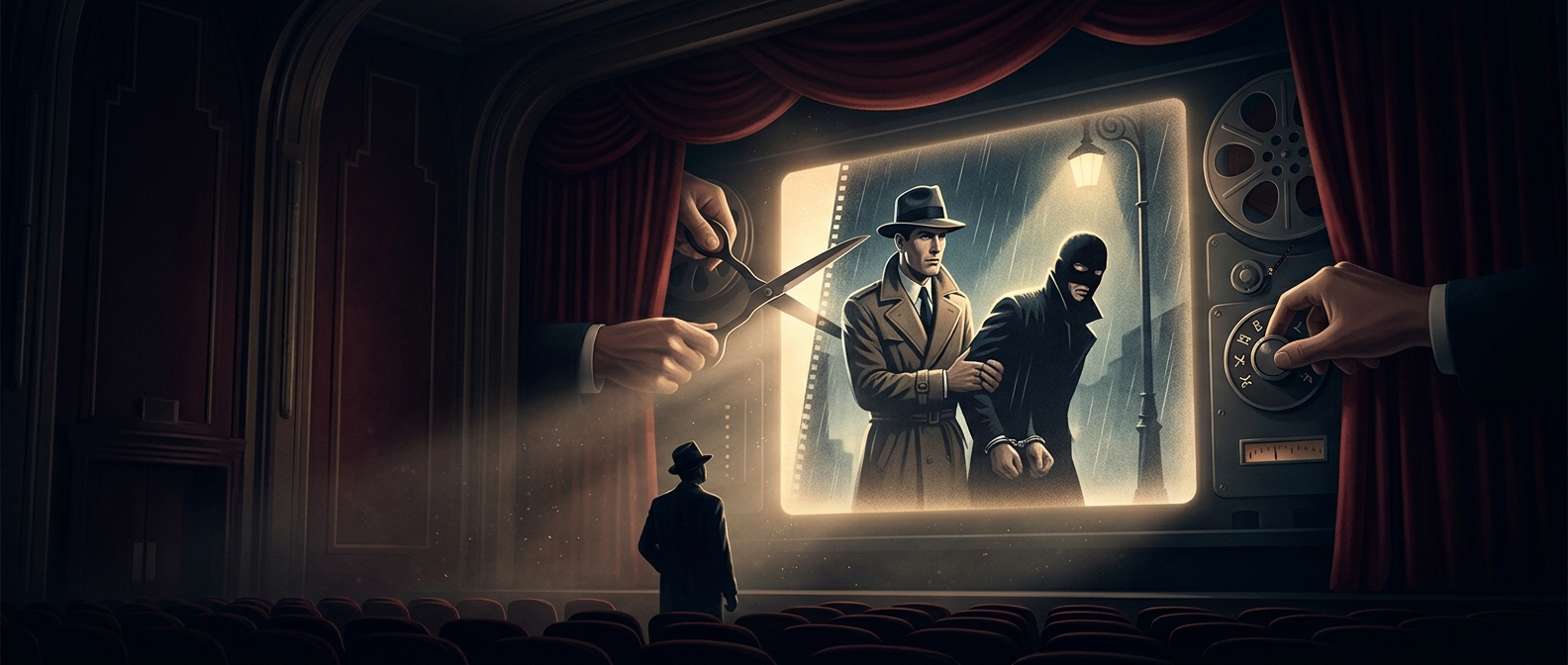
For decades, Hollywood’s Production Code put a moral condition on crime stories: a film could show wrongdoing, but it was not supposed to leave viewers with the impression that crime paid. The Code was adopted in 1930 and strictly enforced from 1934. Its rules discouraged making criminals sympathetic or presenting lawbreaking as a successful route to wealth, power, or freedom.
That did not mean every movie had to end with a courtroom scene or a police arrest. The required effect was broader: by the end, wrongdoing should meet punishment, defeat, or some other unmistakable consequence. A criminal might be killed, captured, or brought down by the damage he had caused.
A rule that shaped the plot
Because studios wanted films approved for release, the Code influenced stories before they reached the screen. Writers and filmmakers had to build consequences into the ending, even when the criminal drove much of the action. A plot that let a gangster keep his fortune and escape untouched risked violating the Code’s moral logic; changing the final act could make the same character’s rise a warning rather than an endorsement.
This constraint also gave crime films a familiar dramatic shape: the outlaw’s apparent success could provide suspense, but it had to be temporary. The audience might watch the criminal outsmart the police for most of the film, while the ending restored the idea that the law—or a larger moral order—would catch up with him.
The Code’s influence faded as the film industry moved to a ratings system in the late 1960s. But its legacy is easy to spot in older crime movies: the villain’s downfall was not merely one possible ending. It was part of what made the story acceptable to Hollywood.