When a Portrait Fell, the Omen Was Personal
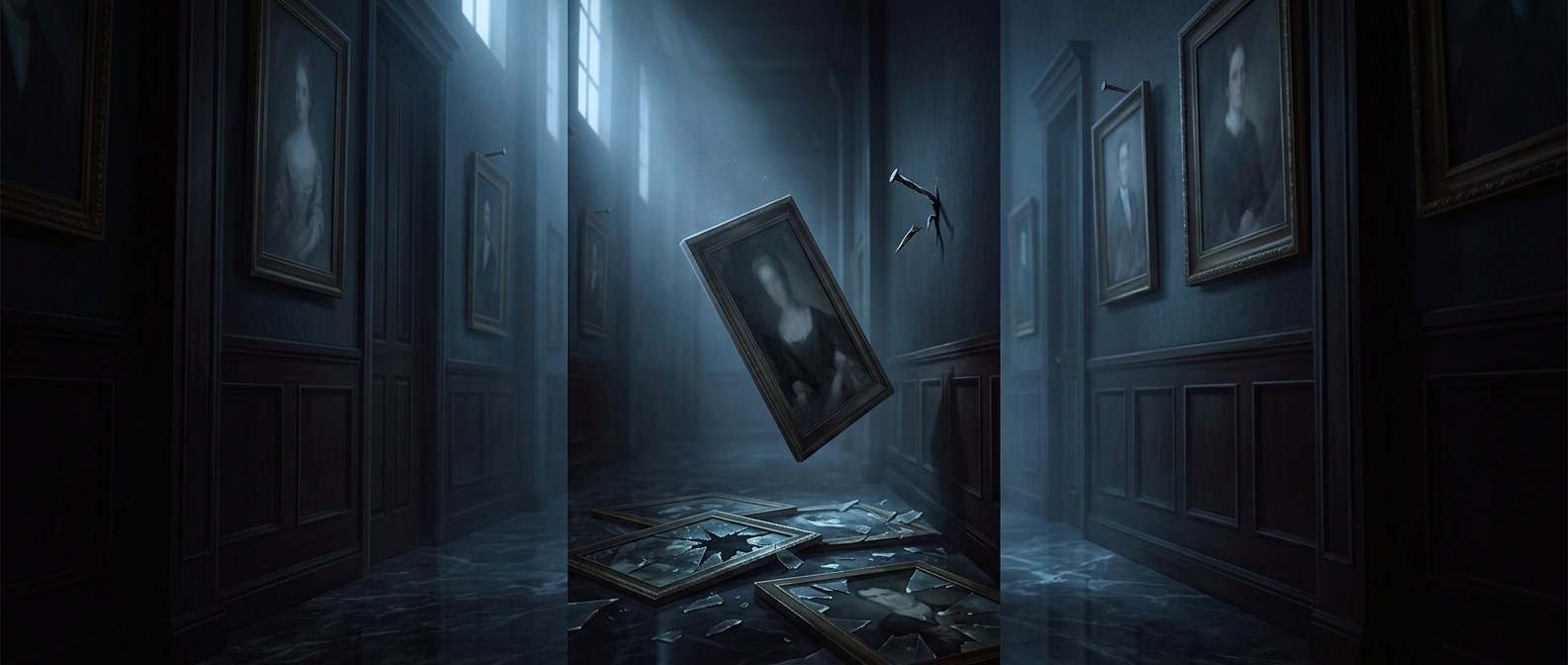
In older households, a portrait coming loose from its nail could be treated as more than a household mishap. If no clear cause explained the fall, people might interpret it as a warning connected to the person pictured—perhaps a sign of danger or impending death. The image stood in for its subject, so damage or disturbance to the portrait could feel like news about the person themselves.
Why the Fall Seemed to Mean Something
A hanging picture is ordinarily expected to stay put. Its sudden crash interrupts a quiet, familiar room, and the absence of an obvious explanation leaves a gap for interpretation. In a culture accustomed to reading unusual events as omens, that gap could turn an accident into a message.
The portrait also made the warning concrete. Rather than predicting trouble in the abstract, the fallen image pointed toward someone the household knew. That personal connection could make the incident memorable and unsettling, even though the fall itself did not establish that anything would happen to the person.
A Household Accident Becomes a Warning
The belief depended on how people understood the event, not on a special property of the picture. A loose nail or shifting frame could bring a portrait down; without a visible cause, observers might instead see the fall as meaningful. The same crash could be ordinary bad luck in one moment and a forewarning in another, depending on what people believed it signaled.