Why a Ruby Could Seem Like an Omen
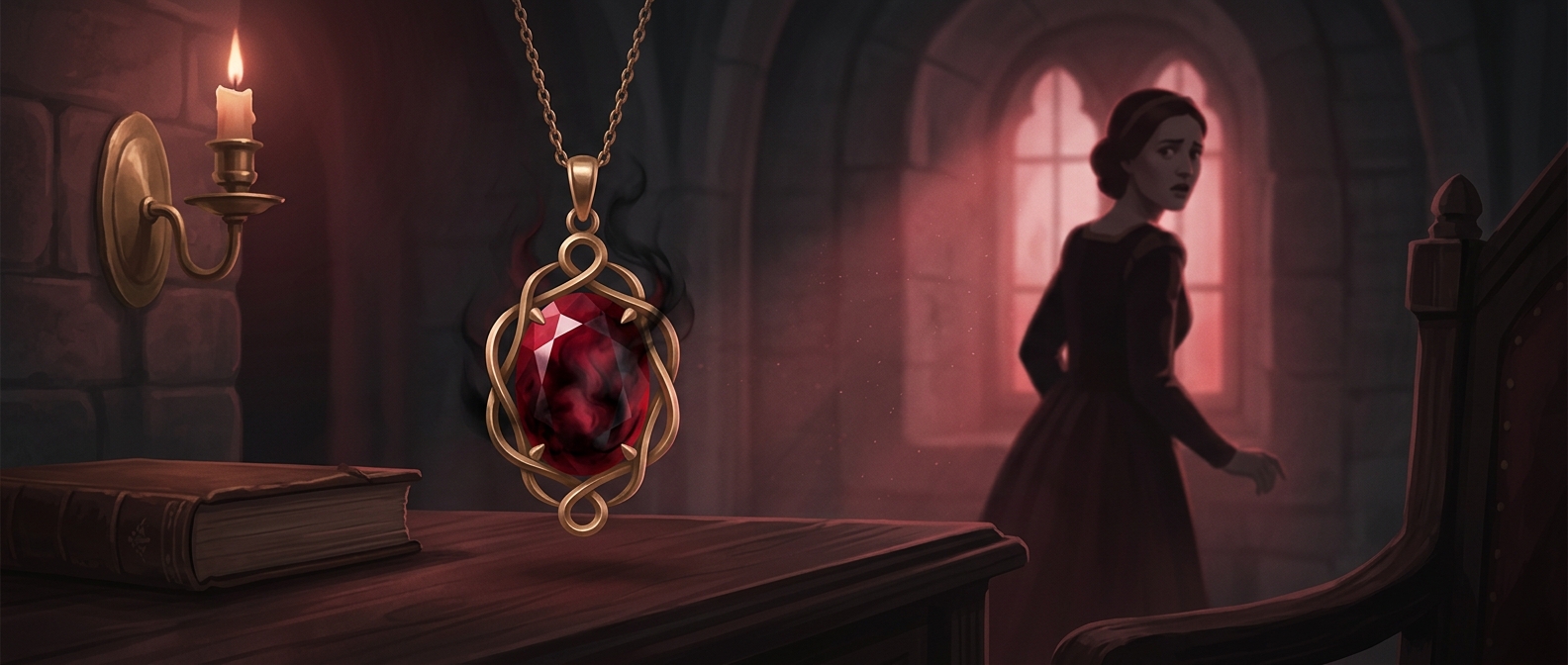
A ruby’s deep red color made it an easy stone to read symbolically. Red could call to mind blood, danger, and royal power, so a gem that appeared to change shade might be taken as a warning about betrayal or disaster. The belief turned a treasured object into something more than decoration: it could seem to offer its owner advance notice of threats that were otherwise hidden.
A Sign, Not a Reliable Alarm
A ruby does not detect treason or predict events. Its appearance can vary with the light, the angle from which it is viewed, and the color of its surroundings. In a culture that treated precious stones as bearers of meaning, an apparent darkening could be interpreted as an omen rather than as a change in the stone itself.
That interpretation gave uncertainty a visible form. A ruler who feared betrayal could look to the ruby for reassurance—or take a perceived change as reason for suspicion. The stone’s importance lay not in forecasting danger, but in how its color helped people make sense of danger they could not yet see.